8 Best Distribution Software Platforms Compared (2026)

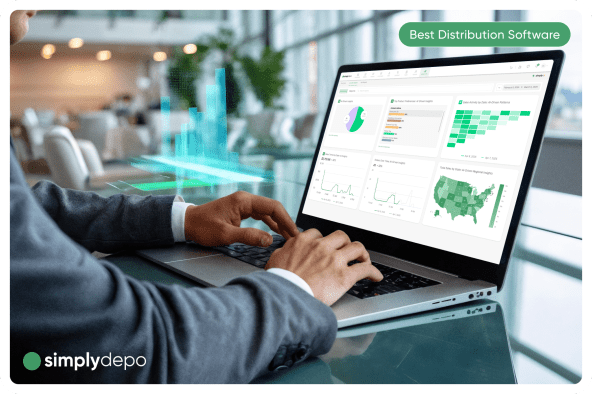
Distribution Software Overview: Entering a New Era
Supply chains are not slowing down for anyone, including US distributors and CPG brands. Order cycles are shorter, margins are tighter, and customers expect live ETAs like they are tracking a pizza. Spreadsheets and stitched-together tools crack under pressure. The data backs it up: McKinsey reports that embedding AI in distribution can trim inventory by 20 to 30% and cut logistics costs by 5 to 20%. In other words, the right sales distribution software is not a nice to have, it is table stakes.
What changed
Today’s platforms do not stop at order entry and accounting. Instead, they unify inventory, sales, delivery, and analytics into one real-time command center. They stream data from scanners and sensors, apply predictive models, and push insights to the person who needs them, on any device.
What this guide covers
In this guide, we break down the technology behind the shift, compare leading options, and give you a simple framework to pick distribution software that matches your goals and actually moves the needle.
Quick Picks: Best Distribution Software by Use Case
- Best overall for CPG and wholesale distributors: SimplyDepo
- Best enterprise ERP: NetSuite
- Best mid-market ERP: Acumatica
- Best for manufacturing-heavy operations: SAP Business One
- Best for AI sales enablement: Proton AI
- Best for B2B commerce: Pepperi
- Best for wholesale ecommerce: Zoey B2B
💡 Pro Tip
When evaluating vendors, ask whether they provide real-time visibility dashboards out of the box. This feature reduces decision lag by 30–50% according to Gartner research.
Why Upgrading Distribution Software Matters
Several converging trends make distribution software a mission-critical investment:
- Customer expectations are rising. Consumers now expect two-day or even same-day delivery. B2B buyers want accurate ETAs and self-service portals. To meet these expectations, distributors need real-time visibility into stock and shipments. A CrossML report notes that real-time inventory tracking reduces stockouts and overstocking by keeping constant visibility across warehouses and channels.
- Margins are shrinking. Rising fuel, labor, and compliance costs leave little room for error. AI helps by optimizing inventory and logistics. McKinsey notes that AI-enabled planning lowers procurement spend and logistics costs. In addition, DataRobot cites McKinsey research showing logistics costs improve by 15% and service levels by 65%. Plus, beverage distributor software helps manage kegs, returns, and shelf-life tracking while keeping route deliveries and inventory aligned.
- Cloud adoption is mainstream. A 2024 SaaS Academy study reports that more than 80% of businesses use at least one cloud app. Cloud distribution platforms provide automatic updates, global access, and lower IT overhead. On-premises systems persist mainly in highly regulated sectors.
- AI and analytics create an edge. Teams can no longer rely only on historical sales. Predictive analytics forecast demand, spot anomalies, and flag slow-moving items. AI control towers let managers address issues before they grow.
- Mobility powers field teams. With more than 85% of U.S. adults owning smartphones, mobile-first apps let reps place orders, capture signatures, and audit merchandising anywhere. An Upper Inc. guide adds that route optimization reduces fuel use and operating costs while improving on-time performance.
These five forces are not buzzwords. Instead, they are a product blueprint. They are also the foundation of SimplyDepo: a cloud-native, mobile-first platform with real-time inventory and order visibility, AI-assisted routing and dispatch, self-service ordering and ePOD, built-in analytics, and open APIs that connect to your ERP or CRM. In practice, that means accurate ETAs, fewer stockouts, faster cycles, and lower delivered costs without a rip and replace.

Key Technologies Driving Distribution Software Innovations
Real-Time Data and Connected Devices
Imagine scanning a barcode and instantly seeing stock levels update across every warehouse. Modern systems collect data from barcodes, RFID tags, and IoT sensors. As a result, you always know what is in stock, what is on the truck, and what has been delivered. This flow of data prevents stockouts and excess inventory, improves supplier coordination, and gives you time to restock before customers notice.
AI-Driven Forecasting and Decision Support
Think of AI as a co-pilot for planning. It looks at seasonality, promotions, weather, and broader trends to forecast demand more accurately than a spreadsheet. Companies using AI improve inventory and service levels. Some systems even suggest pricing or prompt you to move stock to a key customer before they run out.
Optimized Routing and Territory Management
Daily routes are hard. Route optimization tools factor in traffic, delivery windows, and truck capacity to build efficient schedules that reduce fuel costs and vehicle wear. Drivers and dispatch stay in sync through mobile apps and GPS. Meanwhile, customers get accurate ETAs and fewer missed deliveries. Check how SimplyDepo routing tools work.
Mobile Access and Offline Capability
Sales and delivery teams are on the move. The best systems put the power of the back office on a phone or tablet. Even offline, reps can place orders, take photos, and capture signatures. Once online, everything syncs. For CPG teams, pairing mobile tools with dedicated retail execution software ensures shelf audits, photo capture, and promo compliance stay connected to live inventory data. Companies that embrace mobile tools see strong productivity gains and happier customers. Offline access is a key reason users choose SimplyDepo.
Embedded Analytics and Dashboards
Do not wait for a month-end report. Real-time dashboards show which products are moving and which routes are late. Built-in analytics track fill rates, delivery times, and order accuracy. In one case, a building materials distributor improved fill rates by 5 to 8% after adding an AI control tower. Clear visuals and drill-downs help managers spot issues and act fast.
💡 Pro Tip
Pair your analytics dashboard with automated alerts for KPIs like fill rate or delivery time variance. It transforms reports from passive metrics into proactive actions.
Essential Features to Look for in Distribution Software
When you shop for distribution software small business tools, make sure it solves daily pain points. The categories below come from real practice and analyst research:
- Comprehensive inventory management. Sync stock across warehouses, track batches and expiry dates, and run real-time cycle counts. Also, look for auto-replenishment that triggers purchase orders at set levels. Pair this with catalog management software to keep product data, pricing tiers, and availability consistent across every channel and customer segment.
- Automated order orchestration. Capture orders from e-commerce, EDI, phone, or field sales. Then assign them to warehouses or routes by rules and generate pick lists, labels, and invoices. B2B order management software takes this further by giving buyers a self-service portal to place, track, and reorder without contacting a rep. Accounting integration removes duplicate entry and speeds cash flow.
- Advanced routing and dispatching. Auto-sequence deliveries, balance loads, and send real-time updates to customers. Fuel savings and driver productivity usually deliver fast ROI.
- Configurable dashboards and analytics. Out-of-the-box reports should cover sales, inventory, delivery performance, and customer profitability. AI insights can flag demand spikes, slow movers, and cross-sell opportunities.
- Industry-specific workflows. In regulated sectors such as food and pharma, confirm support for lot tracking, recalls, temperature logs, and compliance reporting. For beverage and CPG, merchandising audits and promo tracking matter.
- Flexible deployment. Cloud offers scale and easy upgrades. However, hybrid or on-prem setups may be needed for certain rules or offline needs. Know the vendor’s data ownership and exit policies.
- Open integration architecture. Connect to Shopify or Magento, Salesforce or HubSpot, and QuickBooks or Xero. Finally, APIs let you extend the system as you grow.
Distribution Software Comparison at a Glance
The table below compares leading distribution software platforms using publicly available information from vendor documentation and independent review platforms. Features, integrations, and deployment capabilities may vary depending on product editions and configuration.
| Platform | Best For | Mobile App | Offline Mode | Retail Execution | Route Management | B2B Ordering | QuickBooks Integration | API / Integrations |
|---|---|---|---|---|---|---|---|---|
| SimplyDepo | CPG brands, beverage distributors & wholesale distributors | ✅ | ✅ | ✅ | ✅ | ✅ | ✅ Native | ✅ |
| NetSuite | Enterprise distributors & multi-entity organizations | ✅ | ⚠️ Limited | ❌ | ⚠️ Via modules/partners | ✅ | ⚠️ Via connectors | ✅ |
| Acumatica | Mid-market distributors | ✅ | ⚠️ Limited | ❌ | ✅ | ✅ | ⚠️ Via connectors | ✅ |
| SAP Business One | Manufacturers & industrial distributors | ✅ | ⚠️ Limited | ❌ | ⚠️ Via partners | ✅ | ⚠️ Via partners | ✅ |
| Proton AI | AI-powered sales enablement for distributors | ✅ | ❌ | ❌ | ❌ | ❌ | ❌ | ✅ |
| Pepperi | B2B commerce, field sales & retail execution | ✅ | ✅ | ✅ | ✅ | ✅ | ✅ | ✅ |
| Zoey B2B | B2B ecommerce for wholesalers | ✅ | ❌ | ❌ | ❌ | ✅ | ⚠️ Via integrations | ✅ |
Which Distribution Software Is Right for Your Business?
If you’re evaluating distribution software, the right platform depends on your business model, team size, and operational requirements.
Choose SimplyDepo if you:
- Manage field sales, wholesale ordering, and retail execution
- Need a mobile-first platform with offline functionality
- Want native QuickBooks integration
- Sell consumer packaged goods (CPG), food, or beverages
- Need route management and customer-specific pricing
- Want fast implementation without enterprise ERP complexity
Choose NetSuite if you:
- Need a full enterprise ERP
- Manage multiple legal entities or global operations
- Require advanced financial management and planning
Choose Acumatica if you:
- Want a flexible cloud ERP
- Need warehouse management and broader ERP functionality
- Work with an implementation partner
Choose SAP Business One if you:
- Operate a manufacturing business
- Require production planning and strong inventory controls
- Need enterprise reporting and financial management
Choose Pepperi if you:
- Need B2B ecommerce alongside field sales
- Manage retail merchandising teams
- Want a customer ordering portal with retail execution capabilities
Choose Proton AI if you:
- Already have an ERP
- Want AI-powered sales recommendations and forecasting
- Need CRM and sales enablement rather than distribution operations
Choose Zoey B2B if you:
- Primarily sell through a B2B ecommerce portal
- Need customer-specific catalogs and pricing
- Already use separate inventory or ERP software
Best Distribution Software for CPG Brands
SimplyDepo is our top recommendation for CPG brands that manage field sales, retail execution, wholesale ordering, and customer relationships from one platform. It combines mobile ordering, route management, retail audits, CRM, B2B ordering, and QuickBooks integration in a solution built specifically for consumer packaged goods companies.
Brands looking to replace disconnected spreadsheets or multiple software tools can manage sales, merchandising, customer visits, inventory visibility, and reporting from one connected platform.
Best Distribution Software for Beverage Distributors
Beverage distributors often require route management, mobile ordering, proof of delivery, pricing management, and retail execution. SimplyDepo is designed to support beverage distributors with offline mobile access, customer-specific pricing, route optimization, inventory visibility, and real-time reporting.
Larger enterprise beverage operations with extensive ERP requirements may also evaluate platforms such as NetSuite or SAP Business One depending on operational complexity.
Best Distribution Software for Wholesale Distributors
Wholesale distributors typically need inventory visibility, customer-specific pricing, wholesale order management, CRM, B2B ordering, and accounting integration. SimplyDepo provides these capabilities in one platform without the complexity of a traditional enterprise ERP, making it well suited for growing distributors that prioritize fast deployment and ease of use.
Best Distribution Software for Manufacturers
Manufacturers often prioritize production planning, inventory management, financial controls, and supply chain visibility. Platforms such as SAP Business One, NetSuite, and Acumatica provide strong ERP capabilities for manufacturing organizations, while SimplyDepo complements manufacturing operations by improving field sales, wholesale ordering, retail execution, and distributor management.
How We Evaluated Distribution Software
To help distributors and CPG brands compare solutions objectively, we evaluated each platform using publicly available information from vendor websites, product documentation, customer review platforms, and independent industry research.
Our evaluation considered:
- Distribution-specific capabilities
- Mobile functionality and offline access
- Inventory and order management
- Route management and delivery workflows
- Retail execution and field sales tools
- B2B ordering capabilities
- ERP and accounting integrations
- API and third-party integrations
- Deployment complexity
- Target customer size and industry focus
Because software capabilities evolve over time, readers should confirm the latest product functionality directly with each vendor before making a purchasing decision.
Detailed Comparison of Distribution Software Solutions: Best Fit, Pros, Cons and Pricing
The landscape includes tools for small warehouses, mid-market firms, and global enterprises. Instead of only pricing, this view highlights fit, strengths, cautions, and typical cost.
1. SimplyDepo
⭐ G2 Rating: 4.7/5
- Best for: Small and midsize CPG brands, food & beverage distributors, wholesale distributors, and field sales teams looking for an all-in-one operating platform.
- Pros: Mobile-first with offline, real-time inventory and orders, retail execution with photo audits and promo tracking, QuickBooks integration, and fast onboarding.
- Cons: Focuses on distribution operations rather than complex global accounting. Large enterprises may still want a separate ERP for finance.
- Pricing: $, budget-friendly with transparent tiers.
Key capabilities
✓ Field Sales CRM
✓ Wholesale Order Management
✓ Route Management
✓ Retail Execution
✓ Mobile Sales App
✓ B2B Ordering Portal
✓ Catalog Management
✓ Customer Pricing
✓ Forms & Surveys
✓ Analytics & Reporting
✓ QuickBooks Integration
✓ Shopify Integration
✓ Offline Mode
Ideal customer
- CPG brands
- Beverage distributors
- Food distributors
- Specialty wholesale distributors
- Manufacturers with field sales teams
- Companies replacing spreadsheets or disconnected software
- Businesses using QuickBooks Online
2. NetSuite
⭐ G2 Rating: 4.1/5
- Best for: Large distributors and multi-entity enterprises.
- Pros: Broad ERP across finance, CRM, e-commerce, and supply chain. Multi-currency and global tax. Highly customizable with robust analytics.
- Cons: High cost and long implementations. Complex UI and limited field-rep mobility.
- Pricing: $$$, license and implementation plus subscription.
3. Acumatica
⭐ G2 Rating: 4.5/5
- Best for: Mid-market teams that need flexible deployment.
- Pros: Cloud or hybrid, open API, integrated WMS and shipping, responsive mobile app.
- Cons: Often needs partners to implement. Many AI features come as add-ons.
- Pricing: $$, varies by modules.
4. SAP Business One
⭐ G2 Rating: 4.3/5
- Best for: Manufacturers and regulated industries.
- Pros: MRP, lot traceability, audit trails, strong financials, multi-warehouse, global support.
- Cons: Longer setup, specialized training, and limited offline mobility.
- Pricing: $$$, perpetual or subscription with maintenance.
5. Proton AI
⭐ G2 Rating: 4.3/5
- Best for: Distributors that want AI-driven CRM and sales enablement, not a full ERP.
- Pros: Reorder prompts and product suggestions from sales data, built-in PIM, and clear insights for reps.
- Cons: Limited inventory and logistics. Needs ERP or WMS integration.
- Pricing: $$, tailored subscription.
6. Sage (Intacct, X3, 100)
⭐ G2 Rating: 4.3/5
- Best for: Mid to large teams that need strong financials with distribution features.
- Pros: Modular suites, multi-entity accounting, real-time reporting, and open API.
- Cons: Implementation complexity and rising cost as modules grow.
- Pricing: $$, subscription or license per module.
7. Pepperi
⭐ G2 Rating: 4.6/5
- Best for: Mid to large distributors that want B2B commerce plus field sales and retail execution.
- Pros: Unified commerce across customer-facing and back-office tools. Audits, photos, trade promotions, and offline native apps.
- Cons: Setup and training can be heavy. Cost rises with modules.
- Pricing: $$$, quote by modules and users.
8. Zoey B2B
⭐ G2 Rating: 4.5/5
- Best for: Wholesalers and online sellers that need strong B2B e-commerce without a full ERP.
- Pros: Custom catalogs, pricing rules, quotes, flexible workflows, responsive portal, and BI integrations.
- Cons: Limited inventory and WMS. Often needs separate accounting or ERP. Mobile app is still maturing.
- Pricing: $$, subscription based on users and orders.
Real-World Success Stories: Distribution Software in Action
SimplyDepo Case Study: 88 Acres grows reorders and customers
88 Acres moved off spreadsheets and guesswork. After adopting SimplyDepo, reps saved about 10 hours per week, reorders rose 30%, and the customer base grew 15%. Because everything lives in one mobile app, field teams know stock levels and routes and can reorder with a tap. The mix of real-time data, smart routing, and simple mobile tools drives quick wins.
Building products distributor raises fill rates
A building materials distributor added an AI control tower to watch inventory across warehouses and shift stock early. As a result, fill rates climbed 5 to 8%. A gen-AI chatbot also surfaced live insights, so managers spent less time on spreadsheets and more time fixing what matters.
Logistics provider unlocks warehouse capacity with digital twins
A logistics provider built a digital twin of its warehouse. By simulating labor, forklifts, and inventory flow, the team found almost 10% more capacity without adding space. The model flagged bottlenecks and suggested hour-by-hour tweaks.
Global retailer cuts costs with AI forecasting
An unnamed retailer saved about $400 million per year by improving forecast accuracy with AI. Inventory fell, waste dropped, and product availability improved. Plus, many firms that adopt AI see logistics costs drop by 15% and service rise by 65%.
Industrial manufacturer saves with AI optimization
OYAK Cement used AI to optimize energy and resources. Alternative fuel usage rose from 4% to 30%, and savings reached roughly $39 million. This shows how AI can reduce cost and support sustainability at the same time.
Mobile route planning delivers measurable gains
Upper Inc. reports that optimized routes reduce fuel use and emissions, cut maintenance costs, and raise customer satisfaction. Many companies report fuel savings up to 20% and more stops with the same fleet.
How to Choose the Right Distribution Software: A Practical Guide
Selecting distribution software can feel complex. Use this simple process:
- Clarify business goals. Decide if you want lower holding costs, faster order processing, better CSAT, or stronger compliance. Then rank goals to focus your search.
- Map workflows. Document how orders move from demand to delivery and returns. Note bottlenecks. These points shape your feature list.
- Segment vendors by fit. Use the comparison above to shortlist by size, industry, and deployment. Decide if AI and advanced analytics are must-haves.
- Test ROI with pilots. Ask for demos or trials. Measure fill rate, inventory turns, labor hours, or fuel use before you commit.
- Check integration and scale. Confirm links to current systems and room to grow. Review APIs and data-export options to avoid lock-in.
- Plan change management. Adoption needs training and support. Choose vendors with strong onboarding and responsive help. Update internal processes to match the software.
- Improve over time. Tech moves fast. Pick a vendor that keeps shipping improvements in AI, mobile, and sustainability. Set reviews to track performance and add features.
Need a hand? The SimplyDepo team can review your goals and share a roadmap that fits your workflows. If you want to see it in action, try SimplyDepo free for two months and measure the impact.
Future Trends Driving Distribution Software
Looking beyond 2026, several trends will shape distribution tech:
- Micro-fulfillment and automated warehousing. Robotics and micro sites bring inventory closer to customers for same-day delivery. Software must coordinate pick stations, conveyors, and autonomous vehicles.
- Sustainability and carbon accounting. Expect built-in carbon tracking and route optimization to lower emissions. AI can also support greener choices.
- Generative AI for decision support. Beyond forecasts, gen-AI will suggest stocking plans, create promotions, and answer user questions. As tools get cheaper, mid-market teams will adopt them faster.
- Interconnected ecosystems. Future DMS will connect suppliers, carriers, retailers, and customers through shared data hubs. API-first design will improve real-time collaboration.
- Cybersecurity and data governance. With more cloud data, strong encryption, role-based access, and third-party audits will stand out.
Final Thoughts: Preparing for the Future of Distribution Software
Distribution in 2026 runs on speed, visibility, and intelligence. Real-time inventory tracking cuts both stockouts and overstock. AI forecasting and analytics lower logistics costs and raise service. Mobile workflows put orders, PODs, and retail execution in the hands of reps and drivers. Smarter routing then reduces fuel use and emissions. These are no longer optional. They are the baseline for today’s market.
If you’re still unsure which tool matches your priorities, you can dive even deeper into evaluating platforms. See our in-depth guide on Distribution Management Software to compare options and pick the right solution for your business.
Curious how this looks in action? Explore SimplyDepo for Distributors to see how field sales, retail execution, and route management work together in one platform.
Ready to see the difference? Start your free trial and test it with your own data. Check SimplyDepo pricing to compare plans before you commit.
Frequently Asked Questions About Distribution Software
Distribution software centralizes inventory, orders, sales, and logistics into one connected system. It helps distributors improve visibility, reduce costs, and meet rising customer expectations by replacing manual spreadsheets with real-time data and automation.
AI forecasts demand, automates planning, and optimizes routes. It analyzes patterns in sales, weather, and promotions to prevent stockouts and overstocking while cutting logistics and fuel costs. The result is faster decisions and higher service levels.
Look for real-time inventory tracking, automated order management, mobile access, route optimization, analytics dashboards, and API integrations. Together, these features streamline daily workflows and give teams complete operational visibility.
Cloud-based systems offer scalability, automatic updates, and lower IT costs. They enable remote access for teams, support real-time collaboration, and ensure data security across devices—making them more flexible than traditional on-premise tools.
Mobile-first tools let reps capture orders, signatures, and photos on-site, even offline. When back online, data syncs automatically. This reduces paperwork, eliminates errors, and gives managers real-time insight into field performance.
SimplyDepo is built specifically for CPG and beverage distributors. It combines mobile ordering, route management, photo audits, and QuickBooks integration in one app. The platform focuses on speed, simplicity, and offline access for field teams.
AI-driven forecasting, automated warehousing, and sustainability tracking are redefining distribution. Modern systems now connect suppliers, retailers, and carriers through open APIs to create smarter, faster, and more transparent operations.
-
 October 20, 2026
 -
October 20, 2026
-
October 20, 2026
