Shopify Plus Alternatives for B2B Wholesale Teams


Shopify Plus alternatives come up most often when a wholesale or CPG team realizes its online store works well, but the rest of its B2B operation doesn’t.
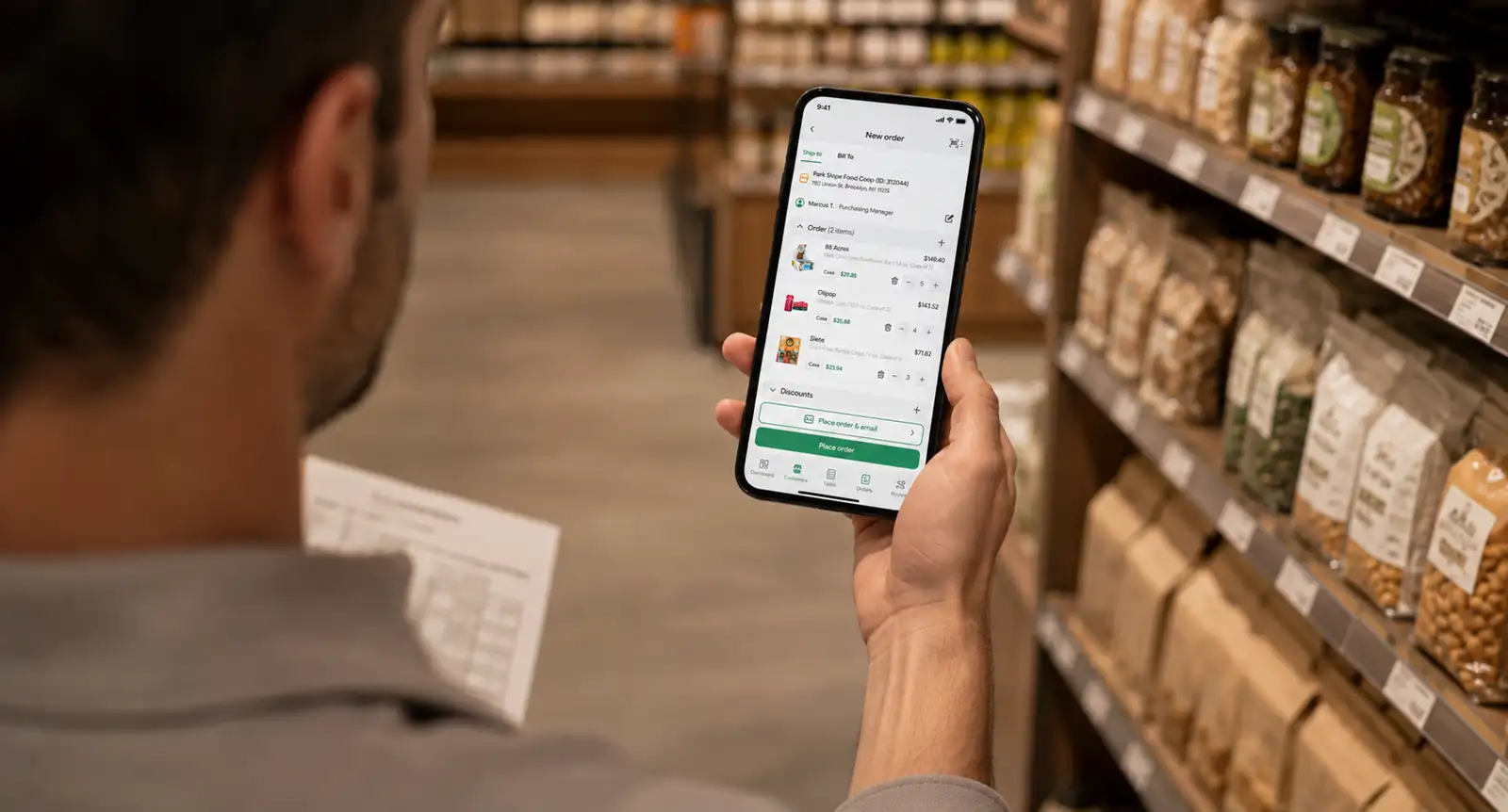
Shopify Plus is a strong ecommerce platform. The friction usually shows up in places a storefront wasn’t built to handle: reps writing orders in stores, route deliveries, truck inventory and account-specific pricing across channels.
This guide explains when Shopify Plus fits a B2B team, where it strains and which alternatives to consider depending on what’s actually slowing you down. If your bottleneck is field sales and distribution rather than the storefront, start with our overview of B2B ecommerce platform options built for wholesale.
Why B2B teams look for Shopify Plus alternatives
- Field sales is a big share of revenue. Reps need mobile ordering, visit tracking and route planning that an ecommerce platform doesn’t center on.
- Delivery runs on your own trucks. Route planning, truck inventory and proof of delivery sit outside a storefront’s core.
- Pricing gets complicated. Contract pricing, tiers and promotions need to match across the portal, reps and invoices.
- The app stack keeps growing. Each gap gets filled with another app or integration, adding cost and failure points.
Where Shopify Plus works well
Shopify Plus is a good fit for brands selling heavily direct to consumer that want to add a wholesale storefront, teams whose B2B buyers mostly order online and businesses that ship by parcel carrier rather than their own routes. Its app ecosystem and checkout are strengths.
Where it strains for distribution teams
- Rep ordering, store visits and merchandising tasks usually require separate apps.
- Route-based delivery and truck inventory need outside systems.
- Keeping inventory in sync across storefront, reps, warehouse and trucks takes careful integration.
- Reporting by rep, route and territory often means exporting data elsewhere.
Storefront problem or field execution problem?
Before switching ecommerce platforms, check where orders actually come from. If most revenue comes through reps and phone orders, a new storefront won’t fix the bottleneck. The fix is connecting field sales, inventory and delivery to the same order system as the online store. Our guide to multi-channel order management covers how to bring those channels together.
Shopify Plus alternatives to consider
1. SimplyDepo
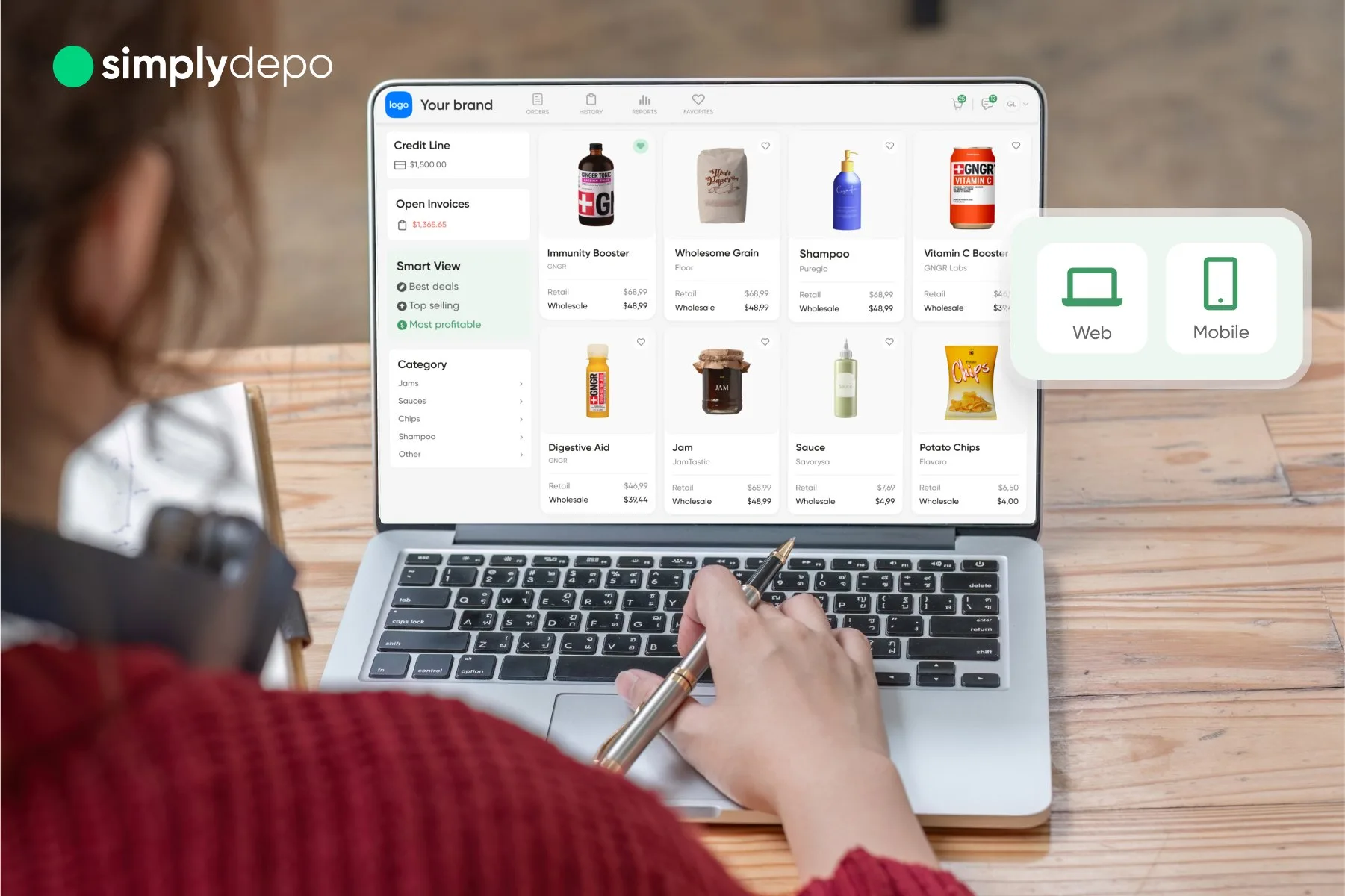
Built for distributors and CPG brands that sell through reps and deliver on their own routes. The B2B storefront, rep app, store visits, inventory across warehouses and trucks, route planning, proof of delivery and invoicing share one set of data, so online and field orders follow the same rules.
It’s less suited to brands that only sell direct to consumers.
Best for: Distributors and CPG brands running wholesale ordering, field sales and delivery together.
Pricing: Per-rep plans are listed on the pricing page, with a free trial.
2. BigCommerce B2B Edition
BigCommerce B2B Edition is a solid choice when most wholesale buyers order online and products ship by carrier. It supports company accounts with multiple buyers, customer groups, price lists, quotes and purchase orders on a hosted platform.
It handles online B2B buying well. Field sales, store visits and route delivery need separate tools.
- Best for: Brands moving most wholesale ordering online.
- Watch for: Separate tools for reps and delivery.
Pricing: Sold with BigCommerce’s enterprise plans, priced by quote.
3. Adobe Commerce
Adobe Commerce, formerly Magento, is very flexible for complex catalogs and custom requirements. Its B2B features include company accounts, shared catalogs, quick order and requisition lists, and it can be heavily customized.
That flexibility comes with a development partner, a longer implementation and ongoing maintenance.
- Best for: Companies with complex catalogs and development resources.
- Watch for: Implementation time and development cost.
Pricing: Licensed through Adobe and quoted based on business size.
4. Salesforce Commerce Cloud (B2B)
Salesforce’s B2B commerce fits large companies that already run Salesforce for sales and service. Buyer accounts, pricing and orders live alongside CRM data, so sales teams see online orders in the same system.
Cost and setup reflect its enterprise focus, and most projects involve an implementation partner.
- Best for: Enterprises standardized on Salesforce.
- Watch for: Cost and implementation effort.
Pricing: Enterprise pricing through Salesforce.
5. OroCommerce
OroCommerce was designed for B2B from the start, with corporate account hierarchies, customer-specific catalogs and price lists, quote-to-order workflows and built-in CRM features. It can be self-hosted or run on Oro’s cloud.
Most deployments rely on implementation partners and developers who know its framework.
- Best for: Mid-market and enterprise B2B sellers with complex pricing and buyer organizations.
- Watch for: Implementation and maintenance effort.
Pricing: A free open-source Community Edition, and an Enterprise Edition priced by gross merchandise value tiers and hosting needs, with no transaction fees.
6. WooCommerce with B2B extensions
WooCommerce is a free WordPress plugin, and B2B features such as wholesale pricing, customer roles, minimum order quantities and quote requests come from paid extensions. It can be low cost for small catalogs.
Functionality depends on the plugins you combine, and hosting, updates and security fall on your team.
- Best for: Small catalogs already on WordPress.
- Watch for: Plugin compatibility and maintenance.
Pricing: Free core plugin. B2B extensions and hosting are paid.
How to choose
| If your main problem is… | Look at… |
|---|---|
| Online ordering for wholesale buyers | BigCommerce B2B, OroCommerce |
| Heavy customization at enterprise scale | Adobe Commerce, Salesforce Commerce Cloud |
| Field reps, routes and store execution | SimplyDepo |
| Low cost for a small catalog | WooCommerce with B2B plugins |
Costs to compare
Look beyond the platform fee. Add app subscriptions, integration maintenance, transaction fees, implementation and the staff time spent moving orders between systems. A higher platform fee can still cost less overall if it replaces several apps and manual steps.
Migration checklist
Moving off Shopify Plus, or adding a B2B system alongside it, goes smoother with a plan:
- List every app and integration your store relies on today.
- Export customers, price lists, products and order history.
- Decide which channels stay on Shopify, such as direct-to-consumer, and which move.
- Confirm how inventory will stay in sync if both systems remain.
- Pilot with a group of wholesale accounts before switching everyone.
- Set up redirects for any wholesale pages that change URLs.
Running ecommerce and field sales together
Storefronts and field sales don’t have to compete. Many brands keep their consumer store and add a B2B system for reps and wholesale accounts, as long as both share inventory and orders.
Brands that sell seasonal collections through showrooms may also want to compare NuORDER competitors.
Why distributors choose SimplyDepo
The best Shopify Plus alternative for a field-driven B2B team is one that treats reps, routes and the online portal as one sales system.
SimplyDepo brings a B2B storefront, mobile ordering, store visits, live inventory, routing and invoicing into one platform for distributors and CPG brands. Book a demo to see how it fits alongside or in place of your current stack.
FAQs
Common options include SimplyDepo, BigCommerce B2B Edition, Adobe Commerce, Salesforce Commerce Cloud, OroCommerce and WooCommerce with B2B extensions. The right choice depends on whether your bottleneck is online ordering or field sales and delivery.
It works well for brands whose wholesale buyers order online and receive parcel shipments. Teams with field reps and route deliveries usually need additional systems.
Yes. Many brands keep Shopify for direct-to-consumer and run wholesale through a B2B platform, as long as inventory stays in sync.
Mobile rep ordering, customer-specific pricing, live inventory across warehouses and trucks, route planning, proof of delivery and accounting integration.
-
 November 17, 2026
-
 November 17, 2026
-
 November 13, 2026