
Retail execution sounds simple – get products on shelves the right way – but in 2026, it’s harder and more critical than ever.
This guide breaks down five proven, field-tested retail execution strategies you can actually use, not just talk about. You’ll learn how to tighten execution, focus your team, and drive real in-store results without overcomplicating things.
If you want faster wins and fewer headaches, you’re in the right place.
Why Retail Execution Still Breaks Down in 2026
Retail execution is the simple idea of making sure products show up in stores the way they’re supposed to. That means the right items on the shelf, the right prices, and the right promotions in front of shoppers.
It sounds straightforward, but it’s where many teams get stuck.
You plan something at headquarters, and then the store experience doesn’t match. That gap is where sales slip. In 2026, most brands still face the same issues:
- Products go out of stock too often.
- Displays aren’t set up on time.
- Pricing changes lag behind promotions.
- Field teams spend more time checking than fixing.
The result? Missed revenue and frustrated shoppers.
Even with better retail execution tools and more data, coordination between headquarters, distributors, and stores is still messy. You might know what’s wrong, but not who owns the fix or how fast it’s happening.
The U.S. retail landscape is huge and fragmented, so execution breaks down fast when communication slows down.
The old model (show up, take notes, send a report) moves too slowly. It creates more information but not better action. And with automation projected to impact over 40% of consumer goods roles and 20% of retail jobs in the next decade, teams must shift toward faster, tech-enabled execution that helps workers build new skills and stay competitive.
You can’t rely on gut instinct or manual checklists when shelves change every hour. You need real-time visibility, fast decisions, and clear accountability.
That’s why modern teams are shifting toward smarter workflows that help reps flag issues, fix them on the spot, and confirm results. The future belongs to systems that turn data into action, not noise.
This is where retail execution intelligence becomes essential.
How We Build Retail Execution Strategies
You don’t build great retail execution by guessing. You build it by learning what really happens in stores and turning that learning into clear, repeatable steps your team can follow.
The goal is simple: spot problems faster, fix them sooner, and prove the impact.
What We Learned from Thousands of Retail Execution Audits
After reviewing thousands of store audits across categories and regions, one pattern stands out: the same issues repeat over and over. That’s good news: it means they’re fixable.
Here’s what those audits taught us:
- Execution breaks at the basics. Out-of-stocks, missing tags, and late displays drive most losses.
- Visits without action don’t change results. Field teams often report issues but don’t close the loop.
- The best reps follow a system. They focus on a checklist, prioritize the biggest opportunities, and move fast.
- Small wins compound. Fixing one high-traffic shelf often beats chasing ten low-impact issues.
From there, the retail execution strategy becomes clearer. You don’t need more visits. You need smarter visits. And you want every rep to walk into a store knowing exactly what to check, what matters most, and what to do next.
So you build processes that:
- Define the standards.
- Measure those standards consistently.
- Turn every finding into an action.
- Confirm completion.
This keeps execution simple, predictable, and scalable.
Turning Store-Level Data Into Retail Execution Intelligence
Data only helps when it drives action. Store-level information (photos, counts, pricing, and notes) becomes powerful when you combine it, compare it, and use it to guide decisions.
Start with three steps:
- Surface the biggest gaps. Highlight stores, regions, or products that fall below target.
- Spot patterns. Look for repeated issues by retailer, time of year, or SKU.
- Prioritize fixes. Aim your team at the fastest wins with the biggest upside.
Once you do that, you can coach teams better, plan visits smarter, and prove performance to leadership. You’ll learn how to move from “we think” to “we know,” and that clarity builds confidence.
It also creates one source of truth everyone can trust.
When that happens, every store visit becomes more productive, and every action becomes measurable. That’s the heart of retail execution insights, turning real-world data into decisions that drive growth.
Retail Execution Strategies That Actually Work in 2026
So, you’ve heard the buzzwords. You’ve seen the slide decks.
But in the real world (where shelves change hourly, promotions shift weekly, and retailers demand results), retail execution only matters if it actually works in stores. In 2026, the brands winning at execution are the brands that keep it simple, stay focused, and repeat what works.
And, you don’t need a massive transformation to improve retail execution. You just need five practical strategies you can apply, scale, and measure.
Let’s break them down.
Strategy #1 – Define Clear Retail Execution Standards by Channel and Retailer
Execution fails when expectations are fuzzy.
Success starts with clarity: by channel, by retailer, and sometimes even by store type. Big-box, drug, dollar, convenience, and club stores all operate differently. Your standards should too.
How to Translate Brand Guidelines Into In-Store Standards
Brand guidelines often live in decks and PDFs. Store teams need something simpler – clear standards they can see, score, and act on.
Turn brand guidelines into in-store rules like:
- Shelf placement = eye-level for priority SKUs.
- Facing counts = minimum number of facings by retailer.
- Pricing rules = promo price and start/end dates.
- Display requirements = location, size, and creative.
Keep it visual. Use photos, examples, and “right vs wrong” comparisons. Avoid long text.
Make it easy enough that a new rep could follow it on their first day.
💡 Pro Tip
Turn every standard into a one-sentence rule and a single photo example. If it takes more than 15 seconds to explain, it’s too complicated.
Using Audits to Refine and Improve Retail Execution Standards
Standards shouldn’t be static. They should evolve based on what works in the field.
Use audits to:
- Spot repeated failures. If 60% of stores miss a standard, the standard may be unclear or unrealistic.
- Compare by retailer. Some retailers execute promotions better than others. Adjust accordingly.
- Validate what drives velocity. Standards that boost sales should become non-negotiable.
When you treat audits as feedback (not punishment!), you build standards that reflect real store conditions, not wishful thinking. Retail execution tools like SimplyDepo make this easier by standardizing audits across retailers so teams can compare performance instantly.
This foundation is critical across the retail execution in the United States market, where retailers vary widely in scale, rules, and execution capability.
Strategy #2 – Build Visit Playbooks for Merchandisers and Field Reps
A store visit without a plan is just a walk-through.
The best-performing teams give reps playbooks – simple, repeatable workflows that drive action every time.
Checklists, Priorities, and Must-Have Photos for Each Visit
A strong visit playbook has three core parts:
- A short checklist
Focus on the essentials:
- On-shelf availability
- Pricing accuracy
- Display compliance
- Promo execution
- Clear priorities
If time is tight, reps should know what matters most. For example:
- Fix availability first.
- Then confirm pricing.
- Then check displays.
- Must-have photos
Photos create proof, clarity, and coaching opportunities. Standardize photo angles so teams compare store to store.
SimplyDepo helps reps capture consistent photo evidence and store data in seconds.
Standardizing Retail Execution Audits Without Killing Field Agility
Standardization doesn’t mean rigidity. It just means clarity and consistency.
💡 Pro Tip
Cap audits at 10 questions. If you can’t get the truth in 10, you’re asking the wrong questions.
Here’s how to balance both:
- Use one shared audit format.
- Let reps add notes and photos as needed.
- Keep the audit short enough to finish in minutes.
- Give reps power to act on findings immediately.
The goal is to help reps move faster, not slow them down with admin work. When everyone follows the same process, HQ gets better data, and the field gets fewer surprises.
SimplyDepo keeps audits simple and mobile-friendly so reps stay fast and flexible instead of being bogged down by admin work. This is how mature teams bring discipline to their retail execution strategies without losing speed.
Strategy #3 – Turn Retail Execution Monitoring Into a Feedback Loop, Not a Report
Most teams collect data. The best teams use it.
The difference is follow-through.
A report tells you what happened. A feedback loop changes what happens next.
Closing the Loop Between HQ, Field, and Retail Partners
Execution breaks when communication stalls. You fix that by building a simple loop:
- Field finds an issue.
- HQ reviews and prioritizes it.
- Field resolves it.
- HQ confirms completion.
- Retailers see results.
Everyone knows what’s happening and who owns what. No black holes. No finger-pointing. SimplyDepo helps automate this loop so issues get flagged, assigned, and closed without endless back-and-forth.
Using Monitoring Data to Continuously Improve Retail Execution
Monitoring should answer three questions:
- Where are we winning?
- Where are we slipping?
- What should we change next?
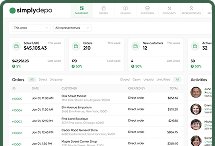
Share trends with field reps weekly. Share wins with retailers monthly. Turn insights into training, new standards, or updated playbooks. SimplyDepo dashboards make this reporting visual, real-time, and shareable.
When reps see how their work changes the scoreboard, engagement skyrockets.
And when monitoring connects directly to action, you stop generating reports, and start generating results. That’s the shift modern brands are making with AI retail execution, where data leads directly to smarter decisions and faster fixes.
Strategy #4 – Align Retail Execution With Promotions, Trade Spend, and Shopper Marketing
There’s no bigger waste than funding a promotion that never makes it to the shelf. In 2026, the smartest teams align execution with investment (including budget for retail execution software).
Making Sure What’s Funded Actually Shows Up on Shelf
Start with a simple rule: if you’re paying for it, you’re checking it.
Tie store visits and audits directly to:
- Promotion start dates
- Display commitments
- Feature and price agreements
- Seasonal launches
This turns promotions into measurable execution, not blind hope.
Connecting Retail Execution Insights to Promo and Trade ROI
Don’t judge a promotion by the calendar. Judge it by the shelf.
Ask:
- Did the display go up on time?
- Did pricing match the agreement?
- Did availability hold during peak traffic?
If execution slipped, sales probably did too. When you connect execution data to ROI, you can make smarter trade investments, shift spend to better retailers, or push for stronger compliance clauses.
And SimplyDepo gives teams one place to see execution data and promo results side by side, with super-transparent pricing. This alignment helps leadership see retail execution as a revenue lever, not a field task
Strategy #5 – Use Data to Prioritize High-Impact Stores and Categories
Not all stores matter equally. Not all issues are worth fixing. Winning teams focus field time where it actually drives sales.
Focusing Field Time Where It Actually Moves the Needle
Start by ranking stores by opportunity:
- Size of the category
- Sales potential
- Historic compliance
- Promotion importance
- Competitive pressure
Visit high-opportunity stores more often. Give low-opportunity stores lighter-touch monitoring. You’re not reducing effort. You’re reallocating it to win faster.
💡 Pro Tip
Re-rank stores monthly, not yearly. Store performance shifts fast and your priorities should too.
Retail Execution Optimization Through Smarter Store Targeting
Smarter targeting unlocks:
- Higher return per visit
- Faster promotion lift
- Better resource planning
- Clearer coaching for reps
This is where tools, dashboards, and automation shine. They help teams see patterns and prioritize action instead of guessing.
It’s also where many brands begin to scale more advanced retail execution optimization capabilities, moving from reactive fixes to proactive planning. SimplyDepo supports this shift by helping teams prioritize stores based on impact, not gut instinct.
And once again, this approach ties back to scalable, repeatable retail execution strategies, the kind that grow with your team instead of overwhelming them.
If there’s one theme across all five strategies, it’s this: retail execution is a system, not a task. When you standardize what “good” looks like, give reps simple playbooks, build feedback loops, align with investment, and target high-impact stores, execution becomes predictable instead of painful.
And as the market keeps shifting, the teams that thrive will be the ones that stay focused on clarity, speed, and continuous improvement.
Start small. Repeat what works. Scale with confidence.
That’s how you win retail execution in 2026.
AI-Powered Retail Execution: From Insights to Smart Actions
AI isn’t about replacing people in the field.
It’s about giving them faster clarity and smarter direction. When you can turn store data into instant recommendations, you cut guesswork and boost results. Turning store data into instant recommendations cuts guesswork and accelerates results, and companies adopting generative AI are already averaging 15% productivity gains and a 9% bottom-line boost.
That’s the promise of AI retail execution.
What AI Retail Execution Means
Think of AI as a coach that works in real time. It looks at store data, spots patterns, and suggests what to do next. Instead of waiting for reports or diving into spreadsheets, you get answers on the spot.
You’ll learn where the biggest gaps are, which products need attention, and which stores offer the fastest wins.
It makes execution feel proactive instead of reactive.
Using AI to Flag Issues Automatically from Retail Execution Audits and Photos
AI can review audits and photos faster than any team. It can detect:
- Missing shelf tags
- Empty spaces
- Incorrect pricing
- Off-planogram displays
And here’s the key: AI doesn’t just flag issues. It tells you which ones matter most. So instead of spending time hunting for problems, reps walk into a store with a clear plan.
That means more time fixing and less time checking.
How AI Helps Optimize Routes, Priorities, and In-Store Tasks
AI can help reps work smarter by:
- Mapping the most efficient routes
- Ranking stores by opportunity
- Suggesting high-impact tasks first
This creates momentum. Your team gets more done in fewer visits. Leadership gets proof of progress. And shoppers see better shelves, faster.
With AI guiding decisions, you move from information to action in one step. That’s the real path to improving retail execution: fewer delays, clearer priorities, and better follow-through. AI doesn’t just analyze the work. It helps accelerate it.
Turning Retail Execution Insights Into Continuous Optimization
Winning in retail isn’t a one-time fix. It’s an ongoing cycle of learning and improving.
When you treat execution as a process (not a project!), you get smarter every quarter and deliver more consistent results.
Building a Simple Retail Execution Scorecard for Each Store
Start with clarity. Give every store a short scorecard so you can compare performance quickly. Keep it focused on essentials like:
- On-shelf availability
- Display compliance
- Pricing accuracy
- Promotion execution
Use a single rating or color system so reps know exactly where a store stands. This helps you spot trends fast and coach teams with confidence. It also turns store visits into measurable progress instead of guesswork.
Using Retail Execution Audits to Benchmark Retailers and Channels
Audits aren’t just checklists. They help you understand which retailers and channels execute best. Compare results across:
- Store formats
- Regions
- Retail partners
This shows where you’re winning and where support is needed. It also helps you set realistic targets and share best practices across accounts.
Quarterly Optimization Cycles: Test, Learn, and Scale What Works
Every 90 days, review what worked, what didn’t, and what to try next. Think in three steps:
- Test a small improvement.
- Measure the impact.
- Roll out the winners.
This creates momentum without overwhelming teams. Over time, these small adjustments add up. That’s the heart of retail execution optimization – steady improvements that drive predictable growth.
Getting Started: Applying These 5 Retail Execution Strategies in Your Organization
You don’t need a massive overhaul to see results. Small steps can build fast momentum. The key is to start simple, stay focused, and help your team win early.
Begin with actions that boost visibility and tighten execution:
- Create a basic checklist for every store visit.
- Run short weekly huddles to review wins and blockers.
- Pick one priority (like on-shelf availability) and track it consistently.
These quick changes help your team move with clarity and confidence. They also give you real data you can use to improve your next round of retail execution audits.
Alignment happens when everyone sees the same goals and the same results. Share simple dashboards, define clear standards, and agree on what “good” looks like. Encourage field reps to close the loop by reporting actions taken, not just issues found.
As a result, when sales, trade, and field teams focus on the same priorities, execution becomes faster and smoother.
If you want to streamline workflows, give reps clearer direction, and prove impact with real-time data, SimplyDepo can help. You’ll see how the platform supports store visits, routing, compliance, and reporting, all in one place.
Book a demo to explore how SimplyDepo turns strategy into consistent execution.
FAQs on Retail Execution Strategies for 2026
How many store visits should my reps make per week?
Visit fewer stores with higher impact. Prioritize the top opportunities instead of hitting every store to maximize meaningful results.
Do small brands need retail execution tools?
Yes. Tools help small teams move faster, stay consistent, and compete with bigger players more effectively every day.
How long should a store audit take?
Aim for 10–15 minutes. Short audits keep reps focused and reduce admin drag while maintaining reliable consistency.
What’s the easiest metric to start measuring?
Start with on-shelf availability. It’s simple, visible, and directly tied to sales growth and immediate performance.
What’s one quick win for the next 30 days?
Pick one priority (like promo compliance) and score every store against it. Focus beats complexity and drives rapid improvement.




-

-
-
 IndustryDistributor Inventory Management Software: Types, Features, and Solutions in 2026March 2, 2026
Boost Sales.
Cut Manual Work.
Streamline ordering, routing, and retail execution — while giving every rep the tools to grow accounts faster.
-
+15h
Save weekly
per rep -
93%
Increase
buyer retention -
24%
Increase
in retail sales

Error: Contact form not found.