4 Must-Have CPG Data Analytics Tools for Field Sales Teams

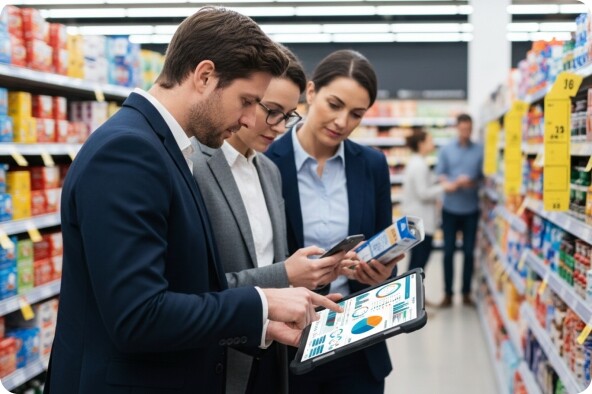
Field sales teams face more pressure than ever:
- Stores move fast…
- Shelves change constantly…
- Competition grows every week.
And with industry sales growth slowing in 2024-25 due to smaller price rises and limited volume gains, you can’t rely on instinct or outdated reports anymore. You need real visibility into what’s happening in every aisle.
That’s where the right CPG data analytics tools make all the difference.
With smarter, simpler insights, reps don’t waste time guessing. They know which stores to hit first, which products need attention, and where opportunities are hiding. The goal isn’t more data.
It’s better decisions.
With strong CPG retail data analytics, even small improvements add up quickly: fewer missed facings, faster fixes, and better conversations with retailers.
This guide breaks down the tools shaping retail analytics and execution, what features matter most, and how to choose the right platform for your team. You’ll get clear comparisons, practical recommendations, and a look at where the industry is headed.
Let’s get started.
Why Field Sales Teams Need CPG Data Analytics Tools in 2026
Field sales teams face a very different reality heading into 2026.
You’re no longer winning by relying on gut instinct or hoping a store visit pays off. The shift from instinct-driven visits to precise, data-backed actions is happening fast, and the teams that adapt will pull ahead.
That’s where CPG data analytics tools make a real impact.
Retailers expect more from brands and distributors than ever. They want cleaner execution, clearer communication, and proof of performance. If you can’t show what you did (and the results it drove), they’ll notice. And as category competition gets tighter, the “shelf wars” intensify.
Your products won’t fight for space on their own.
💡 Pro Tip
Share execution wins with retailers weekly to strengthen trust and collaboration.
This is why real-time visibility matters. You need to know what’s happening in every store before you walk in. That includes shelf conditions, out-of-stocks, inventory gaps, and whether promotions are actually live. With the right insights, you’re not just reacting. You’re planning your moves with confidence.
Here’s where the tools shine. Basically, they help you:
- Spot issues fast.
- Prioritize the stores that will make the biggest difference.
- Maximize every visit with clear, actionable next steps.
You move quicker. You make smarter decisions. And as a result. You walk into each store with a plan instead of a guess.
And the results? Stronger retail relationships, fewer missed opportunities, and a measurable lift in revenue. That’s the real value of CPG data analytics, giving distributors and brands the clarity and confidence to win in every aisle.
Key Features to Look for in a CPG Data Analytics Tool
When choosing CPG software for field sales, look beyond the dashboard. The platform should turn store-level data into clear actions reps can take during every visit.
The right CPG data analytics features make your team faster, sharper, and more confident.
Store-Level Data Granularity
Start with store-level data granularity.
You need item-level detail that shows distribution, shelf placement, pricing, and void detection. You also want visibility into regional and store-by-store variations, because execution rarely looks the same across every location.
This kind of clarity helps you walk in prepared and walk out knowing exactly what you fixed.
Real-Time Sales and Inventory Tracking
Additionally, real-time sales and inventory tracking is just as important.
Look for field sales tools that pull data automatically from retailer systems, so you aren’t chasing reports. You should also get low-inventory alerts, phantom inventory detection, and quick trend spotting.
To make this even easier, choose a tool that gives you simple, practical signals you can act on fast, such as:
- Low-stock items that need immediate attention
- Stores showing unusual sales dips
- Products flagged for phantom inventory
- Sudden spikes that may signal promo issues
These insights help you jump on problems before they hit your numbers.
Visual Dashboards for On-the-Go Teams
Next, pay attention to how information is displayed.
Visual dashboards built for on-the-go teams make everything easier. Mobile-first layouts, at-a-glance scorecards, and simple action lists help reps make fast, smart decisions during tight store visits.
Alerts for Out-of-Stock and Planogram Compliance
You’ll also want strong alerting features.
Smart notifications tied to thresholds keep reps focused on what matters. Add image recognition for display and shelf compliance, and you’ll cut time spent checking planograms.
Integration with Retailer Portals and CRM
Finally, make sure the tool integrates with retailer portals and your CRM. Think Walmart Luminate, Target Partners Online, Kroger 84.51°, and more.
With closed-loop visibility between HQ, field reps, brokers, and distributors, everyone stays aligned and moves faster.
💡 Pro Tip
Map which data source updates when to avoid mismatched insights.
Must-Have CPG Data Analytics Tools for Field Sales Teams
Choosing the right tool starts with understanding what your team truly needs in the field.
Here’s a quick breakdown to help you compare the strongest options.
SimplyDepo
G2 Rating: 4.8/5

If you’re looking for a tool that actually makes field sales easier (not harder), SimplyDepo is one you’ll want to seriously consider. It’s built for distributors, brands, merchandisers, and field teams that want to simplify execution, boost efficiency, and grow without adding more manual work.
Built for Real-World Field Sales Workflows
SimplyDepo brings everything into one place.
Your orders, routes, customer info, shelf photos, dashboards, and performance insights all live together. As a result, you don’t have to juggle multiple apps or guess what’s happening in the field. Your reps get a clean, mobile-first experience that helps them work faster and stay focused.
What makes it practical is how well it fits real-world workflows. You’ll see that in features like:
- Intuitive sales-rep app for quick order writing
- Easy photo capture for shelf checks and retail execution
- Smart routing to save time and mileage
- Simple visit scheduling and territory management
- Real-time dashboards for tracking what’s working
Smooth transitions across tasks mean your team doesn’t slow down. They open the app, get their route, complete visits, take photos, write orders, and move on.
No clutter. No confusion.
Integrations, Results, and Why Teams Choose It
SimplyDepo also stands out for its strong integrations. You can connect QuickBooks, Shopify, ShipStation, HubSpot, Salesforce, Stripe, Zapier, and more. That means fewer manual imports and cleaner data. And if you need something custom, there’s API access too.
The results speak for themselves:
24% boost in sales, 93% buyer retention, 14 hours saved weekly per rep, and over 90% satisfaction rates. That’s exactly what you want from a field sales platform – clear, measurable impact.
You’ll also appreciate the pricing flexibility: a 60-day free trial, add-ons you can turn on as you grow, and support that’s available 24/7. Finally, training is simple, onboarding is guided, and updates roll out weekly.
If you’re ready to streamline your sales process, remove manual headaches, and give your field team a tool they’ll actually use, SimplyDepo is absolutely worth a look. Book a demo and see how it fits your workflow.
Movista
G2 Rating: 4/5
Movista is a well-known retail execution platform focused on helping in-store teams stay coordinated and consistent. It brings tasking, execution tracking, and workforce visibility into one system so teams don’t have to rely on spreadsheets or disconnected tools.
What Movista does well is unifying field and store work. You can plan tasks, guide reps, and track completion in real time.
Also, the platform supports frontline teams with a simple mobile app that makes checking off work fast and clear. To make the workflow smoother, Movista automates routine tasks and integrates with other systems so teams don’t repeat work.
The impact is easy to see. The company reports improvements like reduced out-of-stocks, lower labor costs, and better promotional compliance. For large retail environments or organizations managing multiple in-store teams, Movista provides structure and visibility that help improve shelf conditions and overall execution.
Wiser (ex-Shelvspace)
G2 Rating: 4.3/5
Wiser, formerly Shelvspace, focuses on helping brands and retailers understand what’s happening at the shelf, both in-store and online. It gives teams real-time visibility into pricing, execution, availability, and compliance across thousands of locations.
What makes Wiser useful is its scale.
It tracks billions of products, monitors hundreds of thousands of stores, and helps brands react quickly when something goes off-track. To make execution easier, Wiser blends data and automation to spot issues early, like pricing gaps, out-of-stocks, or missed facings.
You’ll also see tailored solutions for different retail challenges. For example, FMCG brands can track shelf conditions and validate field activity, while retailers can optimize pricing based on competitors’ moves.
Teams use Wiser to:
- Catch execution issues early
- Respond faster to pricing and availability changes
- Track KPIs across online and in-store environments
It’s a solid option for large teams that need broad visibility and quick insights.
Alloy.ai
G2 Rating: 4.6/5

Alloy.ai is a retail analytics and intelligence system built specifically for consumer packaged goods (CPG) brands. It helps Sales, Supply Chain, and IT teams connect retail POS data, inventory, and supply chain information into a single view, making it easier to identify demand shifts, reduce stockouts, protect margins, and improve forecasting across retail and e-commerce partners.
What makes Alloy.ai stand out is its retail-specific data infrastructure.
The platform comes with hundreds of pre-built integrations for major retailers, distributors, and ERP systems, allowing brands to consolidate data without lengthy implementation projects. It also provides SKU-store level visibility, helping teams uncover issues like phantom inventory, monitor retail execution, automate replenishment opportunities, and react to changes before they impact sales.
To support faster decision-making, Alloy.ai combines advanced analytics with AI-powered forecasting and workflow automation. Teams can also model different inventory scenarios and improve collaboration between sales, supply chain, and demand planning.
Organizations use Alloy.ai to:
- Identify and act on replenishment opportunities
- Improve demand forecasting accuracy
- Gain real-time visibility into retail inventory and sales
- Reduce out-of-stocks and excess inventory
- Make faster, data-driven supply chain decisions
It’s a strong choice for CPG brands that need detailed retail visibility and more accurate demand planning across multiple retailers.
Tool Comparison Matrix: Which One’s Right for Your Field Sales Team?
Choosing the right platform gets a lot easier when you compare tools by what actually matters day-to-day. Not every solution fits every team, and that’s okay. The goal is to match your workflows, budget, and field model with the strengths of today’s top CPG data analytics tools.
Here’s a quick cheatsheet to help you see how each type of tool fits different needs:
| Category | Features to look for | Solutions | Advantages |
|---|---|---|---|
| SMB brands | Easy onboarding; mobile-first workflows; low total cost | SimplyDepo, Movista | Fast setup, simple training, budget-friendly operations |
| Enterprise CPGs | Custom reporting; deep integrations; complex account hierarchy support | SimplyDepo, Alloy, Wiser | Rich analytics, scalable structure, cross-team visibility |
| Natural/organic product lines | Flexible audits; mixed retailer coverage; distributor collaboration | SimplyDepo, Movista | Great for diverse channels, adaptable tasks, strong partner coordination |
| Mobile experience | Fast load times; offline mode; streamlined photo/QR workflows | SimplyDepo, Movista | Faster store visits, fewer delays, better field productivity |
| Real-time inventory visibility | Retailer portal connections; predictive low-stock alerts; real-time dashboards | Wised, Alloy, SimplyDepo | Immediate issue detection, tighter replenishment, stronger execution control |
Every tool has strengths, but the best choice is the one that fits your retail coverage model and helps your reps act faster in every store.
Consequently, use this as a starting point, match it to your workflow, and pick the platform that removes friction instead of adding more.
Your field team will feel the difference instantly.
How to Choose the Right Tool for Sales Reps
Choosing the right tool for your sales reps team doesn’t have to feel overwhelming.
When you break it down, you’re simply matching your day-to-day needs with the features that actually support your team.
That’s the heart of smart data analytics in CPG industry decision-making.
Match Your Tool to Your Retail Coverage Model
Start by matching the tool to your retail coverage model. Every setup needs something a little different.
Direct store delivery teams need tighter control over inventory and execution. Even more, broker-led teams need easy communication and visibility across partners. Distributor-heavy models need clarity on what’s happening in stores they don’t directly visit.
And if you’re operating nationally versus regionally, your volume and complexity may change what “must-have” really means for you.
Align Features with Field Rep Workflows
Next, make sure the features align with your field reps’ real workflows.
Tools should make their jobs easier, not add extra steps. Think about what they do every day: audit tasks, photo capture, order writing, note taking, and replenishment actions.
If the tool doesn’t support those tasks smoothly, it’s not the right fit.
Don’t Pay for Enterprise Features You’ll Never Use
Also, it’s easy to get impressed by fancy analytics modules, but if they don’t help reps in the field, skip them. Look for scalability without locking yourself into unnecessary complexity or cost.
Then consider the other decision factors that make or break your long-term success. A good tool should offer:
- Easy integrations
- Simple training and strong adoption
- Clear data-ownership policies
- Reliable support and upgrade cycles
When everything aligns, you get a tool that actually helps your team win, without the headache.
💡 Pro Tip
Audit your current workflows to cut unused features and lower costs.
Future Trends: Where CPG Data Analytics Tools Are Headed
As the space evolves, you’ll see retail CPG data analytics move from reactive reporting to smarter, predictive guidance. Tools won’t just tell you what happened.
But they’ll help you see what’s coming.
Expect predictive store-level insights powered by AI. In particular, the technology expected to drive an additional $160–$270 billion in annual CPG profit as gen AI expands traditional AI’s impact by 15–40%.
These tools can flag lost sales before they happen and pre-empt out-of-stocks so reps can fix issues earlier.
Another big shift is deeper integration with retail media networks. You’ll finally get closed-loop measurement between in-store execution and digital activations. That means you’ll understand how shelf conditions influence online performance, and vice versa.
You’ll also see a rise in hyperlocal personalization. With real-time foot-traffic data, tools will recommend store-by-store execution tactics. To make this even more useful, many platforms will add dynamic routing so reps always know which stores need attention first.
All of these CPG data analytics trends point to the same goal: faster decisions, sharper execution, and more wins in every market.
Final Thoughts: Don’t Just Collect Data. Arm Your Reps With It
Data alone doesn’t change outcomes.
Execution does.
Even the best CPG data analytics tools won’t help if reps can’t turn insights into action. Your team doesn’t need complicated reports or dashboards packed with noise. They need simple, clear signals they can use the moment they step into a store.
In the long run, the goal is straightforward: turn every store visit into a high-impact opportunity. Basically, when reps know which items are at risk, which shelves need attention, and which promotions aren’t hitting, they move with confidence.
And when brands empower reps with actionable insights, retail performance compounds over time.
Strong CPG retail data analytics should make your team faster, smarter, and more effective, not busier.
If you’re exploring tools and want to see how a streamlined, field-friendly platform feels in action, you can always book a quick demo with SimplyDepo to get a sense of what the right setup could look like for your team.
FAQ
To help reps know exactly which stores, products, and issues to tackle first, so every visit drives real results, not guesswork.
If reps rely on spreadsheets, texting photos, or manual notes, it’s time. CPG retail data analytics removes chaos and gives everyone one source of truth.
Yes, even small teams benefit from clear store priorities, fewer mistakes, and faster execution. You don’t need enterprise complexity to see value.
Actionable insights. No more reports. Just clear guidance on what’s wrong, where to go, and what to fix right now.
Not always. Many CPG data analytics tools integrate with your CRM so reps can work faster without switching platforms or adding duplicate data.
Match the tool to your workflow, not the other way around. Focus on usability, integrations, mobile speed, and whether insights are actionable.

-
 October 20, 2026
 -
October 20, 2026
-
October 20, 2026
