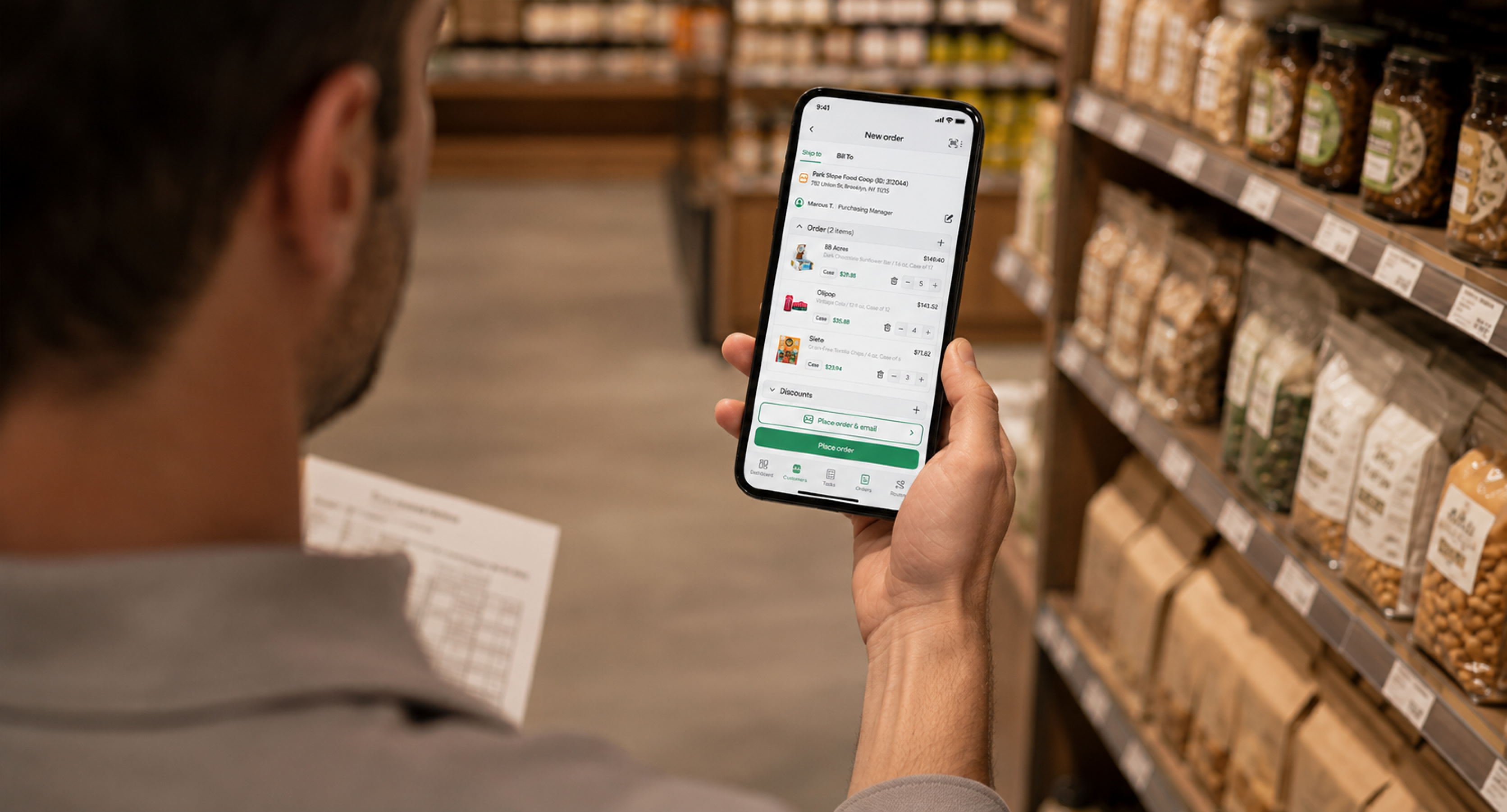
How to Pitch Your Product to a Retail Buyer or Distributor


Retail buyers see hundreds of pitches every week. Most go straight to the trash. If you want to know how to get your product into stores, a great product is not enough. You need a pitch that shows a buyer your product will sell from day one.
According to the Grocery Manufacturers Association, about 80% of CPG sales in the US still move through traditional retail channels. That is where your growth lives. But shelf space is limited, and buyers are picky. This guide walks you through how to pitch a retail buyer or distributor, what to bring, and how to follow up so you land the order.
Key Takeaways
- Personalize every pitch to the buyer’s store, shopper, and category
- Bring proof of demand, not promises
- A clean, data-backed deck beats a flashy one every time
- Big box takes patience, portals, and operational readiness
- Follow up until you get a clear yes or no
Know Who You Are Pitching
Before you send a single email, get clear on who your target actually is. A retail buyer works inside a store or chain and picks products for shelves. A distributor buys in bulk from you and sells to many retailers.
Your pitch changes based on who is on the other end. A buyer cares about how fast your product will move off their shelves. A distributor cares about margins, order volume, and how easy you are to work with over time. Learn the basics of wholesale distribution so you can speak their language in the first meeting.
Ask yourself these questions before you pick a lane:
- Do you need one distributor to reach 500 stores, or do you want direct buyer relationships?
- Can you fulfill a large order without dropping quality?
- Do you have the margin to handle wholesale pricing plus retailer markup?
Do Your Homework Before You Pitch
Buyers can spot a generic pitch from the subject line. Personalization wins. RangeMe’s 2025 Buyer Behavior Study found that personalized pitches convert 60% faster than generic submissions.
Before you reach out, dig into:
- The retailer’s current product mix and where the gap is
- Their target shopper and average price point
- Recent news, expansions, or category resets
- The exact buyer name for your category
You can find most of this on their website, LinkedIn, and trade publications. If you also want a quick view of the market, this guide to wholesale suppliers in the US is a solid starting point.
Then answer one question in your head before you hit send: why should this specific buyer say yes?
Build a Pitch Deck That Sells
Your pitch deck is the star of the meeting. Buyers scan it in under three minutes, so every slide must earn its spot.
Keep it to 8 to 10 slides and cover
- Brand story and mission in one line
- Product overview with photos and pricing
- Target shopper and category fit
- Proof of demand, like sales numbers, retention, waitlist, or press
- Margins, MOQ, lead times, and payment terms
- Marketing support you bring to the launch
- The ask (SKUs, doors, timing)
Use AI presentation maker for pitches
An AI Presentation Maker becomes the cherry on top of your pitch. You feed it your notes, product info, and key numbers, and it turns them into a clean, buyer-ready deck in minutes. No more wrestling with slide templates at 1 a.m. before a big meeting.
- It gives every slide a consistent look, so your deck feels like a brand, not a school project.
- It suggests layouts based on your content, which means your sales numbers and product shots actually get the space they deserve.
- You can spin up different versions fast. One for a boutique buyer, one for a big box category manager, one for a distributor. Each was tailored; none were rebuilt from scratch.
- You spend your time sharpening the story and the ask, not moving text boxes around.
Buyers judge your professionalism before you say a word. A polished deck signals you take their time seriously, and it puts your product in the best light without pulling attention from the pitch itself.
Pro tip: Bring hard numbers to every slide. “Grew 40% quarter over quarter” beats “we are growing fast” every time.
Nail the Pitch Meeting
Whether the meeting is on Zoom, at a trade show, or in the buyer’s office, treat it like a sales call, not a show and tell.
Open with a hook that ties your product to their shopper. Skip the founder monologue. Then walk through the deck, but stop often to ask questions. What is missing from their current mix? What price point moves best? What launched last year that failed and why?
Have samples ready. If your product tastes, smells, or feels like something, put it in the buyer’s hands. Buyers remember what they touch.
Close with a clear ask, not a soft one. Try, “Can we run a test in 25 stores in the Northeast this spring?” A specific ask beats “let me know what you think.”
How to Get Your Product Into Big Box Stores
Big box retailers like Target, Walmart, and Costco run a tighter process. If you want to know how to get your product into big box stores, you need to meet their bar on volume, packaging, insurance, and reporting before the first meeting.
Here is the play:
- Prove yourself first in regional chains or independent stores. Big box buyers look for a track record.
- Apply through their supplier portals. Most big box retailers have one, and it is the front door.
- Attend category events like ECRM meetings, where you get one-on-one time with buyers.
- Partner with an approved distributor who already sells into that retailer. It shortens the path.
- Get your ops ready for EDI, on-time delivery penalties, and chargebacks. Many brands land the order and lose money because they were not ready.
If you are not sure what a distributor actually does inside these deals, this breakdown of wholesale distribution explains the roles in plain terms.
Follow Up Without Being Annoying
Most deals die in silence, not rejection. Buyers are busy, so follow-ups are your job.
A simple cadence works:
- Day 1: Thank you email with the deck attached and next steps
- Day 7: Short check-in with one new proof point (a new retailer, a press hit, a sales number)
- Day 21: Final nudge with a clear question
Keep every message under 150 words. If a buyer passes, ask what would have made it a yes. That feedback is gold for your next pitch.
Wrapping Up
Learning how to get your product into stores comes down to three things: knowing your buyer, backing up your pitch with real numbers, and following up until you get a clear answer. Do that on repeat, and shelf space stops being a dream and starts being a pipeline.
FAQs
Anywhere from three months to over a year. Independent boutiques can decide in a week. Regional chains usually take one to three months. Big box retailers often run on annual category resets, so you may wait 9 to 12 months from the first pitch to the shelf.
Not always. Many small retailers buy direct. But if you want to scale across regions or land big box accounts, a distributor makes life easier. They handle logistics, invoicing, and relationships you would otherwise build one store at a time.
Most retailers want a 40 to 50% margin, and distributors add another 15 to 30% on top. Price your product so it works at every step of the chain and still leaves room for promotions.
 Rated 4.7 on G2
You shouldn't need 5 tools to run distribution.
-
 September 16, 2026
 -
 September 15, 2026
 -
 September 15, 2026