
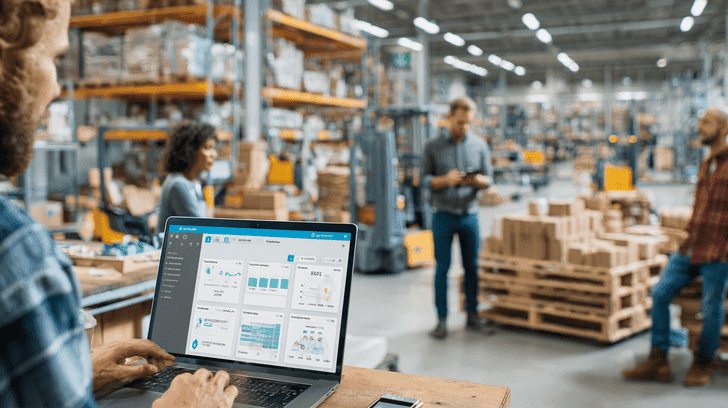
Food distribution in 2026 moves fast. Margins are thin. Customers expect accuracy, speed, and flexibility. Spreadsheets and generic tools can’t keep up anymore.
The pressure is only growing. 72% of U.S. retailers say omnichannel experiences will drive the biggest results. That means tighter coordination, real-time visibility, and systems that actually talk to each other.
Yet, the right software helps you stay in control. You’ll manage inventory better. You’ll process orders faster. And you’ll reduce errors before they cost you money.
Most importantly, you’ll scale without chaos.
This guide breaks down 10 of the best food distribution software platforms to consider in 2026. Each one solves different problems, from inventory and ERP to e-commerce and field sales. You’ll learn what each tool does best, who it’s for, and when it makes sense to use it.
If you’re planning to grow, modernize, or simplify your operation, this list will help you choose with confidence.
Why Food Distribution Software Is Non-Negotiable in 2026
In 2026, food distribution feels like a race against the clock. Shelf life keeps shrinking. Costs keep climbing. Rules keep tightening. If you’re still managing operations with spreadsheets and disconnected tools, you’re leaving money and trust on the table.
2026 Pressures for Food Distribution: Shorter Shelf Life, Tighter Margins, and Stricter Compliance
Fresh products move fast, or they expire. One delay can mean waste. One mistake can erase your margin.
At the same time, regulators expect instant proof of safety, sourcing, and handling. Manual tracking can’t keep up. You need systems that work at the speed of your inventory.
That’s where food distribution software becomes essential. It replaces guesswork with clarity.
How Food Distribution adds Speed, Traceability, and Real-Time Control
With the right tools, daily work gets simpler and faster. You’ll see:
- Faster order processing, from intake to delivery
- Real-time inventory updates that prevent overstock and spoilage
- Batch and lot tracking that makes recalls manageable, not scary
- Clear reporting that supports audits without stress
Together, these features turn complexity into control. Modern food and beverage distribution software helps you react quickly, plan smarter, and protect margins. You’re not just keeping up. You’re running a tighter, safer, more confident operation.
💡 Pro Tip
Track where product expires today. If you can’t answer that in seconds, software ROI will show up fast.
What Food Distribution Software Has to Handle in 2026
In 2026, food distribution is all about managing complexity without slowing down. The right systems must support every part of your operation, all at once, without friction.
Let’s break down what that really means.
Food Distributor Inventory Management
Inventory is the heartbeat of your business.
You’re juggling fresh, frozen, and shelf-stable items at the same time. Dates matter. Quantities matter. Accuracy matters even more.
You need visibility across locations, real-time stock updates, and alerts before products expire or run short. Beverage distributor software helps track kegs, cases, and expiry dates accurately, especially when managing high-turnover inventory across multiple locations. That’s the baseline for wholesale food distribution software today.
ERP Toolset: Orders, Pricing, Lots, Expiry Dates & Routes in One System
Next comes coordination. Orders flow in fast. Prices change by customer and volume.
Lots and expiry dates must stay traceable. Routes must stay efficient. When these live in separate tools, mistakes happen.
A unified food ERP distribution software platform keeps everything connected, so your team works from one source of truth.
E-Commerce Solutions for Food Distribution: B2B Portals and Self-Service Ordering
Buyers now expect self-service. In practice, that means:
- Ordering anytime without calling or emailing
- Seeing live pricing by account
- Checking real-time product availability
- Reordering from past purchases in seconds
- Fewer back-and-forth questions
B2B portals make this possible. Phone calls drop. Orders come in cleaner. Your team spends less time entering data and more time supporting customers.
Integrations to Connect Warehouse, Field Sales, and Finance
Finally, nothing should operate in isolation.
Your warehouse needs to sync with sales. Sales needs pricing from finance. Finance needs clean data from everyone. Strong integrations keep data flowing smoothly, so decisions are faster and smarter.
10 Best Food Distribution Software Platforms
Not all platforms solve the same problems. Some focus on inventory and ERP. Others specialize in sales, e-commerce, or field execution.
This list highlights tools that stand out in 2026 for real-world distribution needs. You’ll see what each platform does best, who it’s built for, and when it makes sense to use it.
If you’re evaluating the best food service distribution software, this breakdown helps you compare options without guesswork.
SimplyDepo

SimplyDepo is built for modern distributors that rely on field teams, fast ordering, and strong customer relationships. It’s not just about back-office control. It’s about execution in the real world.
What SimplyDepo Is Best At
SimplyDepo combines distribution management, field sales, routing, and retail execution in one platform. That means fewer tools and less manual work.
You’ll manage orders, visits, routes, and payments from a single system. Both mobile and desktop teams stay in sync.
How It Helps You Sell More
Growth starts with visibility. SimplyDepo gives your team clear priorities and clean workflows.
Here’s how that shows up day to day:
- Prospecting tools to identify high-potential customers
- Mobile apps for field reps on iOS and Android
- Faster order creation with fewer errors
- Optimized delivery and visit routes
- Easier payment tracking and collections
Sales reps spend more time selling and less time typing.
Built for Field Teams and Retail Execution
If your business depends on in-person visits, SimplyDepo shines. Reps see customer history, tasks, and routes in one place. Managers track activity, coverage, and performance without chasing updates.
Retail execution features help ensure shelves, displays, and promotions stay compliant. You don’t guess what’s happening in the field. You see it.
Setup, Support, and Flexibility
Onboarding is simple. The platform is no-code, so you don’t need developers. Pricing is flexible, which helps as you grow.
You also get:
- Personalized customer support
- Weekly product updates
- Secure, compliant infrastructure
- 99.9% uptime
If you want a practical, sales-driven platform that connects field execution with distribution operations, SimplyDepo is one of the strongest & simplest options to consider for 2026.
💡 Pro Tip
If field reps avoid logging activity, the tool is too complex. Adoption beats sophistication every time.
NetSuite ERP Distribution Module

The NetSuite ERP Distribution Module, from Oracle, is built for distributors that run at scale. If you manage high order volume, complex pricing, and multiple warehouses, this food distribution software covers a lot of ground.
NetSuite brings finance, inventory, orders, warehouses, and suppliers into one system. Everything updates in real time. That means fewer handoffs and fewer surprises.
Here’s what you’ll notice day to day:
- Inventory, orders, and financials stay in sync
- Complex pricing rules apply automatically
- Multi-warehouse operations stay visible and controlled
- Picking, shipping, and billing move faster
You’ll also get strong reporting. True costs like freight and rebates roll up clearly, so margins are easier to track.
Zoho Inventory

Zoho Inventory is a strong option if you want simplicity without giving up control. Built by Zoho, it works well for small to mid-sized distributors that need clean inventory and order management.
Zoho Inventory focuses on day-to-day execution. You’ll track stock accurately, fulfill orders faster, and avoid common mistakes as volume grows.
Here’s where it shines:
- Real-time inventory with batch and serial tracking
- Multi-warehouse support with easy transfers
- Barcode and RFID-based stock updates
- Built-in shipping with major carrier integrations
- Multichannel selling across e-commerce platforms
It also connects smoothly with Zoho’s finance, CRM for a distribution company, and analytics tools. That makes it easy to build a wider system without heavy setup.
SAP Business One

SAP Business One is a solid choice for growing distributors that want structure without enterprise-level complexity. Built by SAP, it brings core operations into one reliable system.
SAP Business One covers the essentials. You manage accounting, purchasing, inventory, sales, and reporting from a single platform. Data updates in real time, so decisions are based on facts, not guesswork.
It works best when you want stability, clean processes, and long-term scalability. Many distributors use it as food distributor inventory software while connecting industry-specific add-ons as they grow.
Acumatica Distribution Edition

Acumatica Distribution Edition is built for distributors that want flexibility without limits. It’s cloud-based, modular, and designed to grow as your business grows.
Here’s what stands out in daily use:
- Real-time inventory across warehouses and locations
- Built-in WMS to speed up picking and fulfillment
- Demand planning and replenishment tools to balance stock
- Strong financial reporting by product, warehouse, or channel
- Embedded CRM to keep sales and operations aligned
Acumatica focuses on visibility and control. You see inventory levels, costs, and orders in real time. That makes planning easier and mistakes less likely.
Fishbowl

Fishbowl is a strong pick if you want powerful inventory control without full ERP complexity. It’s especially popular with small to midsize distributors that rely on QuickBooks or Xero.
Fishbowl, as a food distribution software, focuses on execution. You’ll see what’s in stock, what’s at risk, and what needs action right now. Built-in AI helps you stay ahead instead of reacting late.
Here’s where Fishbowl stands out:
- Real-time inventory across multiple locations
- Lot, serial, and expiry tracking for traceability
- AI-driven replenishment to reduce stockouts and overstock
- Faster picking, packing, and scheduling
- Tight sync with QuickBooks and Xero for clean financials
It also plays well with e-commerce, shipping, and 3PL tools. That keeps data flowing without double entry.
Pepperi

Pepperi is built for distributors that win through sales execution. It focuses on how orders are taken, not just how they’re processed. That makes Pepperi especially strong for teams, comparing the alternatives, and with field reps, inside sales, and B2B buyers.
Pepperi puts all sales channels into one flow. Mobile reps, e-commerce buyers, and inside sales teams all work from the same rules, pricing, and product data.
Here’s what you’ll use most:
- Mobile order taking that works online and offline
- B2B e-commerce portals for self-service ordering
- Direct Store Delivery and route sales support
- Trade promotions and pricing logic built in
- Fast integrations with ERP and back-office systems
Sales reps move faster. Orders are cleaner. Customers get a consistent experience across every channel.
Zoey B2B

Zoey B2B is designed for distributors that want to move ordering online without losing control. It’s built specifically for wholesalers, including food and beverage brands, that rely on repeat buyers and complex pricing.
Zoey, compared to its alternatives, focuses on self-service and sales efficiency. Buyers order when it suits them. Sales teams spend less time taking calls and more time closing deals.
Here’s what you’ll notice quickly:
- B2B customer portals with gated catalogs and pricing
- Fast order creation, quotes, and reorders
- Built-in CRM for inside and field sales
- Flexible pricing, discounts, and account rules
- Clean integrations with NetSuite, QuickBooks, and shipping tools
Setup is guided, not DIY chaos. Support is responsive. That matters when orders are flowing daily.
Aptean Food & Beverage ERP

Aptean Food & Beverage ERP is built for large, complex food and beverage operations. If you manage high volumes, strict compliance, and detailed product attributes, this platform is designed for that reality.
Aptean goes deep into food-specific needs. You’ll handle product variations, allergens, traceability, and specifications without workarounds. Costs are also clearer, from raw materials to landed and labor costs.
Here’s where it delivers real value:
- End-to-end inventory, production, and distribution control
- Strong lot, batch, and product traceability
- Advanced costing and margin visibility
- Sales order tools that reduce missed or late deliveries
- Multi-currency and multi-language support for global ops
Updates roll out regularly, so you don’t face painful upgrade cycles.
BlueCart

BlueCart is built for food distributors that want to sell online, fast. It focuses on modern B2B ordering and works especially well for restaurant-focused and wholesale food businesses.
BlueCart replaces phone calls, emails, and texts with one clean ordering experience. Customers order anytime. Sales reps stop acting like order takers.
Here’s where this food distribution software shines in daily use:
- Web and mobile self-service ordering for buyers
- Personalized digital catalogs with live pricing
- Mobile app for field sales reps, even offline
- Built-in CRM and customer messaging
- Fast setup with hands-on onboarding support
Everything lives in one place. Products, pricing, customers, and orders stay aligned.
How to Choose the Right Food Distribution Software for Your Business in 2026
Choosing the right system in 2026 isn’t about features alone. It’s about fit. Your business model, your customers, and your growth plans should guide every decision.
Start with structure.
Map Your Model: Retail vs Foodservice vs Hybrid Distribution
Start by mapping how you actually operate:
- Retail → high order volume and fast, accurate picking
- Foodservice → strict delivery windows and route precision
- Hybrid → a mix of both, without compromises
Once this is clear, choosing food distribution software gets easier. You’re no longer comparing features at random. You’re matching tools to real operational needs.
💡 Pro Tip
Hybrid distributors should optimize for exceptions, not averages. Software must handle edge cases cleanly.
Next, set priorities.
Must-Have vs Nice-to-Have: Inventory, Routing, E-Commerce, or Field Sales?
You can’t implement everything at once.
Start with what’s critical now. Many teams focus on inventory first. Others need sales or delivery tools right away.
Nice-to-haves can wait. Stability can’t. Here’s how you can define the root cause for your business:
| Business need right now | Start with |
| Stock control and expiry dates | Inventory management |
| Frequent delivery issues | Routing and delivery tools |
| Heavy field sales activity | Mobile sales apps |
| High order errors | Order management |
| Growing online buyers | B2B e-commerce |
This approach keeps implementation realistic. You solve today’s biggest problem first, then add features as your operation stabilizes and grows.
Then, think about deployment.
Cloud, On-Prem, or Hybrid? Deployment Choices for Food Distribution ERP Software
Cloud systems update faster and scale easily. On-prem offers control but needs IT support. Hybrid works when compliance or connectivity demands it.
Choose what matches your resources, not what sounds trendy.
Finally, check connectivity.
Integration Checklist: WMS, TMS, CRM, and Field Sales Apps
Your system shouldn’t live alone. It must connect cleanly to warehouse, transport, sales, and finance tools.
If you’re adding a food distribution e-commerce solution, integrations matter even more. Smooth data flow saves time, prevents errors, and keeps everyone aligned.
Choose carefully now, and you’ll move faster later.
2026 Trends in Food Distribution Software You Can’t Ignore
Food distribution in 2026 moves faster, smarter, and with less margin for error. Software is no longer just a back-office tool. It’s driving daily decisions.
Here are the trends you can’t afford to overlook.
Automation & AI: Demand Forecasting, Dynamic Pricing, and Smart Reordering
Automation removes daily guesswork.And the impact is measurable. 72% of retailers using AI report lower operating costs. Another 69% see an increase in annual revenue.
In real terms, it means:
- Demand forecasts based on actual sales
- Pricing that adjusts by volume and season
- Automatic reordering before stock runs low
- Fewer emergency purchases and rush orders
- Less waste and fewer manual checks
Your team spends less time reacting and more time staying ahead.
E-Commerce-First Food Distributor Software
Buyers want fast, self-service ordering. That looks like:
- Live inventory visibility
- Account-specific pricing
- Access to past orders and quick reorders
- Ordering anytime, not just business hours
When this runs through a B2B portal, phone orders drop. Errors drop too. Your team gets time back to focus on account growth instead of order entry.
End-to-End Traceability and Compliance Built into Food ERP Distribution Software
Traceability isn’t optional anymore.
You need lot tracking, expiry dates, and recall readiness in one flow. Compliance reporting must be instant, not stressful. Strong food distribution ERP software makes audits routine instead of disruptive.
Field Sales + Distribution in One Stack: Why Food Distributors Are Retiring Point Solutions
Disconnected tools slow everything down. If you want to become one of the leading distributors, you need to run sales, pricing, orders, and delivery in one system. Field reps see real-time data.
Operations stay aligned. Decisions happen faster because everyone works from the same source of truth.
How Food Distribution Software Improves Margin, Service, and Growth
Margins are thin. Customers expect speed. Mistakes cost real money.
In 2026, growth doesn’t come from working harder. It comes from working smarter. That’s exactly where software for food distribution makes a measurable difference.
Let’s start with the biggest leak in profitability.
Reducing Write-Offs and Spoilage with Better Inventory and Expiry Management
Expired product kills margins quietly.
You buy it. You store it. You throw it away. Modern systems track lot numbers, expiry dates, and real-time stock across locations. You’ll sell older inventory first. You’ll reorder with confidence. You’ll stop guessing and start preventing waste before it happens.
Next comes speed.
Faster, Cleaner Ordering: Less Phone and Email, More Digital and Self-Service
Manual orders slow everything down.
Calls get missed. Emails get misread. Digital ordering changes the flow. Customers place orders themselves. They see what’s available. They confirm pricing upfront.
Your team spends less time entering data and more time supporting accounts that matter.
That leads directly to accuracy.
Fewer Errors, Fewer Credits: Cleaner Data from Order to Invoice
Most errors come from messy data. In practice, that means:
- Incorrect quantities
- Pricing mismatches
- Wrong delivery dates
When orders, inventory, and invoicing run in one system, data stays consistent. Errors drop. Credits and disputes drop with them. Payments come in faster.
Now let’s talk about service.
Better Customer Experience
Customers notice reliability.
Orders arrive complete. Invoices match deliveries. Questions get answered fast. With better visibility, your team can respond confidently instead of scrambling for information. That builds trust, and trust builds loyalty.
Put it all together and the impact compounds. Less waste protects margin. Faster ordering improves efficiency. Cleaner data reduces friction. Better service drives repeat business.
That’s how the right software turns daily operations into a growth engine, not a constant fire drill.
Conclusion: When to Outgrow “Generic ERP + Spreadsheets” and Move to Distribution Software
Generic ERPs and spreadsheets work.
Until they don’t.
If you’re fixing errors daily, chasing inventory, or reacting instead of planning, you’ve outgrown them. In 2026, speed, accuracy, and visibility matter too much to rely on patchwork tools.
Purpose-built food distribution software programs are designed for how distributors actually work. They reduce waste. They simplify ordering. They keep data clean from warehouse to invoice.</span>
If you’re ready to operate with less friction and more control, it’s time to move on.
<p>demo with SimplyDepo to see how it works and decide if it’s the right next step for your business.
FAQs
What Is Food Distribution Software and How Is It Different From Generic ERP or Inventory Tools?
Food distribution tools are built for real-world product flow, not generic accounting. They handle perishables, lot tracking, expiry dates, pricing rules, and delivery routes in one place. Generic ERPs don’t go deep enough. Food distributor software focuses on speed, accuracy, and traceability across daily operations.
How Do I Choose the Best Food Distribution Software for My Type of Business (Wholesale, Foodservice, Retail)?
Start with how you sell. Wholesale needs pricing flexibility. Foodservice needs routing and delivery timing. Retail needs fast picking and stock accuracy. Choose software that matches your model first, then scales as you grow.
What Features Should I Look for in Food Distribution ERP Software to Manage Inventory, Lots, and Expiry Dates?
Look for real-time inventory, FIFO or FEFO logic, lot and batch tracking, and expiry alerts. These features help you sell the right product at the right time and avoid costly surprises.
How Can Food Distribution E-Commerce Solutions Help My Customers Order Faster and With Fewer Errors?
B2B portals let customers place orders anytime. They see live inventory, pricing, and past orders. That removes phone calls, cuts mistakes, and speeds up order processing.
What Are the Benefits of Dedicated Food and Beverage Distribution Software vs Generic Distribution Systems?
Dedicated food distribution software solutions understand perishability, compliance, and complexity. They reduce manual work, improve accuracy, and support growth without constant workarounds.
How Do Food Distributor Inventory Management Software Tools Help Reduce Waste, Write-Offs, and Stockouts?
They give you visibility. You track what’s selling, what’s expiring, and what needs reordering. Better data leads to smarter decisions, less waste, and more consistent service.


You shouldn't need 5 tools to run distribution.


You shouldn't need 5 tools to run distribution.


Boost Sales.
Cut Manual Work.
Streamline ordering, routing, and retail execution — while giving every rep the tools to grow accounts faster.
-
+15h
Save weekly
per rep -
93%
Increase
buyer retention -
24%
Increase
in retail sales
