6 Retail Merchandising Rules Every Brand Should Follow in 2026

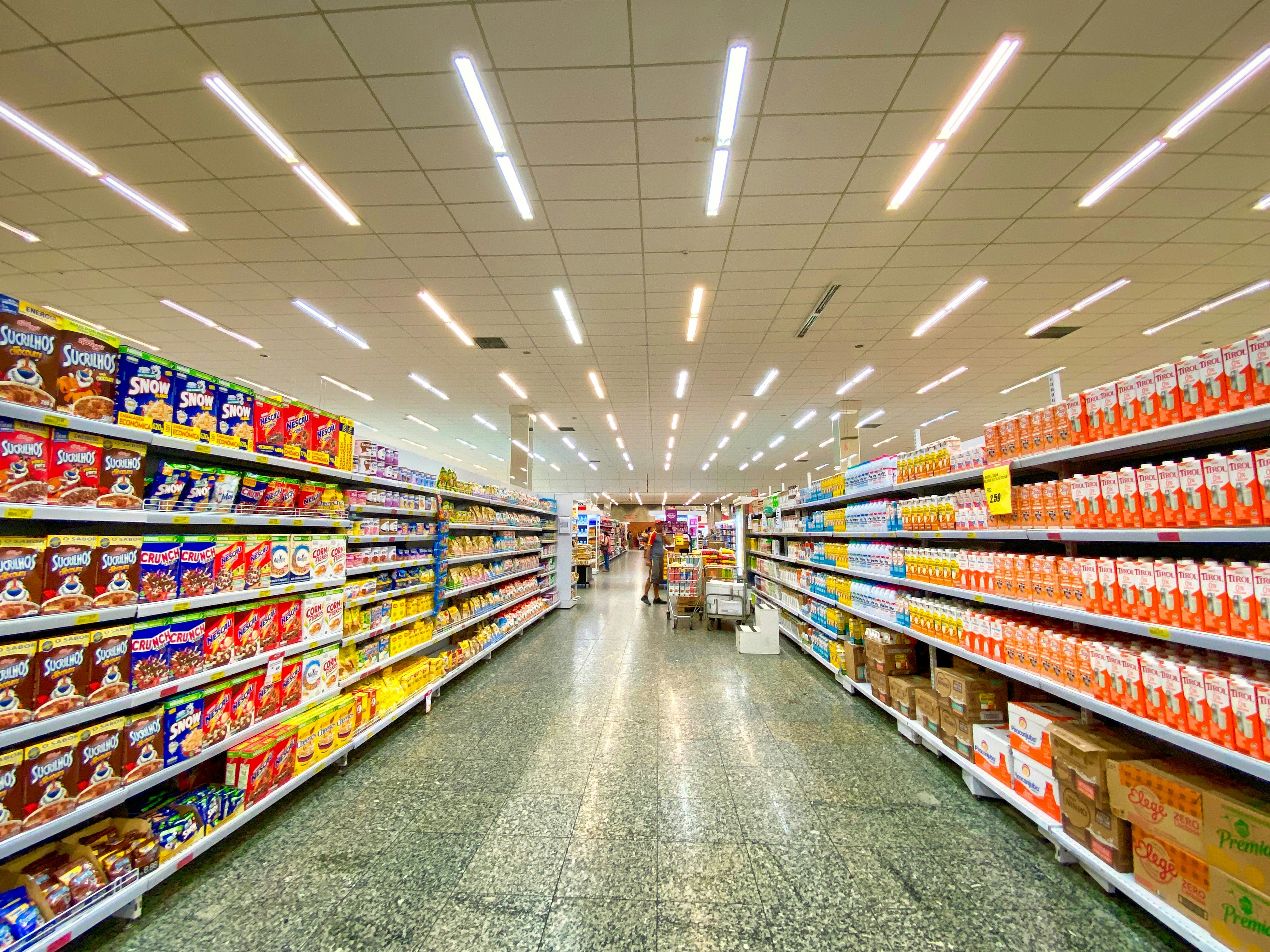
The average shopper spends less than 20 seconds deciding what to buy at the shelf. They’re not reading every label or comparing every option. Instead, they’re reacting to what they see at eye level and what the display tells them.
That split-second moment is what retail merchandising is really about. Not the strategy deck or the planogram PDF. What actually matters is what’s on the shelf when a shopper is standing in front of it.
When you’re managing field teams across multiple accounts, getting that right consistently is harder than it sounds. In this guide, we’ll cover 6 retail merchandising rules that separate brands that win at the shelf from brands that leave that decision to chance.
📌 Key Takeaways
Here are the 6 retail merchandising rules for brand managers, field teams, and retail professionals:
- Where your product sits directly affects how much it sells. Use data to negotiate better positioning continuously, not just at ranging.
- Shoppers respond to context. A display that shows them why they need your product will always convert better than one that simply shows it exists.
- Every empty shelf is a cost your brand absorbs. Track recurring gaps to identify and fix the right variable first.
- A planogram on paper means nothing without verification. Photo documentation on every visit keeps execution honest.
- What worked in January may be dead weight in October. Build a refresh cycle driven by field data and competitor observations.
- The highest-value positions in any store are at the moments when shopper attention breaks. Secure secondary placements and make sure execution matches the position.
A retail execution platform like SimplyDepo gives brands and field teams the visibility to close the gap between what gets planned and what actually happens in the store.
What is Retail Merchandising?
Retail merchandising is the practice of presenting products in a certain way to maximize sales and improve the shopping experience.
It covers product placement, shelf management, display standards, pricing strategy, and inventory availability. Done well, it influences how shoppers move through a store, what they notice, and what they buy.
On that note, it’s important to understand the difference between retail merchandising and visual merchandising. The terms are often used interchangeably, but visual merchandising refers specifically to the aesthetics and display side of the practice. It’s one component of a broader retail merchandising strategy that also includes assortment strategy planning, pricing, stock management, and promotional execution.
For brands and distributors, retail merchandising extends beyond the store itself. It includes the processes, tools, and field workflows that determine whether your strategy is being executed correctly at every account and every visit.
💡 Also Read:
The Core Rules of Retail Merchandising
Rule 1. Your shelf position is a commercial asset. Treat it like one.
Getting listed is not the same as being visible. Where your product sits on the shelf has a direct and measurable effect on how much it sells.
Most brands accept whatever space they are given at the point of ranging and rarely revisit the conversation. The brands that grow treat shelf positioning as an ongoing negotiation backed by data.
For instance, Coca-Cola does not leave placement to chance. Their field teams actively monitor facings, check for competitor encroachment, and use sales data to make the case for better positioning in every key account. Eye-level placement and primary facings are treated as commercial assets worth defending on every visit, not just at the point of the original ranging agreement.
Compare your market share to your share of shelf space in your key accounts. If your product holds a larger share of the market than it does of the shelf, you’re underrepresented. It’s your signal to negotiate for more space.
Rule 2. Make your display tell a story.
A branded endcap or secondary display is a chance to show shoppers how your product fits into their lives. Brands that use displays to communicate a clear use case consistently outperform brands that use them simply to stack more product.
IKEA has built an entire retail model around this idea. Nothing in an IKEA store exists in isolation. Candles sit on a dinner table. Throws are draped over a sofa. Storage boxes are shown inside a wardrobe. Shoppers do not just see products; they see themselves using them.
The same logic applies at any scale. A well-set endcap that answers the question “what is this for and why do I need it today” will always convert better than one that just shows the product exists.
💡 Pro Tip:
Before every display reset, ask this question: does this display show the shopper why they need this product, or does it only show them that it is available?
Rule 3. Empty shelves are a field execution problem.
An empty shelf is not a neutral outcome. When a shopper can’t find your product, they don’t wait. Either they buy a competitor’s product, or leave without buying anything.
Either way, your brand absorbs the cost. And chances are, nobody on your team knows it happened until the sales data tells them weeks later.
Out-of-stocks are signs of execution failure: a SKU sitting in the back room while the shelf runs empty, a facing never restored after a shop visit, a gap that went unnoticed because the last store visit was two weeks ago. According to IHL Group’s research, out-of-stocks cost global retail $1.2 trillion annually, driven as much by poor field execution as by logistics.
Red Bull and Monster are useful benchmarks. Both brands invest heavily in field teams whose job is not just to sell, but to maintain shelf presence. On every visit, teams check stock levels, rotate product, restore facings, and flag issues in real time. Their shelves rarely run empty because the execution standard treats stocking as non-negotiable.
If you have accounts with recurring out-of-stocks, track the pattern. It will tell you quickly whether the problem is supply, ordering cadence, or visit frequency, and which one to fix first.
💡 Pro Tip:
Map your out-of-stock incidents by day of the week. If the gaps keep showing up on the same days, your visit schedule is the problem. Shift your rep cadence to cover those days and you’ll plug most of the gaps without touching a single reorder process.
Rule 4. A planogram only works when someone checks it.
A planogram tells every person on your field team exactly where each product belongs, how many facings it gets, and what sits next to it.
Designed well, it is the closest thing you have to a guarantee that your products show up the same way in every store. The problem is that most brands invest heavily in designing planograms and almost nothing in verifying them.
For instance, Trader Joe’s has one of the most disciplined store layouts in grocery retail. Every location follows the same planogram logic, making the experience immediately familiar regardless of which store you walk into. You always know roughly where to find things, and the store always feels intentional.
That consistency does not happen by accident. It is the result of treating the planogram as an operational standard.
For brands managing field teams across multiple accounts, the gap between a planogram on paper and what is actually on the shelf tends to widen with every week that passes between visits. Competitors quietly gain facings and store staff reset shelves without following the plan.
The only way to know whether your planogram is holding is to verify it on the ground, at every visit, with photo documentation as proof.
Rule 5. Merchandising strategies go stale. You need a refresh cycle.
A merchandising strategy built in January should not be running unchanged in October.
Shopper behavior shifts. Competitors respond. Seasons change. A promotion that drove strong results last quarter may be irrelevant now.
Brands that treat their merchandising standards as a living document, something that gets reviewed and updated based on what the field is actually telling them, consistently outperform those that set a standard once and assume it holds forever.
Nike is a useful example of this discipline in practice. Their in-store retail presence is never static. Seasonal campaigns roll in and out on a structured calendar, display standards are updated to reflect new product launches, and field execution is tied directly to the broader brand strategy at any given time. The shelf always reflects where the brand is right now, not where it was six months ago.
Schedule regular reviews of your merchandising standards in your calendar. Bring field data, account-level sales performance, and competitor observations into the room. What you find will tell you more than any strategy deck.
💡 Did You Know?
According to a 2026 McKinsey survey of retail merchants, teams still spend 40% of their time on low-value manual tasks like data reconciliation and performance reporting, which means most brands lack the bandwidth to act on field insights.
Rule 6. Win at the point of interruption
Purchase decisions do not happen in the middle of an aisle. They happen at the moments when a shopper’s attention breaks: at the end of an aisle, near the checkout, or at a freestanding display in their path. These are the highest-value positions in any store, and brands that treat them as an afterthought leave significant revenue on the table.
According to Oracle’s research, products on endcap displays experience a 32% lift in sales compared to standard shelf placement.
Target uses endcaps almost exclusively for new launches and seasonal items: products that benefit from a spotlight and reward shoppers who were not specifically looking for them. The endcap introduces. The shelf closes.
For field teams, this means knowing which secondary placement opportunities exist in each account, making the case for those positions with retail partners, and ensuring execution matches the placement. A cluttered or half-empty endcap is worse than no endcap at all.
💡 Pro Tip:
Build a simple map of every secondary placement opportunity in each of your key accounts. Review it on every visit and note which positions your brand holds, which a competitor holds, and which are sitting empty. Over time, that map shows you of where the real shelf battles are being fought.
Where Retail Merchandising Strategy Falls Apart and How to Fix It
Here is a scenario that plays out constantly across CPG brands and distributors:
A field rep visits an account, restocks the shelf, fixes a facing issue, and moves on to the next stop.
Two weeks later, someone notices the planogram has drifted. The endcap that was supposed to go up for a promotion never got set in three of the territory’s biggest accounts. A SKU has been out of stock for days, but nobody flagged it because no one was checking.
The strategy was sound. The execution was not.
This is the part of retail merchandising that does not show up in planning decks. Field teams are covering multiple accounts a day. Visit time is short. Priorities compete. And without a reliable way to verify what is actually happening at the shelf between visits, managers are making decisions based on incomplete information. Or worse, no information at all.
The scale of the problem is significant. Salesforce’s research shows that only 48% of brands say their merchandising and marketing plans are executed as intended at retail locations. More than half of what gets planned at headquarters never fully lands in stores.
The brands that execute consistently don’t just have better strategies. They build clear systems for turning strategy into action at the store level, and the visibility to know when something is off.
How SimplyDepo Helps Brands Execute at the Shelf
A good merchandising strategy only goes as far as the team executing it. If reps are working from outdated guidelines, managers have no visibility between visits, and compliance is tracked through spreadsheets and email chains, the strategy stays on paper while the shelf tells a different story.
That is exactly the problem SimplyDepo solves. It is a retail execution software for brands, distributors, and merchandising teams managing store performance across multiple locations.

SimplyDepo unifies store visits, audits, tasks, photo reporting, and promotions in a single platform, so managers always know what is happening in the field and reps always know what to do at every account they walk into.
Here’s how you can stay on top of your retail execution strategies with SimplyDepo:
Guide field teams through every visit

SimplyDepo guides reps through merchandising standards on every store visit, with photo proof capturing what was done at each location.
Tasks, audits, and checklists are created and assigned from one platform, then completed through a mobile app that also works offline.
See what is happening in every store
Geo-tagged, time-stamped photos verify planogram compliance, display execution, and store conditions across every location.
Managers get a clear, real-time view of in-store reality without having to be there themselves. When something is off, they know about it before it snowballs into a serious issue.
Track performance across your entire territory
Real-time visibility into field activity ensures managers are not waiting on end-of-week reports to understand how execution is tracking.
SimplyDepo captures every visit, task, and photo in one place, giving teams the data they need to make faster, better decisions across every account.
Put Your Merchandising Strategy to Work in Every Store
Brands already know what good merchandising looks like. They have the planograms, the display guidelines, and the promotional calendars.
The challenge is rarely the strategy. It is the distance between what gets planned and what actually happens in the store on a Tuesday afternoon when a rep is on their sixth account of the day.
Closing that distance is an operational problem, not a creative one. It comes down to how clearly your team knows what to do at every stop, how quickly issues get flagged, and how much visibility managers have into what’s happening between visits.
If that is something you are working on, check out SimplyDepo. Book a personalized demo today and see what it can do for your field team.
FAQs
Consistency. Brick and mortar retailers that execute well share three things: clear merchandising standards every store employee can act on, a verification process that catches gaps quickly, and real-time visibility between visits. Without those, even a well-designed in-store merchandising plan stays on paper while the physical store tells a different story. SimplyDepo brings all three together: guided store visits, photo documentation, and territory-wide performance tracking, so brands can close the gap between what gets planned and what actually lands in the retail store.
The terms get used interchangeably, but the distinction is worth understanding. Visual merchandising is the creative side: window displays, in store displays, store fixtures, display design, and creating signage that makes a physical store appealing to shoppers. Retail merchandising is the operational side: product placement, shelf space management, inventory availability, and the merchandising process that determines whether your strategy is being executed correctly across every account. For field teams, the distinction matters because visual merchandising is largely a one-time setup. Retail merchandising is an ongoing, visit-by-visit discipline.
Bad lighting, cluttered individual displays, empty tables, too many messages competing for attention, and product displays that don’t follow the store layout silntly erode shopper interest and push customers toward competitors. The damage rarely shows up as a single incident. It accumulates across visits, accounts, and weeks. Brands that track behind-the-scenes data at the account level catch these issues early. Those relying on end-of-week reports find out after the sales opportunities are already gone.
The most business savvy approach is to focus on the moments when shopper attention naturally breaks: endcaps, checkout zones, and freestanding displays in high-traffic areas. Eye catching displays that answer a clear use case, informative signage that removes friction, and directional signage that guides traffic flow all increase the likelihood of an unplanned purchase. Vertical space is consistently underused by brick and mortar stores. Stacking display items upward draws the eye and makes a small footprint feel more prominent. The key is to entice shoppers with a reason to stop, not just a product to look at.
Predictive analytics turns field data into forward-looking decisions. Instead of reacting to a dip in retail sales, brands can use visit frequency data, compliance rates, and account-level trends to anticipate where execution is likely to break down before it does. Pair that with on-the-ground observations: competitor moves, shifts in consumer behavior, changes in store layout, and you have a far more accurate picture of what’s driving performance across your entire store network. SimplyDepo captures this data automatically on every visit, giving teams the visibility to create planograms, adjust merchandising standards, and act on what the field is telling them without waiting on manual reporting.

 Rated 4.7 on G2
Blind spots on the shelf are costing you sales.

-
 September 16, 2026
 -
 September 15, 2026
 -
September 15, 2026
