Retail Merchandising Strategies That Drive Sales | The Ultimate Guide

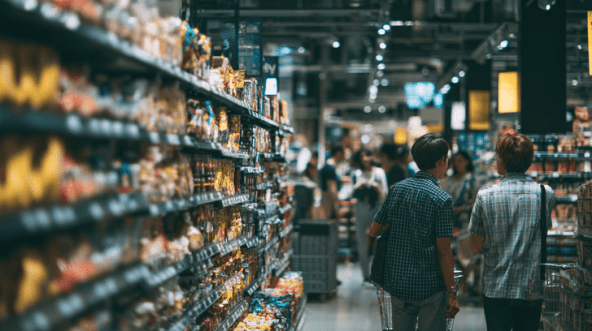
Most purchase decisions happen in-store, right at the shelf. That’s where merchandising matters most. It’s how you present products to guide attention, simplify choices, and drive action.
Strong retail merchandising strategies don’t just look good – they directly increase sales. In simple terms, merchandising is placing the right product in the right spot and making it easy to buy.
This guide breaks down merchandising strategies/principles in retail you can use based on real data, not guesswork.
What is retail merchandising?
Retail merchandising is how you present products in-store to drive attention and sales. It includes placement, pricing, displays, and how easy it is for shoppers to find and buy what they need. Done right, it turns casual browsing into real purchases.
It’s not the same as marketing. Marketing brings people into the store through ads, promotions, or campaigns.
Merchandising takes over once they’re inside. It helps them navigate the space, notice key products, and make faster decisions. This aligns with HubSpot’s point that store layout, clear signage, and strategic product placement shape the in-store customer experience.
Merchandising directly shapes what shoppers see first, how they compare options, and how confident they feel when choosing. When products are easy to find and clearly presented, people buy more without overthinking.
It’s also more than making shelves look nice. It’s about using space, data, and shopper behavior to increase sales.
Strong retail merchandising strategies focus on what actually drives results, not just visual appeal.
Why does merchandising directly impact sales?
Merchandising directly impacts sales because most in-store decisions are fast and emotional.
Shoppers don’t stop to analyze every option. They scan shelves, notice what stands out, and make quick choices. In many cases, the first product they see becomes the one they buy.
Visibility plays a critical role here. Products placed at eye level or in high-traffic areas naturally get more attention and higher conversion. The easier something is to spot, the more likely it is to sell.
Availability matters just as much. If shoppers don’t see a product or can’t find it in stock, they won’t consider it. McKinsey notes that even a one-percentage-point improvement in in-stock rates can lift sales by 20 to 35 basis points.
💡 Pro Tip
Treat eye-level space as your highest-value zone. Review it weekly and update it based on top-selling products.
Placement also shapes purchase intent. When products are grouped logically or placed near related items, buying feels easier and more natural. It reduces effort and speeds up decisions.
That’s why different types of merchandising strategies retail matter. Strong retail product merchandising strategies use visibility, placement, and shopper behavior to turn attention into consistent, predictable sales.
What are the core merchandising strategies?
Core merchandising strategies focus on how you present products to make buying easier and faster. Each one has a clear role in turning attention into action.
When combined, they create a smooth shopping flow that helps customers decide without overthinking. You’re not just showing products – you’re guiding behavior.
Here are the key strategies you should use:
- Product placement strategy → Put high-demand or high-margin items at eye level and in high-traffic zones. This boosts visibility and increases the chances of purchase.
- Shelf organization and blocking → Group similar products together and keep shelves structured. Shoppers should be able to scan quickly and compare options without confusion.
- Pricing presentation → Make prices clear, visible, and consistent. When pricing is easy to understand, people feel more confident buying.
- Promotional displays → Use end caps or featured zones to highlight offers. These areas attract attention and drive impulse buys.
- Cross merchandising → Place related products together, like chips next to drinks. This makes buying feel natural and increases basket size.
- Seasonal merchandising → Update displays based on seasons, holidays, or trends. This keeps your store fresh and relevant.
Strong retail product merchandising strategies combine all these elements to guide shoppers step by step.
Done right, retail merchandising strategies feel effortless but drive consistent, measurable growth over time, helping you scale results without adding complexity.
How does product placement influence buying behavior?
Product placement directly shapes what people notice, consider, and buy. In-store, attention is limited, so where you place products matters as much as what you sell.
Shoppers don’t explore every option. They follow visual cues, move quickly, and often choose what’s easiest to see and reach. That’s why even small placement changes can drive noticeable sales growth.
Here’s how product placement influences buying behavior in practice:
- Eye-level placement → Products at eye level get the most attention and highest conversion. This is your most valuable space. Lower shelves are often skipped, while upper shelves work better for secondary items.
- High-traffic areas and end caps → These zones naturally attract shoppers. Placing key products here increases visibility and drives impulse purchases without extra effort.
- Checkout counter strategy → This is your final selling point. Small, low-cost items perform best because shoppers are already in buying mode.
- Prime vs lower shelf space → Use prime space for high-margin or fast-moving products. Lower shelves can support bulk items or products with steady demand.
- Adjacency and product grouping → When related items are placed together, buying feels easier and faster. This is one of the core retail visual merchandising best practices that increases basket size and improves sales.
When you combine these elements, product placement stops being random and starts working as a clear, predictable driver of sales. Clear retail merchandising rules help teams keep those placement decisions consistent across every store.
How can visual merchandising boost engagement?
Visual merchandising boosts engagement by making your store easy to navigate and pleasant to explore.
When everything looks clear and intentional, shoppers stay longer, notice more products, and interact more. You’re not just showing items. You’re shaping how people feel and move in your space.
💡 Pro Tip
Add one unexpected visual element per display like: contrast, shape, or layout. It naturally stops shoppers and increases engagement.
Clean and organized displays are the foundation. When shelves are neat and uncluttered, shoppers can quickly scan options and feel more comfortable browsing. This reduces friction and keeps them engaged longer.
Color coordination and packaging alignment help create visual harmony. When products are grouped by color or style, displays look more attractive and easier to understand at a glance.
Signage and point-of-sale materials guide attention. Clear, simple signs highlight key products and offers, helping shoppers make faster decisions without confusion.
Lighting and display positioning bring focus to priority items. Well-lit products naturally stand out and feel more appealing. Creating focal points in-store draws shoppers in and encourages exploration.
These retail merchandising best practices turn simple displays into engaging shopping experiences that keep customers interested and drive action.
What role do promotions and displays play?
Promotions and displays play a direct role in driving attention and short-term sales.
They create urgency, highlight value, and give shoppers a clear reason to act now instead of later. When used well, they turn interest into quick, confident decisions.
To make this work consistently, focus on the key promotional tactics:
- Temporary price reductions → Clear discounts make products feel like a better deal and push faster purchases. Shoppers are more likely to act when they see immediate value.
- Bundle offers and multi-buy promotions → “Buy more, save more” deals increase basket size and make extra items feel like a smart, logical choice.
- Limited-time displays → Temporary offers create urgency and reduce hesitation, encouraging shoppers to buy on the spot.
- Sampling and demonstration setups → Letting people try a product removes doubt and builds trust, making buying decisions easier.
- Measuring promotional effectiveness → Track sales lift, conversion, and performance to understand what works and improve results over time.
Strong retail merchandising strategies use promotions as a controlled tool, not guesswork.
The best merchandising strategies/principles in retail focus on what drives consistent, measurable results.
How can data improve merchandising decisions?
Data helps you move from guesswork to clear decisions. Instead of relying on assumptions, you use real numbers to see what’s working and what’s not, especially when using dedicated merchandising software to track execution.
This makes your merchandising more consistent, easier to manage, and much more effective as you scale across multiple stores.
Here’s how different data points improve your merchandising decisions in practice:
| Data source | What it helps you do |
|---|---|
| Sales data analysis | Identify top-performing products and adjust placement to increase revenue and visibility |
| Inventory turnover insights | Spot slow-moving items early and fix placement or demand issues before they impact sales |
| Heat mapping and traffic analysis | Understand where shoppers spend time and place key products in high-visibility zones |
| Store-level performance tracking | Compare results across locations and quickly scale what works across your network |
| Testing and refining displays | Run small experiments, measure results, and continuously improve performance over time |
Platforms like SimplyDepo connect field activity, sales data, and store-level performance into one operational workflow. This gives your team a clear, real-time view of what’s happening in stores and helps you adjust merchandising quickly based on actual results, not assumptions.
Strong retail store merchandising best practices rely on data to make smarter, faster, and more confident decisions that drive consistent and predictable sales growth at scale.
How do retailers and brands collaborate on merchandising?
Retailers and brands work together to make merchandising consistent and effective in every store. When both sides align, execution becomes faster, clearer, and easier to scale across locations.
You’re not just placing products. You’re coordinating decisions that directly impact visibility, shopper experience, and sales results.
Here’s how this collaboration works in practice:
- Planogram agreements → Both sides agree on product placement, shelf layout, and display rules. This creates a clear standard and keeps execution consistent across all stores.
- Trade marketing coordination → Brands and retailers align on campaigns, in-store materials, and messaging. This ensures promotions look clear, consistent, and easy to understand.
- Joint business planning → Teams set shared goals, sales targets, and priorities. This keeps both sides focused on what actually drives performance.
- Aligning on promotional calendars → Timing matters. Coordinating promotions avoids overlap and helps maximize impact during key periods.
- Negotiating shelf space and visibility → Brands aim for better placement, while retailers balance category performance to optimize total sales.
Strong retail merchandising best practices depend on this alignment. For brands in fast-moving categories, consumer goods retail execution helps keep shelf placement, promotions, and visibility consistent across stores.
The best retail merchandising strategies come from close collaboration, shared goals, and consistent execution.
💡 Pro Tip
Agree on one clear in-store priority per campaign. It keeps both teams focused and makes execution more consistent.
What are common merchandising mistakes to avoid?
Even strong merchandising can fail if small mistakes go unchecked. These issues don’t just affect how your store looks – they directly reduce sales and create friction for shoppers.
The good news is you can fix most of them quickly once you know what to look for and how to act.
Here are the most common merchandising mistakes you should avoid:
- Overcrowded shelves → Too many products in one space overwhelm shoppers and make it harder to compare options. Keep displays clean and focused so decisions feel easy.
- Poor stock rotation → When older items stay in front, products lose appeal and can go to waste. Rotate stock regularly to keep shelves fresh and sellable.
- Inconsistent pricing signage → Missing or unclear prices create hesitation. Shoppers don’t want to guess. Use clear, visible pricing to build trust and speed up decisions.
- Ignoring local demand differences → Not every store performs the same. Adjust your assortment based on local buying behavior to avoid missed sales.
- Failing to maintain promotional displays → Even strong promotions lose impact if displays look messy or incomplete. Keep them stocked, clean, and aligned with the offer.
- Not training store staff properly → Your team is part of execution. Make sure they understand layouts, promotions, and priorities so everything stays consistent.
By avoiding these mistakes, you create a smoother shopping experience and remove friction from the buying process.
Strong retail visual merchandising best practices focus on clarity, consistency, execution and that’s what drives stable, predictable sales.
How can companies measure merchandising success?
Measuring merchandising success means linking in-store execution to real sales results.
You need clear data to understand what’s working, what’s not, and where to improve. When you track the right metrics, your decisions become faster and more reliable, supported by tools like retail execution software that connect in-store activity with sales data.
To make this practical, focus on the key metrics that directly connect merchandising to performance:
| Metric | What it shows |
|---|---|
| Sales lift from displays | Measures how much a display increases sales compared to baseline performance |
| Share of shelf | Shows your product visibility versus competitors and how much space you control |
| On-shelf availability rate | Tracks if products are in stock when shoppers are ready to buy |
| Conversion rate improvements | Reflects how many shoppers turn attention into actual purchases |
| Average basket size changes | Indicates whether merchandising drives larger and more valuable purchases |
| Promotion compliance metrics | Confirms if displays and promotions are executed correctly across stores |
Tools like SimplyDepo connect real-time execution tracking with sales visibility, helping you link merchandising compliance directly to revenue outcomes and react faster when something goes wrong.
Strong retail merchandising strategies rely on measurable results, not guesswork, helping you improve performance, fix issues early, and scale what works with confidence.
Creating consistent merchandising across every store
Merchandising isn’t just about how your store looks. It directly shapes how people buy. The way products are placed, grouped, and presented influences what shoppers notice and choose first.
That’s why strong retail merchandising strategies focus on visibility, behavior, and real outcomes, not just appearance.
To make it work, your strategy needs to align with real data and shopper insights, not assumptions. At the same time, execution consistency across stores is critical. Even small gaps can reduce impact, while small shelf changes can drive steady sales growth.
Different types of merchandising strategies retail all aim to do the same thing: make buying easier, faster, and more natural for shoppers.
If you want to connect execution with real results, tools like SimplyDepo can help.
Book a demo to see how you can track performance, improve consistency, and turn everyday merchandising into measurable growth.
FAQs
Focus on visibility first. Make top products easy to see and easy to buy. Strong retail merchandising strategies combine placement, pricing, and clear displays, so shoppers can quickly notice key items, compare options, and make faster decisions without confusion or hesitation.
Placement drives attention. Shoppers notice what’s in front of them first. Eye-level positioning, high-traffic zones, and logical grouping reduce effort, guide choices, and increase the chances of purchase, especially when products feel easy to find and quick to evaluate.
Stay focused. You don’t need scale to win. Small retailers can use smart placement, local demand insights, and faster updates to adjust displays quickly, creating a more relevant and flexible shopping experience that large chains often struggle to match.
Track real results. Focus on sales lift, conversion rate, and product availability. These metrics show what works, while consistent tracking helps you adjust quickly, improve weak spots, and scale successful ideas across your store.
Update regularly. But don’t overdo it. Test and adjust layouts based on performance, seasonality, and shopper behavior, using different types of merchandising strategies retail to keep displays fresh, relevant, and aligned with changing demand.

-
 October 20, 2026
 -
October 20, 2026
-
October 20, 2026
