Supply Chain Order Management: Eliminate Bottlenecks


Supply chain order management connects the orders your customers place with the orders you place on suppliers, and with the inventory and deliveries in between. For distributors and CPG brands, it’s where sales demand meets purchasing, warehousing and transportation.
When those pieces run separately, bottlenecks form at every handoff: sales promises stock that purchasing hasn’t ordered, the warehouse learns about big orders late and deliveries get planned around yesterday’s numbers.
This guide covers the stages of supply chain order management, where it typically breaks and how to remove the bottlenecks. For the software side, see our overview of order management software.
What is supply chain order management?
Supply chain order management is the coordination of customer orders, supplier purchase orders, inventory and fulfillment across the supply chain. It covers both sides of the business:
- Sell side: sales orders from retailers, distributors and other customers
- Buy side: purchase orders to suppliers and manufacturers
Done well, it keeps enough stock in the right place to fill customer orders on time without tying up cash in excess inventory.
Sales orders and purchase orders working together
Supply chain order management connects two order streams that are often managed by different teams.
| Sales orders | Purchase orders | |
|---|---|---|
| Who creates them | Reps, buyers, order desk | Purchasing team |
| What triggers them | Customer demand | Reorder points, forecasts, large customer orders |
| Key data | Customer, price, delivery date | Supplier, cost, lead time |
| Common failure | Promising stock that isn’t coming | Ordering late or too much |
When both streams live in the same system, purchasing can see large customer orders the day they’re placed, and sales can see when inbound stock is due. That visibility prevents most promise-date surprises.
The core stages
1. Demand capture
Customer orders arrive from reps, portals, email and EDI. Clean, timely order data is the starting point for everything else.
2. Inventory check and allocation
Orders are matched against stock on hand and in transit. Available stock is reserved, and shortfalls are flagged.
3. Replenishment and purchasing
Shortfalls and reorder points trigger purchase orders to suppliers. See our guide to purchase order management.
4. Receiving
Incoming supplier shipments are checked against purchase orders and put away so they’re available to sell.
5. Fulfillment
Orders are picked, packed and loaded onto routes or carriers.
6. Delivery and confirmation
Deliveries are made, confirmed and any changes recorded.
7. Invoicing and settlement
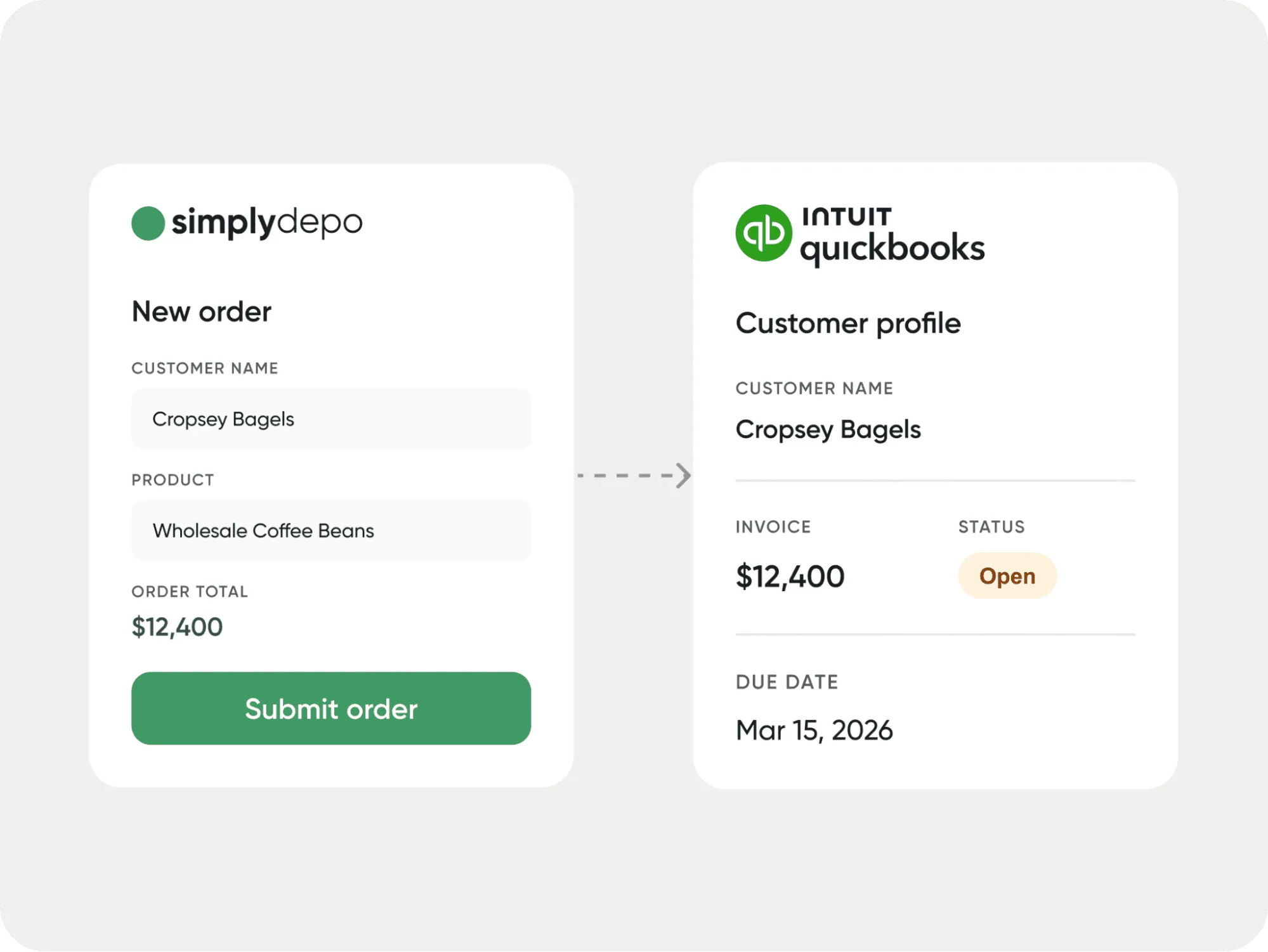
Customers are billed for what was delivered, and supplier invoices are matched to receipts.
Where supply chain order management breaks down
Disconnected buy and sell sides. Purchasing works from last month’s sales report while reps sell from live demand.
Late order data. Orders that sit in inboxes or reps’ notebooks don’t reach purchasing in time to react.
Inaccurate inventory. If the system shows stock that isn’t really there, every downstream decision is wrong. See our guide to inventory accuracy.
Long or unpredictable lead times. Suppliers that vary widely force larger safety stock. Our guide on how to reduce lead time covers practical fixes.
Manual reconciliation. Matching orders, deliveries and invoices by hand delays billing and hides errors.
Why field sales is a key link
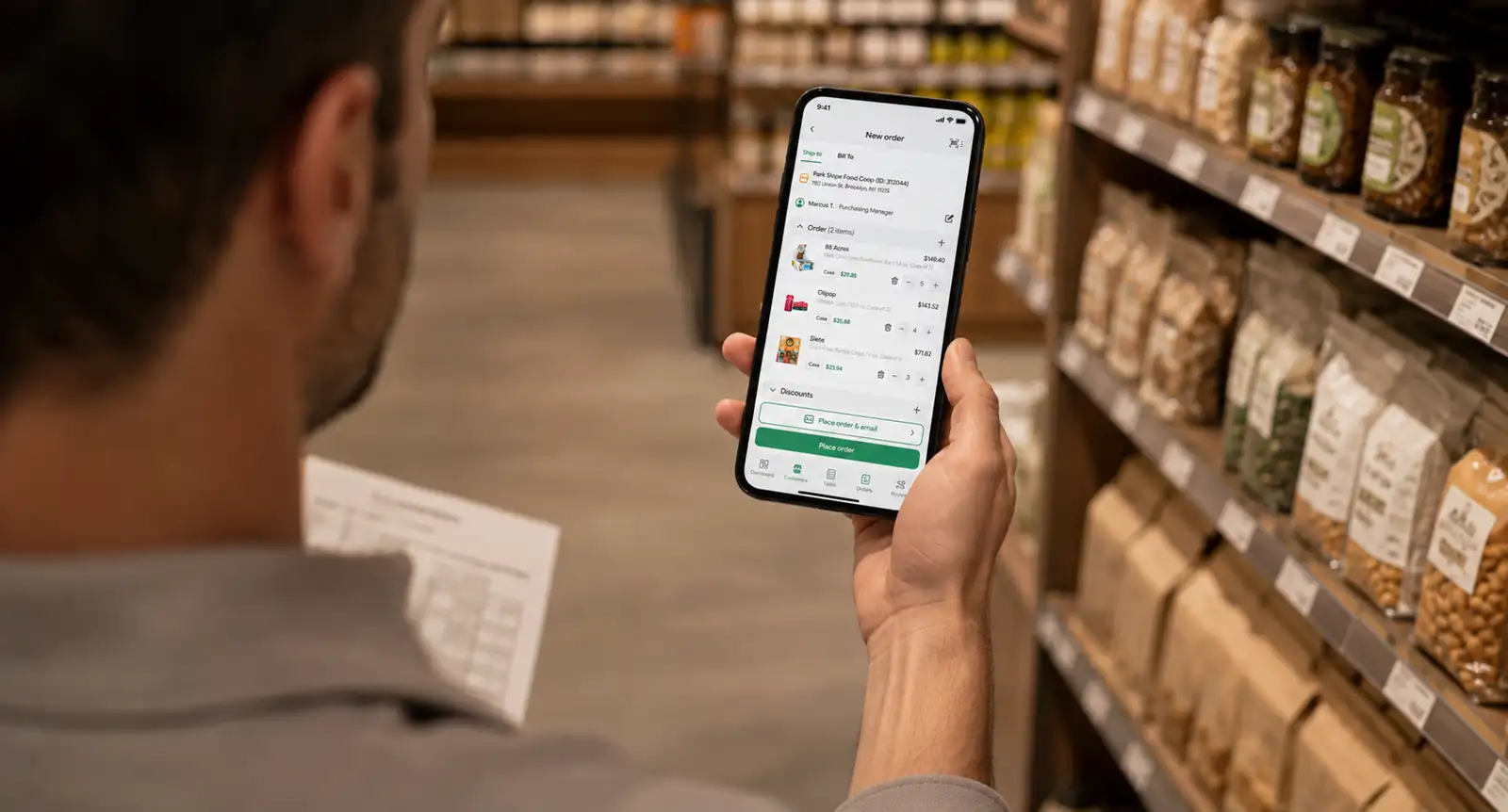
Field reps are often the first to see demand shift. They know when a store adds a product, when a competitor runs a promotion or when shelves are empty. When reps write orders on paper or enter them at the end of the day, that signal reaches purchasing late. Mobile order entry turns field activity into same-day demand data the whole supply chain can use.
What modern supply chain order management looks like
- One system for sales orders and inventory, with purchasing working from the same data
- Live stock across warehouses and trucks
- Reorder alerts based on real demand and lead times
- Validated orders at entry, so bad data doesn’t reach the warehouse
- Connected fulfillment, delivery and invoicing
- Supplier performance tracking on lead times and fill rates
How to remove bottlenecks step by step
- Map how an order and a purchase order each move through your business today.
- Find where data is retyped or delayed.
- Centralize customer orders first, since they drive everything else.
- Tie inventory to orders in real time.
- Set reorder points and safety stock from actual demand.
- Automate invoicing from delivery confirmation.
Supply chain order management metrics
- Fill rate: share of ordered units delivered
- On-time delivery: orders delivered on the promised day
- Supplier lead time: actual days from purchase order to receipt
- Days of inventory on hand: how long current stock will last at current demand
- Backorder rate: share of orders that couldn’t be filled from stock
Our guide to days sales in inventory explains how to calculate inventory coverage.
Working with suppliers
Better supply chain order management also depends on suppliers. Share forecasts for key items, agree on lead times in writing and track supplier fill rates and on-time performance.
Suppliers that consistently ship late or short need larger safety stock or a backup source. For some categories, vendor managed inventory can shift replenishment to the supplier entirely.
Handling disruptions
Supplier delays, weather and sudden demand spikes will still happen. Teams handle them better when they can see which customer orders are affected, which accounts have priority and what substitutes are available. Clear allocation rules and early communication with buyers turn a shortage into a delay instead of a lost account.
Connecting orders, inventory and delivery with SimplyDepo
Supply chain order management works when demand, stock and deliveries are visible in one place.
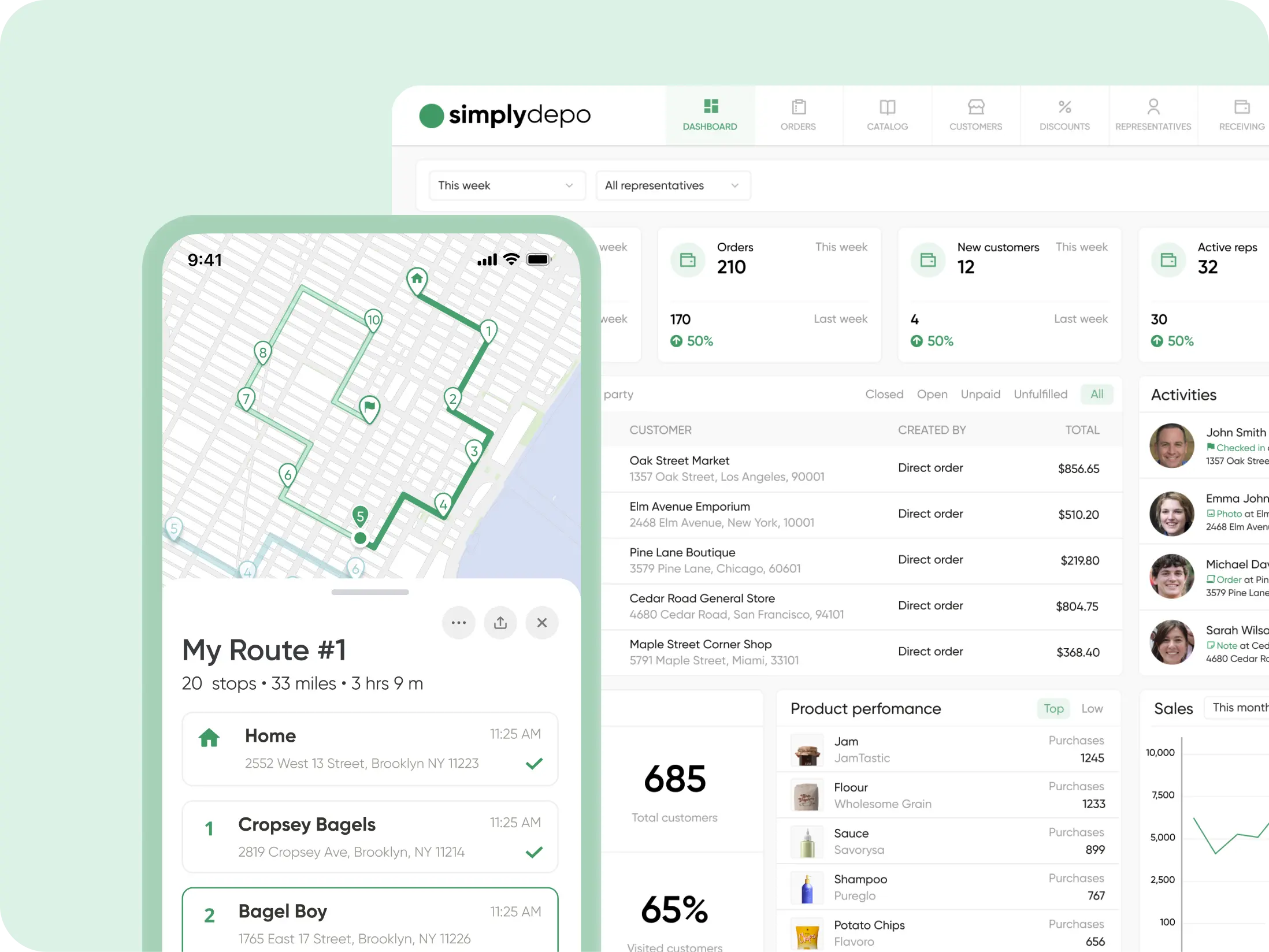
SimplyDepo connects orders from reps and customers with inventory across warehouses and trucks, delivery routes and invoicing, giving purchasing and operations a live view of demand. Book a demo to see how it fits your supply chain.
It’s the coordination of customer orders, supplier purchase orders, inventory and fulfillment so products are available when customers order them.
Order management focuses on processing customer orders. Supply chain management covers the wider flow of goods, from sourcing and production through distribution.
Common causes include late order data, inaccurate inventory, disconnected purchasing and sales, unreliable lead times and manual reconciliation.
Centralize orders, keep inventory accurate and live, base reorder points on real demand and connect fulfillment to invoicing.
-
 November 17, 2026
-
 November 17, 2026
-
 November 13, 2026