Territory Management: The Guide to Scale Sales in 2026

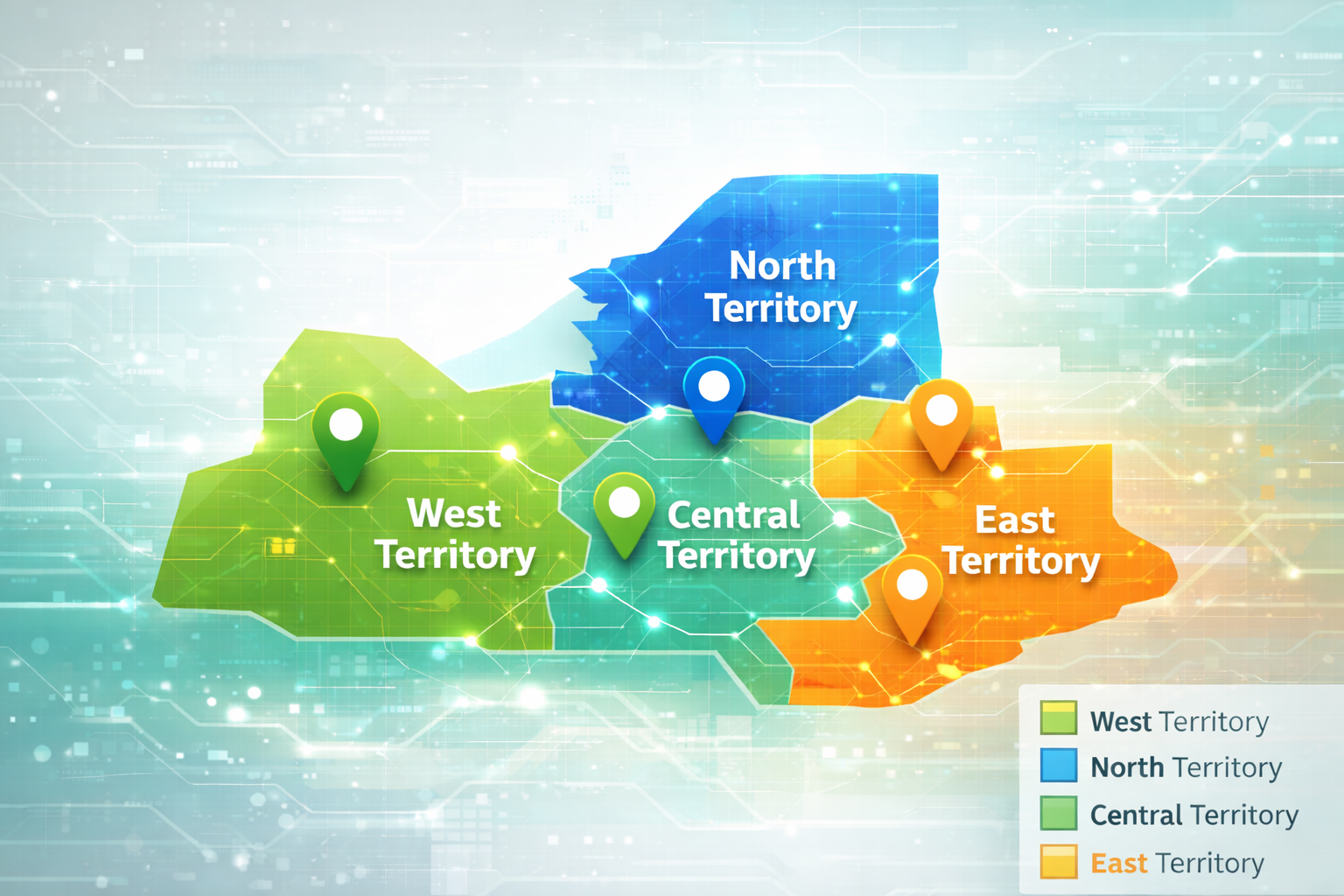
Managing sales territories sounds about as exciting as organizing your inbox. But suppose you’re a founder watching two reps fight over the same deal, or a CRO trying to figure out why your high-growth region is underperforming. In that case, you already know: bad territory management kills momentum fast.
Here’s the thing: territory management isn’t just about drawing lines on a map. It’s about making sure the right people are chasing the right opportunities – without tripping over each other, confusing customers, or wasting resources.
When done right, it’s invisible. When done wrong, it’s expensive.
This guide will help you get it right – whether you’re building your first territory plan from scratch or untangling years of legacy chaos.
What Is Territory Management?
Most people think territory management means “splitting up sales regions.” That’s partially true – but it’s only part of the story.
Territory management is really about strategic resource allocation. It’s how you assign sales reps, distributor partners, and internal teams to specific regions, accounts, industries, or customer segments – in a way that maximizes coverage, minimizes conflict, and supports scalable growth.
Think of it as the operating system for your go-to-market strategy. It connects what you want to achieve with how your sales resources are actually deployed in the field.
For mature teams, this often involves territory management software or CRM tools. But the real power doesn’t come from the tool – it comes from aligning your territory design with your growth model, team capacity, and customer needs.
When territory management is strategic, you get:
- Operational clarity (everyone knows who owns what)
- Revenue visibility (you can forecast with confidence)
- Margin protection (no internal price wars or duplicate efforts)
Why Brands and Distributors Struggle Without It
When territory management is treated as an afterthought – or managed entirely in spreadsheets – things fall apart quickly.
Without clear ownership rules, sales reps start chasing the same accounts. Your direct team and distributor partners compete for the same customers. Pricing gets inconsistent. Customers hear conflicting messages. Internal trust erodes.
The result? Higher customer acquisition costs, bloated teams, and missed quotas – not because your reps aren’t working hard, but because the system they’re operating in is fundamentally broken.
Distributors face unique challenges here. With shared accounts, overlapping territories, and competing incentives, the cost of unclear ownership is even higher. And fixing it is harder when multiple organizations are involved.
Bottom line: if your sales team is running hard but not gaining ground, territory management might be the hidden bottleneck.
The Real Benefits of Getting Territory Management Right
Fix your territory plan, and the impact shows up fast – often in ways you can measure:
- Higher revenue per rep. When reps have clear assignments and focused account lists, they spend more time selling and less time wondering who owns what. Pipelines grow. Deals close faster.
- Faster onboarding. New hires get immediate clarity on where to focus, who their accounts are, and how to ramp. No more guessing games.
- Fewer internal conflicts. No more heated Slack threads about who “owns” an account or who should get credit for a deal. Clear rules = fewer headaches.
- Better customer experience. Customers get consistent, confident engagement from one point of contact – not three reps accidentally competing for the same purchase order.
- Cleaner forecasting. When you know who’s responsible for what, you can actually predict sales performance with confidence. No more mystery deals or surprise shortfalls.
In short: territory management isn’t just a sales ops exercise. It’s growth infrastructure.
💡 Pro Tip:
Document your territory rules in a single source of truth that’s accessible to everyone – not buried in someone’s email or a forgotten spreadsheet. When disputes arise (and they will), you’ll thank yourself for having clear, written guidelines everyone agreed to upfront.
Common Territory Management Challenges in Brand & Distributor Models
Even the best revenue strategies fall apart when territory management breaks down. And if you’re running a hybrid model – with both internal reps and distributor partners – the stakes are even higher.
When Overlapping Coverage Creates Chaos
Picture this: Your field rep has been working a regional grocery chain for months. They’ve built a relationship with the category manager, secured shelf space commitments, and lined up a first order. Then the week before delivery, your distributor’s rep shows up at the same account – quoting different pricing and pushing a conflicting promotion.
This is territory overlap in action. And for CPG brands, it’s one of the fastest ways to lose both the sale and the relationship.
When your direct reps and distributor partners target the same retailers without clear ownership rules, the damage adds up fast:
- Both teams chase the same account, wasting time and burning goodwill
- Reps argue over who gets credit while the retailer watches
- Buyers get mixed messages, inconsistent pricing, and wonder who they should actually talk to
This doesn’t just frustrate your team – it makes your brand look disorganized and gives retailers a reason to stick with your competitor.
Why Static Territory Models Don’t Scale?
You start with a simple territory plan. East Coast, West Coast. Maybe split by state or zip code. It works great with five reps and two distributors.
Then you scale. Suddenly that clean map breaks. You’ve launched new products, shifted your ICP, or moved upmarket. Those arbitrary boundaries now cause chaos. Some reps are drowning in opportunities they can’t work. Others are refreshing their CRM hoping for leads that never come.
Your growth stalls – not because of market conditions, but because your territory model can’t flex with your business.
Most CRMs Aren’t Built for Real Territory Complexity
Most CRMs were designed for simple, one-to-one sales models. One rep, one account, one region.
But modern business – especially in channel-heavy environments – isn’t simple. You need multi-rep assignments, distributor-specific routing logic, and overlap detection that flags conflicts before two reps pitch the same buyer.
Without the right tools, territory management becomes a spreadsheet nightmare. Updates get lost. New reps get assigned accounts that were already claimed. It’s death by a thousand paper cuts.
Territory Management Strategy Framework for Brands and Distributors
There’s no universal playbook. The best territory strategies reflect your business model and customer landscape.
Some companies win by carving up geography. Others succeed with account-based territories, where reps own strategic verticals or customer logos regardless of location. High-growth teams often use revenue banding – splitting coverage between reps who specialize in SMB, mid-market, or enterprise.
The smartest organizations blend these into hybrid models. Your enterprise team owns national accounts by name, while your SMB team covers zip codes, and distributor partners handle everything in between.
High-performing teams choose segmentation based on buyer behavior and business complexity – not legacy org charts.
Key Elements of a Territory Management Plan
Every solid strategy starts with understanding market opportunity through TAM and SAM analysis – figuring out where revenue potential actually lives.
Then comes the practical work of making coverage both comprehensive and fair:
- Account density mapping to balance workload (no rep juggling 200 accounts while another has 30)
- Sales capacity planning across internal reps and partner channels
- Distributor and channel alignment with clear ownership rules to prevent conflict
This is where data meets design – and where scalable coverage begins.
Best Practices from High-Performing Teams
The most efficient teams treat territory management as a living system that evolves with the business.
They follow centralized rules with decentralized execution. Leadership sets the strategy – segmentation model, routing logic, conflict resolution. Frontline teams operate with autonomy within those guardrails.
They build in quarterly optimization cycles to rebalance based on performance and market shifts. Regular check-ins keep your territory plan synced with reality.
And they connect three critical pieces:
- Enablement programs that train reps for their territory type
- Compensation structures that reward the right behaviors
- Clear escalation rules for edge cases – rep departures, customer relocations, partnership changes
💡 Pro Tip:
Document escalation rules upfront and make them accessible. When a dispute arises Friday at 4pm, you don’t want to make up policy on the fly. Territory management isn’t a one-time project. It’s a system running in the background of your entire business – and your success depends on how well you maintain it.
How to Divide Sales Territories Without Creating Conflict
Territory design shouldn’t feel like a political negotiation. When done right, it removes confusion, helps reps cover more ground, and keeps your direct team and distributor partners on the same page. Here’s how to do it.
Choose the Right Segmentation Model
Before dividing anything, figure out how you should segment. Your model should match how your customers actually buy and how your team actually sells.
For CPG brands and distributors, common approaches include:
- Geographic territories (city, county, or ZIP-based splits work well for route-based selling)
- Retail channel type (independent stores vs. chains vs. foodservice)
- Product category (if you have specialized product lines that need different expertise)
- Account size (high-volume accounts vs. emerging retailers)
Many growing brands use a hybrid model – your key accounts team handles major chains while field reps own geographic territories for independents, and distributors fill the gaps.
There’s no perfect formula, but there is a right one for your business.
Use Data, Not Politics
Assigning territories based on seniority, personal requests, or gut feel creates problems fast.
Use real data instead. Check your order history to see where reps close best. Look at sales velocity by region and account type. Factor in route density – don’t give one rep 50 concentrated stops while another drives three hours between accounts.
Data removes bias and builds credibility across the team.
Involve Your Team Early
Top-down territory changes breed resistance – especially with experienced reps or distributor partners who’ve been working accounts for years.
Bring them into the conversation. Share why you’re redesigning territories. Ask for ground-level insights about accounts, routes, and relationships. Even when not everyone gets their ideal territory, transparency reduces pushback.
Modern Tools Make Territory Planning Easier
Modern territory management tools beat the spreadsheet chaos. Look for platforms that visualize your coverage, show performance by segment, handle multi-rep assignments, and work with your existing systems.
The goal: faster planning, fewer mistakes, and easier adjustments as you grow.
How to Manage Overlapping Territories Efficiently
Territory overlap doesn’t just create internal drama – it confuses retailers, slows orders, and damages relationships with distributor partners.
Why Overlap Happens
Overlap usually creeps in through legacy account ownership, unclear handoff rules between direct and distributor reps, or simple lack of documentation about who owns what.
It’s rarely intentional – but left alone, it gets expensive.
How to Prevent It
Clarity is everything. Document who owns what accounts, define rules of engagement (can both a direct rep and distributor call on the same store?), and automate order management to reduce manual errors.
If you don’t enforce the rules consistently, the same problems return every quarter.
Using Tech to Catch Overlap Early
Modern territory platforms flag overlap before it becomes a problem – with real-time alerts when multiple reps target the same account, automated workflows to fix conflicts, and clear attribution so everyone knows who gets credit.
The goal isn’t just fixing overlap. It’s stopping it before it starts.
Top 3 Territory Management Tools for CPG Brands and Distributors
If your spreadsheet isn’t keeping up with your growth, here are three platforms built for how CPG brands and distributors actually work.
1. SimplyDepo – Built for CPG Brands and Distributors
SimplyDepo is an all-in-one B2B sales and retail execution platform built for CPG brands and distributors. It provides a branded wholesale portal, prospecting and route management tools, and a single place to capture orders, store visits, notes, and in-store photos.
Instead of juggling spreadsheets, emails, and separate apps, your team gets automated order processing, streamlined distributor coordination, and real-time performance visibility in an intuitive mobile and desktop experience that’s fast to roll out and easy to use.
2. Salesforce Maps
If you’re already using Salesforce and managing field reps, Maps adds route optimization and territory visualization.
Pros: Works natively with Salesforce, geographic planning, easy route-to-rep assignments
Cons: Requires Salesforce (expensive for smaller brands), limited distributor/channel logic
3. Zoho CRM + Territory Module
An affordable option for smaller brands with straightforward needs.
Pros: Built-in assignment rules, visual territory planning, budget-friendly
Cons: Basic analytics, not designed for complex distributor relationships
💡 Pro Tip:
Start simple. Pick one segmentation model, document your rules clearly, and use a tool that grows with you. You can always add complexity later – but you can’t scale without a solid foundation.
Key Metrics for Measuring Territory Management Effectiveness
You can’t improve what you can’t measure – and when it comes to territory management, guessing is expensive. These key performance indicators help leadership teams understand if their territory plan is actually working, or just politically acceptable.
Coverage Ratio (TAM Assigned vs. Rep Capacity)
This metric shows whether you’re covering enough market with your current team.
- If your total addressable market (TAM) exceeds assigned rep capacity, you’re leaving revenue on the table.
- If rep capacity outpaces TAM, you’re overstaffed or inefficiently assigned.
Balanced ratios = optimized growth.
Revenue Per Rep Per Territory
Your average revenue per rep within a territory reveals:
- Whether territories are fairly and effectively balanced
- Where your top-performing reps may be underutilized (or overburdened)
- If certain regions or segments need more attention, support, or restructuring
Lead-to-Account Routing Accuracy
This measures whether leads are going to the right rep, in the right territory, at the right time.
- High accuracy means your rules of engagement and routing logic are working
- Low accuracy signals breakdowns in CRM workflows or territory misalignment
This metric is key to reducing sales friction and lead leakage.
Account Penetration by Territory
Penetration rate = number of active accounts engaged vs. total accounts assigned in the territory.
Low penetration often points to:
- Over-assignment (too many accounts per rep)
- Territory misalignment (wrong rep for the segment)
- Poor engagement processes (enablement or tooling gaps)
% of Overlap or Conflict Cases Resolved Automatically
Your ability to detect and resolve territory conflicts without human intervention is a maturity signal.
Track:
- % of conflicts flagged by the system
- % resolved via rules/workflows
- Avg. time-to-resolution
A high automation rate means your territory management software is doing its job. Manual resolution? That’s burnout fuel.
Executive Takeaways: Territory Management as a Revenue Lever
For brands and distributors, territory management isn’t just about drawing lines on a map. It’s the backbone of sales coverage and retail execution – the system that ensures every store, account, and region is getting the right attention from the right people.
When handled well, it connects your head office strategy to what happens in the field – and ensures that both your direct reps and distributor partners are set up to win.
Growth Without a Territory Plan Creates Gaps, Waste, and Frustration
As your business scales, the risks of a weak or outdated territory model multiply. You start to see:
- Duplicate efforts between field reps and distributors
- Gaps in coverage where no one owns the outcome
- Higher costs to support the same accounts
- Declining morale as reps feel stretched or under-supported
In fast-moving categories, those cracks turn into lost shelf space, slower sell-through, and confused buyers.
A Well-Designed Territory Plan Boosts Execution, Morale, and Revenue
With clear territories, your reps know exactly where to focus. Your distributor partners understand expectations. And your leadership team can confidently measure performance and adjust coverage as needed.
That’s how brands scale without losing control – and how distributors stay aligned and motivated.
FAQ
In a CPG context, territory management means assigning reps or distributor teams to specific geographies, store groups, or account types – and using tools like CRM to track who owns what. But most generic CRMs can’t handle the real-world complexity of shared coverage, changing retail routes, or distributor sales channels. That’s where specialized territory management software comes in.
Purpose-built tools (like SimplyDepo) let you:
Set clear assignment rules across reps and distributors, detect when accounts are double-covered, automatically route leads or orders to the right person, track accountability and reduce tension in the field, no more guessing who’s responsible – or chasing credit for closed business.
Most CRMs weren’t built for brand + distributor hybrid sales.
That’s why tools like SimplyDepo are designed specifically for:
Managing field reps and distributor coverage in one place, handling multi-rep territory logic, providing real-time visibility into who owns what, where, and why.
If you work through distributors, you need software that understands the channel dynamics and operational challenges of that model.
Absolutely. When you can:
See which stores or accounts are assigned, spot underperforming territories, and reassign resources faster…
…you make better calls – not just on forecasts, but on route planning, merchandising, and in-store execution.
Territory software turns your sales plan from a static map into a living, breathing part of your business.
-
 October 8, 2026
 -
 October 8, 2026
 -
 October 7, 2026