Cin7 Alternatives: When Inventory Isn’t the Real Problem


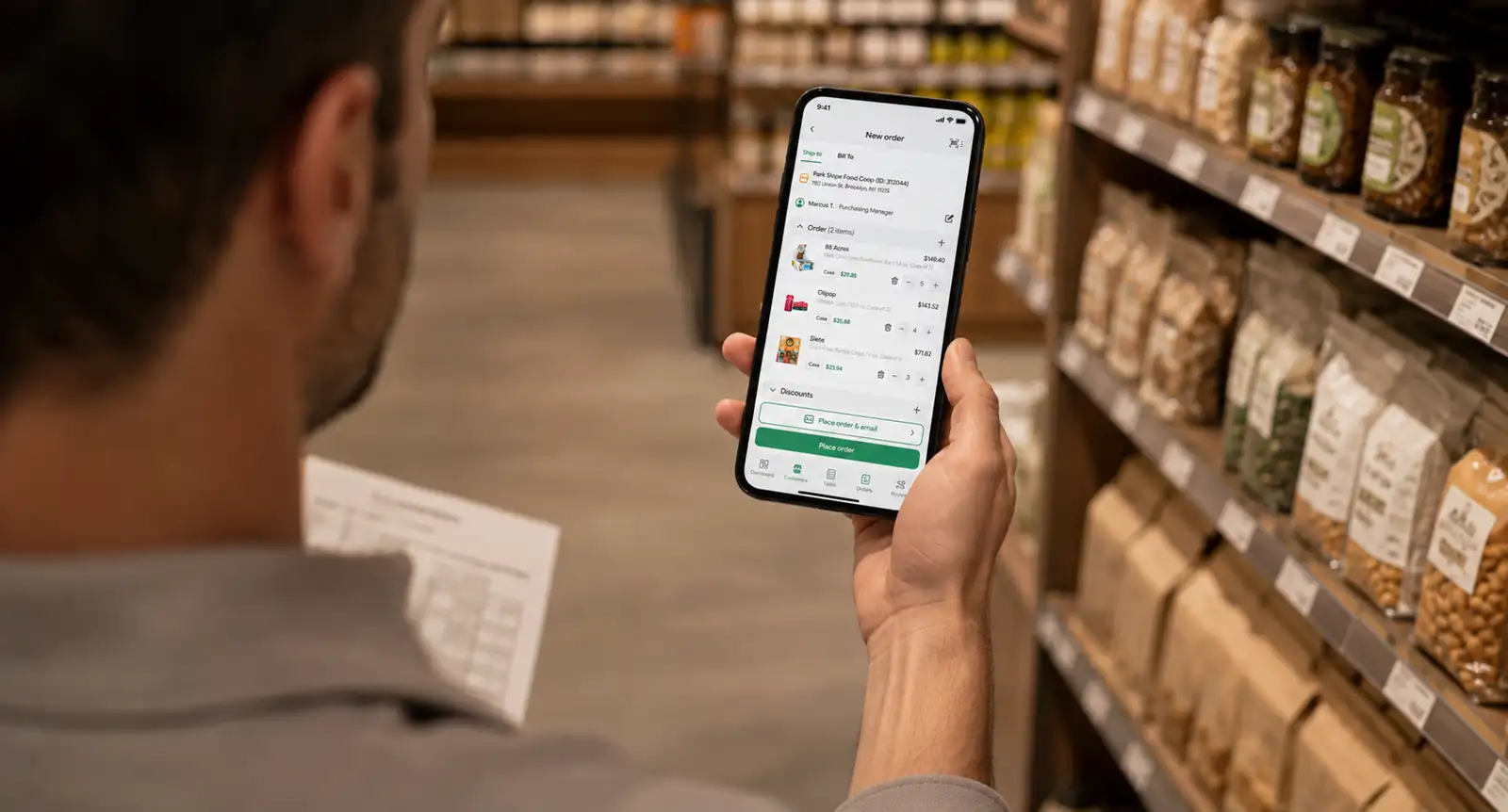
Cin7 alternatives are worth a look when your inventory system works but orders, field sales or deliveries still feel chaotic. Cin7 is a well-known inventory and order management platform for product businesses. Many teams that search for alternatives discover their real bottleneck is what happens before an order reaches the warehouse.
This guide explains where Cin7 fits, when teams outgrow it and which alternatives to consider based on the problem you’re actually trying to solve. For distributors whose pain sits in the field, see our overview of inventory management software connected to sales and delivery.
Why teams look for Cin7 alternatives
- Field sales needs more. Reps need mobile ordering, visit tracking and store tasks during each stop.
- Deliveries run on your own trucks. Route planning, truck inventory and proof of delivery matter as much as warehouse stock.
- Setup and complexity. Some teams find the platform more than they need, or need more help configuring it.
- Too many connected apps. Filling gaps with integrations adds cost and points of failure.
Where Cin7 works well
Cin7 suits product businesses that sell through multiple channels, such as ecommerce, marketplaces, retail and wholesale, and need strong inventory control across warehouses. It offers broad integrations and inventory features like batch and serial tracking.
Where teams hit its limits
- Rep ordering, store visits and merchandising tasks usually need separate tools.
- Route-based delivery and truck stock management sit outside its core focus.
- Reporting by rep, route and territory may require exports or extra tools.
Is inventory really the problem?
Before switching inventory systems, check where errors start. If stock is wrong because reps write orders on paper, deliveries aren’t confirmed or returns aren’t logged, a new inventory tool won’t fix it. Those are field execution problems. Our guide to inventory accuracy covers how to find the source.
Cin7 alternatives and competitors to consider
1. SimplyDepo
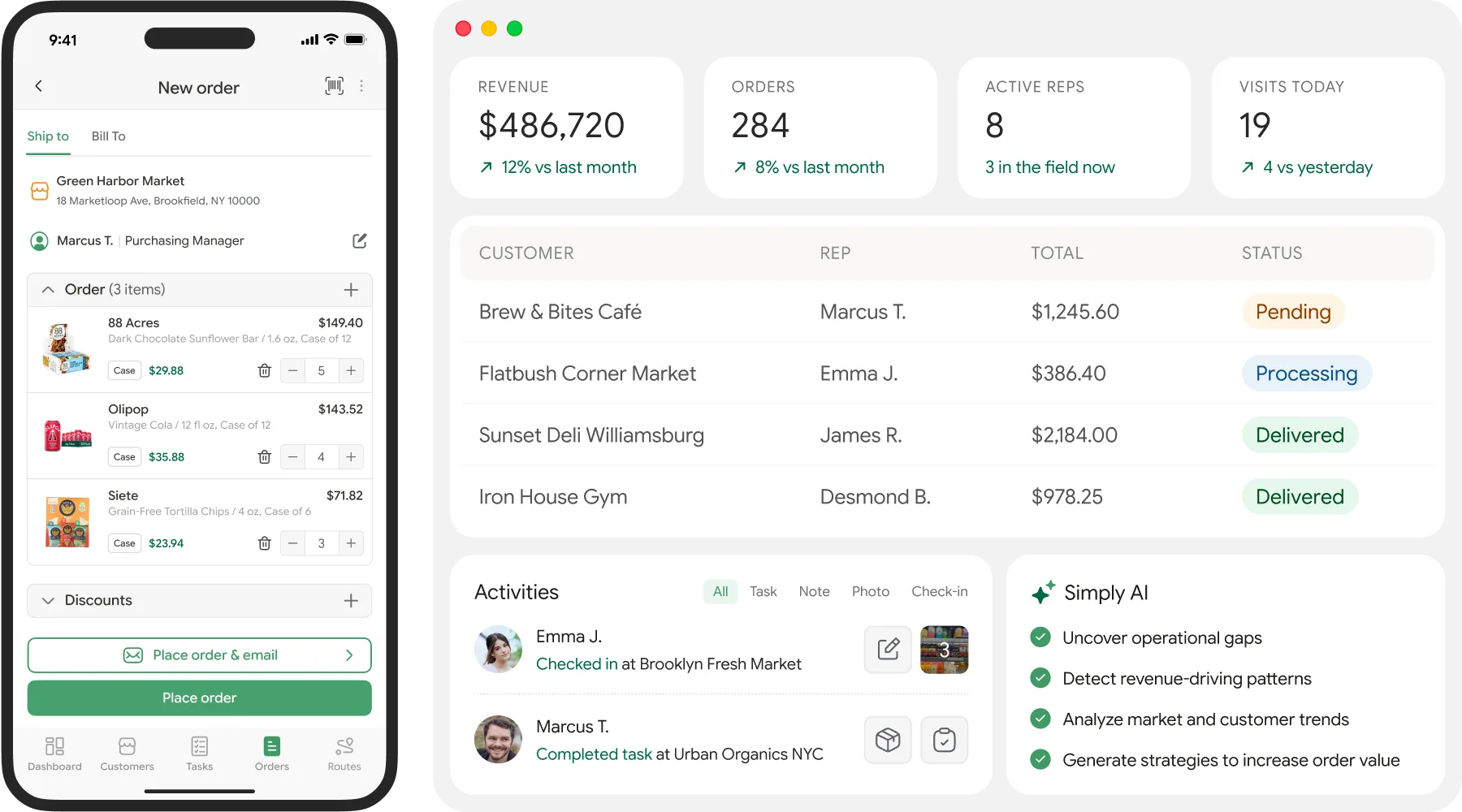
SimplyDepo is built for distributors and CPG brands where reps, routes and stores drive revenue. Reps write orders on a mobile app with live stock and customer-specific pricing, buyers reorder through a B2B storefront, and every order draws from inventory across warehouses and trucks. Orders then move into route planning, proof of delivery and invoicing, with QuickBooks sync for accounting.
Low-stock items show up in the purchase order module, so buyers can reorder from suppliers before shelves run empty. Teams that mainly sell through ecommerce marketplaces may find a multichannel inventory tool a closer fit.
Best for: Distributors and CPG brands with field reps, store visits and their own delivery routes.
Pricing: Per-rep plans are listed on the pricing page, with a free trial.
2. Fishbowl
Fishbowl has a long track record with businesses that run their own warehouses and want inventory tied closely to QuickBooks, with two-way sync built in. It covers barcode scanning, multi-location stock, purchasing and order fulfillment, and Fishbowl Advanced adds deeper warehouse and manufacturing options.
It is strongest inside the warehouse. Rep ordering, store visits and route-based delivery sit outside its core, so distributors with field teams usually pair it with other tools.
- Best for: Warehouse-heavy businesses and light manufacturers that use QuickBooks.
- Watch for: Implementation planning, plus separate tools for field sales and delivery.
Pricing: Sold as subscriptions. Confirm current plans with Fishbowl.
3. Katana
Katana is a cloud manufacturing ERP for small product brands that make goods in batches and sell through ecommerce stores, marketplaces and wholesale. Its strengths are production planning, bills of materials, raw material tracking and batch tracking.
If you resell finished goods rather than make them, much of Katana goes unused. Distribution and field sales features are limited.
- Best for: Small manufacturers that need production and materials planning.
- Watch for: Limited tools for reps, routes and store execution.
Pricing: A free plan for very small catalogs, with paid tiers above it.
4. inFlow
inFlow is straightforward inventory and order management for small and mid-sized businesses. It handles purchase orders, sales orders, barcode scanning and stock across locations, includes a B2B ordering portal for wholesale customers, and integrates with QuickBooks.
It is a common first system for teams moving off spreadsheets. Field sales, store visits and route delivery need other tools.
- Best for: Small wholesalers and warehouses replacing spreadsheets.
- Watch for: Sales order limits on lower plans as volume grows.
Pricing: Flat monthly plans priced per account rather than per user, with a free trial.
5. Zoho Inventory
Zoho Inventory suits teams already using Zoho apps. It connects with Zoho Books for accounting and covers multi-warehouse stock, composite items, backorders and dropshipping.
The free and lower tiers cap orders, users and locations, so growing teams move up plans quickly. Field sales and route delivery need other tools.
- Best for: Small product businesses already in the Zoho ecosystem.
- Watch for: Plan limits on orders, users and locations.
Pricing: A forever-free plan with limits, plus paid plans per organization.
6. NetSuite
NetSuite is a full cloud ERP covering financials, inventory, order management, purchasing and reporting in one system. It fits companies ready to run the whole business on one platform, including multiple entities and currencies.
Implementation is a real project, usually with a partner, and field sales and route delivery typically come from add-ons or connected apps.
- Best for: Larger companies standardizing on one enterprise system.
- Watch for: Implementation time and total cost of ownership.
Pricing: Annual subscription quoted by Oracle NetSuite based on modules and users.
How to choose
| If your main problem is… | Look at… |
|---|---|
| Field sales, routes and store execution | SimplyDepo |
| Light manufacturing plus inventory | Fishbowl, Katana |
| Simple inventory for a small team | inFlow, Zoho Inventory |
| Enterprise-wide ERP | NetSuite |
Questions to ask before switching
- Where do most inventory errors start: receiving, picking, field orders or returns?
- How much revenue comes from reps and route deliveries?
- Which integrations would we lose or need to rebuild?
- Can we fix the problem by adding a field sales tool instead of replacing inventory software?
- What would migration involve for products, customers and open orders?
Migration tips
Clean up product and customer records before exporting. Move open orders and current stock counts at a quiet time, such as the end of a week, and run a full count right after go-live. Keep the old system read-only for a few weeks so the team can look up history. Our guide to cycle counting helps keep counts accurate after the switch.
Inventory and field sales can work together
Some teams keep their inventory system and add a field sales and distribution platform on top, syncing orders and stock between them. Others consolidate into one platform. Either works if inventory, orders and deliveries share the same data.
If your wholesale business runs on seasonal collections or a branded online store instead, our guides to NuORDER competitors and Shopify Plus alternatives cover those tools.
Why distributors choose SimplyDepo
The best Cin7 alternative for a field-driven distributor connects what reps sell, what’s in stock and what gets delivered.
SimplyDepo brings mobile ordering, live inventory across warehouses and trucks, route planning, proof of delivery and invoicing into one platform for distributors and CPG brands. Book a demo to see it with your products and routes.
FAQs
Common alternatives include SimplyDepo, Fishbowl, Katana, inFlow, Zoho Inventory and NetSuite. The best fit depends on whether you need field sales and delivery, manufacturing or enterprise ERP features.
Product businesses selling across several channels that need strong multi-warehouse inventory control and many integrations.
Usually because they need stronger field sales, route delivery and truck inventory features, or a simpler setup.
Yes, some teams connect a field sales platform to their inventory system. Confirm that orders and stock sync reliably before rolling it out.
-
 November 17, 2026
-
 November 17, 2026
-
 November 13, 2026