CPG Supply Chain Network Optimization: A Guide

CPG supply chain network optimization is the work of deciding where products are made, stored and shipped from, and how they move to customers, so you serve stores reliably at the lowest reasonable cost. For consumer packaged goods brands and distributors, that network includes co-packers, warehouses, distributors, delivery routes and the retailers at the end of the line.
Most networks aren’t designed. They grow one decision at a time: a new co-packer here, an overflow warehouse there, a distributor added to reach a new region. Eventually the network works, but not well. This guide covers where efficiency usually leaks out of a CPG supply chain network and how to fix it in a practical order. If your network relies on distributors, distribution management software is often the first tool that makes those leaks visible.
What is a CPG supply chain network?
A CPG supply chain network is the set of facilities, partners and transportation links that move products from raw materials to store shelves. For most brands it includes:
- Suppliers of ingredients and packaging
- Manufacturing sites or co-packers
- Warehouses, distribution centers or 3PLs
- Distributors and wholesalers
- Delivery routes to retailers, including direct store delivery where it’s used
Optimization means changing the number, location and role of these pieces, and how goods flow between them, to hit service goals at a lower total cost.
Where CPG supply chain networks lose efficiency
Too many or too few stocking locations
Each extra warehouse adds rent, labor and inventory. Too few warehouses mean long, expensive delivery routes and slower service. Many growing brands end up with locations chosen for convenience rather than demand.
Inventory in the wrong place
It’s common to have plenty of stock overall but not where orders come from. That leads to transfers between warehouses, split shipments and stockouts in one region while another sits overstocked.
Inefficient delivery routes
For brands and distributors that deliver themselves, routes often reflect history rather than current customers. Drivers cross each other’s areas, trucks leave partly empty and stops cluster on the wrong days.
Weak demand signals
If you only see orders from distributors, not what sells in stores, you plan production and stock levels on delayed information. That creates the classic bullwhip effect, where small changes at the shelf turn into big swings upstream.
Disconnected systems
When orders, inventory and deliveries live in separate tools, nobody can see the whole network. Problems show up as late shipments and angry buyers rather than early warnings.
CPG supply chain network optimization example
Many growing brands start with one warehouse and expand by adding customers far from it. Delivery costs rise, transit times grow and stockouts appear in distant markets. A network review might show that a second warehouse, or a 3PL location closer to a large customer cluster, cuts delivery miles and transit time enough to cover its cost. Others find that better routing and delivery days solve the problem without a new location. Our guide to 3PL vs in-house distribution covers that tradeoff.
How to approach CPG supply chain network optimization
1. Map the current network
List every facility, partner and lane, with volumes, costs and service levels for each. Many teams find costs they didn’t know they were paying.
2. Set service targets
Decide what good looks like: delivery lead times by region, fill rates and on-time, in-full performance. Retailer requirements like OTIF often set the minimum.
3. Match inventory to demand
Use sell-through and order history by region to decide what to stock where. Fast movers belong close to customers. Slow movers can sit in fewer locations.
4. Rethink routes and delivery days
Group customers by area and plan delivery days around them. Route optimization usually saves more than people expect, especially for self-distributing brands.
5. Review partners
Check whether each distributor, 3PL and co-packer still fits your volume and service needs. If a 3PL could take over storage or delivery in a region, compare its cost to serve against running that work yourself.
6. Connect the data
Bring orders, inventory and delivery data together so you can track service and cost across the whole network, not just inside each facility.
Starting without disruption
Network changes don’t have to happen all at once. Start by fixing visibility, so every location’s stock and orders are in one system. Next, adjust routes and delivery days, which can be changed quickly. Larger changes, like adding or closing a warehouse, come after the data shows a clear case.
Metrics to track
- Cost to serve by customer, region and channel
- Fill rate and on-time delivery
- Inventory days on hand by location
- Delivery cost per case or per stop
- Forecast accuracy against actual sell-through
When to revisit your network
Network decisions shouldn’t be one-time projects. Revisit them when you add a major retailer, enter a new region, change distributors or see costs rising faster than volume.
Ownership decisions shape the network too. Our guide to vertical vs horizontal integration covers the trade-offs.
Getting the visibility to optimize
Most CPG supply chain network optimization work starts with seeing what’s happening across orders, stock and deliveries in one place. Without that, every fix is a guess.
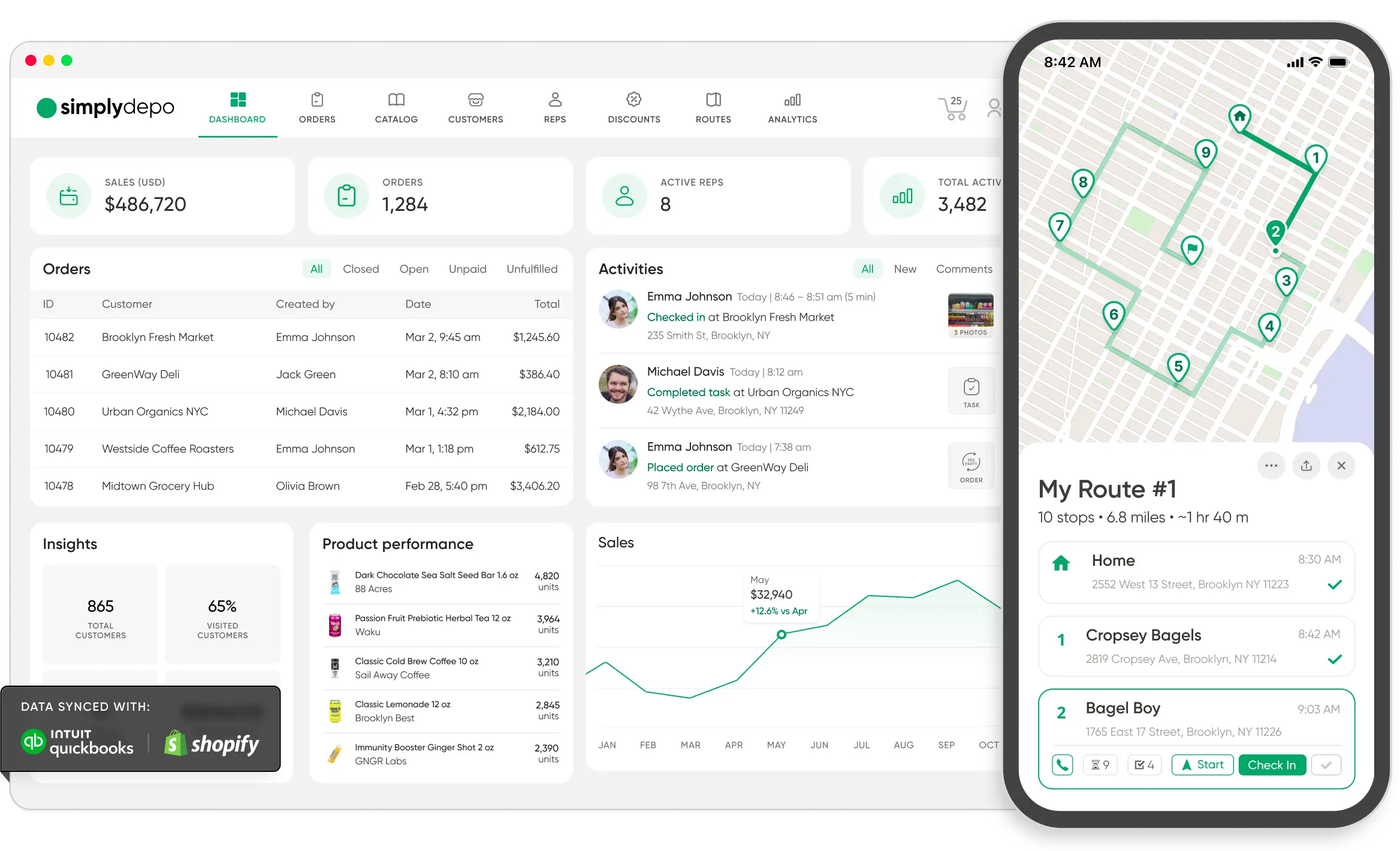
SimplyDepo brings orders, inventory and delivery routes into one platform for brands and distributors, so you can see where your network is working and where it isn’t. Book a demo to see it with your own data.
It’s the process of designing the number, location and roles of facilities and partners, and the flows between them, to meet service goals at the lowest total cost.
CPG margins are thin and retailers expect reliable delivery. A well-designed network lowers freight and inventory costs while improving service levels.
At least once a year, and whenever there’s a big change like a new retailer, a new region or a switch in distributors.
You need order and shipment history by location, inventory levels, facility and transportation costs, and service targets such as lead times and fill rates.
-
 November 17, 2026
-
 November 17, 2026
-
 November 13, 2026