Last mile delivery: Why the final leg costs so much

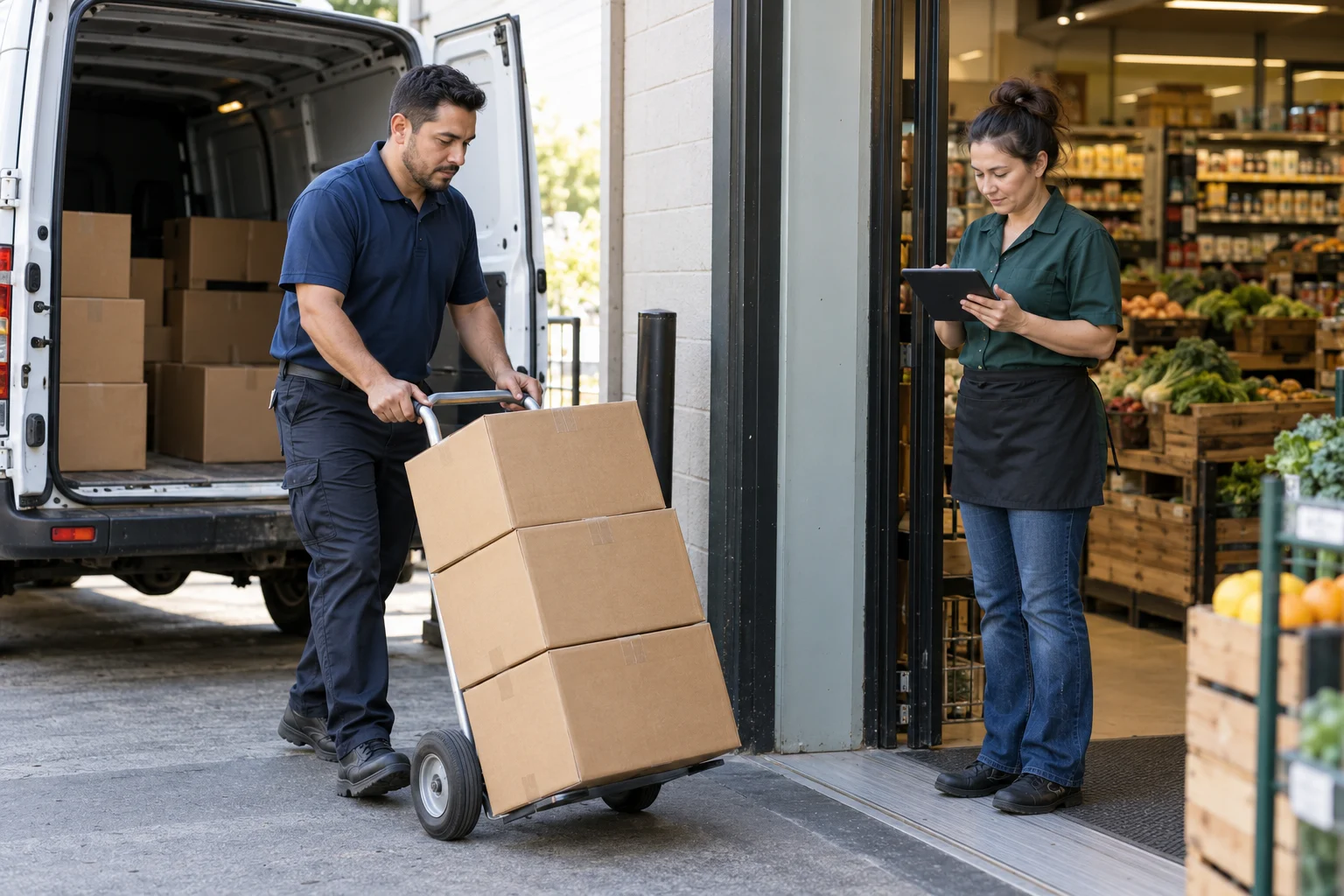
Last mile delivery is the trip from the final distribution point to the customer. For a wholesale distributor, that often means taking cases from a warehouse to a grocery store, café or restaurant. The truck's mileage is only part of the bill. Your team also pays for time at receiving, unloading, checking quantities and returning when a delivery cannot be completed.
To understand where that money goes, start with cost per successful stop. Then look at the work behind the number. A route with too much driving needs a different fix from one held up at receiving or sent out with missing product.
📌 Key takeaways
- Measure completed, accepted deliveries as well as attempted stops so failed visits remain visible in your costs.
- Build receiving windows and service time into the route plan. The shortest drive may still get the truck there at the wrong time.
- Catch order and loading errors before dispatch, and record shortages or refusals at the store.
- Check service quality alongside cost. Savings that lead to stockouts or extra trips may not last.
What is last mile delivery in wholesale distribution?
The term describes the final transport leg between a local hub or warehouse and the delivery destination. It can cover much more than a mile. As DHL's last-mile overview explains, shipments that travel together over longer distances split into smaller drops for this final stage. Each drop brings its own access and timing requirements.
For a beverage distributor, the middle mile might bring pallets from a producer to the warehouse. The last mile takes cases from that warehouse to individual retail accounts, using the distributor's own fleet or a third-party carrier.
With direct store delivery, the supplier or distributor delivers to the store rather than through the retailer's distribution center. The driver or rep may also take an order, rotate stock, check a display or handle a return. A route plan needs to allow time for that work if it is part of the visit.
Why can the final leg cost so much?
A wholesale route spreads vehicle and labor costs across many separate handoffs. At each store, someone may need to park, unload, check the order and get it accepted before moving on. Whether this is your most expensive delivery stage depends on your network and how you allocate costs. A parcel-industry percentage will not tell you what your wholesale route should cost.
Small drops still take time to receive
A two-case order and a twenty-case order can both involve finding the receiver, checking the purchase order and collecting a signature. The unloading time will differ, but some of the work stays the same. That makes frequent small drops expensive on a per-case basis.
Before reducing visit frequency, look at the account's contribution margin and replenishment needs. A small order might protect a valuable account or keep a fast-selling perishable item in stock. If the shelf cannot hold enough product between visits, fewer planned deliveries could lead to more emergency runs.
Time at the store can outweigh time between stores
Reaching the right address does not mean the driver can start unloading. A truck may wait for a loading space, a receiver or access to the back entrance. The University of Washington's Urban Freight Lab research on the Final 50 Feet examines these parking, loading and building-access stages.
Record waiting time separately from service time. Twenty minutes spent rotating stock is different from twenty minutes waiting for someone to unlock a door. If both appear as a long stop in your report, it is difficult to tell what needs to change.
An incomplete delivery creates more work
A refused order, missing case or missed receiving window may require a second trip. The first attempt has already used driver time and truck capacity. Dispatch then has to fit the return visit around other commitments.
The reason matters. “Store closed,” “short-loaded,” “price disputed” and “receiver unavailable” point to different problems and different people who can solve them. Record what happened while the details are fresh, rather than leaving the office with a generic failed-delivery status.
Paperwork can keep the route open after the truck returns
Someone still has to reconcile the manifest, find missing signatures and confirm whether a customer accepted a partial shipment. Include that time in delivery costs. Otherwise, a route can look efficient while it creates hours of work for the office.
Keep the order reference with the delivery record and any exception. A photo is much more useful when the person reviewing it can identify the store, time and order without calling the driver.
How do you calculate last mile delivery cost?
For route improvement, cost per successful stop is a useful place to start. Choose a reporting period, add the costs of serving the route and divide by the number of completed deliveries. Cost per case and account-level contribution can then help explain differences between large and small orders.
Cost per successful stop = total route delivery cost ÷ successful delivery stops
Agree on what counts as a successful stop before comparing results. You might require an accepted delivery and a completed delivery record. If partial deliveries count as completed stops in your operation, keep them visible separately. Apply the same definition to the baseline and the revised route.
Include driver and helper labor, variable vehicle expenses, an allocated share of fixed vehicle costs, and delivery-related dispatch or administration. Add outsourced fees and recovery costs where they apply. Check for double counting: a per-mile rate that includes fuel or depreciation should not have those costs added again.
A worked route example
These hypothetical figures, in US dollars, show how the calculation works. They are not industry benchmarks or SimplyDepo customer results.
|
Cost item |
Calculation |
Daily cost |
|---|---|---|
|
Driver labor including payroll burden |
8 paid hours × $36 |
$288 |
|
Variable vehicle expense |
120 miles × $0.60 |
$72 |
|
Allocated fixed vehicle cost |
Daily allocation |
$60 |
|
Delivery dispatch and administration |
Recorded daily cost |
$60 |
|
Total route cost |
Sum of the four items |
$480 |
The route attempts twenty stops and completes eighteen. Its cost is $24 per attempt, but $26.67 per successful stop. That second figure makes the cost of the two unsuccessful visits easier to see.
Now suppose a revised plan completes all twenty stops within the same paid shift, reduces mileage to 110 and brings administration down to $36. With the other assumptions unchanged, the route costs $450, or $22.50 per successful stop. That is a reduction of about 15.6% from the original $26.67.
The result depends on completing the extra work within the same shift. If the revised route needs overtime, add it. Include any later recovery trips when comparing the full cost of serving those orders, too. A one-day report can miss costs that show up tomorrow.
Where should distributors reduce delivery cost first?
Review several comparable route days with drivers and dispatch. Look for a recurring source of waiting, extra driving or failed deliveries that the team can realistically address. Start there, and watch the customer's service level as you test the change.
1. Keep receiving details in the account record
Each account should have a current receiving window, entrance, contact and unloading instructions. Include appointment requirements and what the driver should do if the receiver is absent. Both dispatch and the driver need access to those details.
A store that opens at 8 a.m. may not receive deliveries until 10 a.m. Plan around the receiving requirement. When a driver finds that it has changed, update the account as part of resolving the issue so the next route does not repeat the mistake.
2. Plan time for the work at each stop
A routine replenishment drop, a first delivery and a visit with merchandising work need different time allowances. Use actual visits to improve those estimates instead of giving every stop the same duration.
Combine service time with receiving windows and available vehicle capacity. Loading, breaks and the return to the depot all belong in the paid day. Allow for normal delays; a schedule that requires every handoff to happen immediately leaves dispatch little room to respond.
Route management software can help organize accounts and routes. Its usefulness still depends on accurate operating details. If your operation needs automatic handling of capacity limits or complex time windows, test those requirements directly with the provider.
3. Consolidate orders where the service agreement allows it
Consistent delivery days by area and clear order cutoffs can reduce avoidable trips. Before adding a late order, check whether the truck has space, whether the store can receive it and which other commitment would be affected.
Use account history to review order frequency with sales and the buyer. Changes to minimum orders or delivery cadence need commercial agreement. Dispatch should continue to honor confirmed orders while the team works out whether planned replenishment can replace emergency drops.
4. Check the order against the load
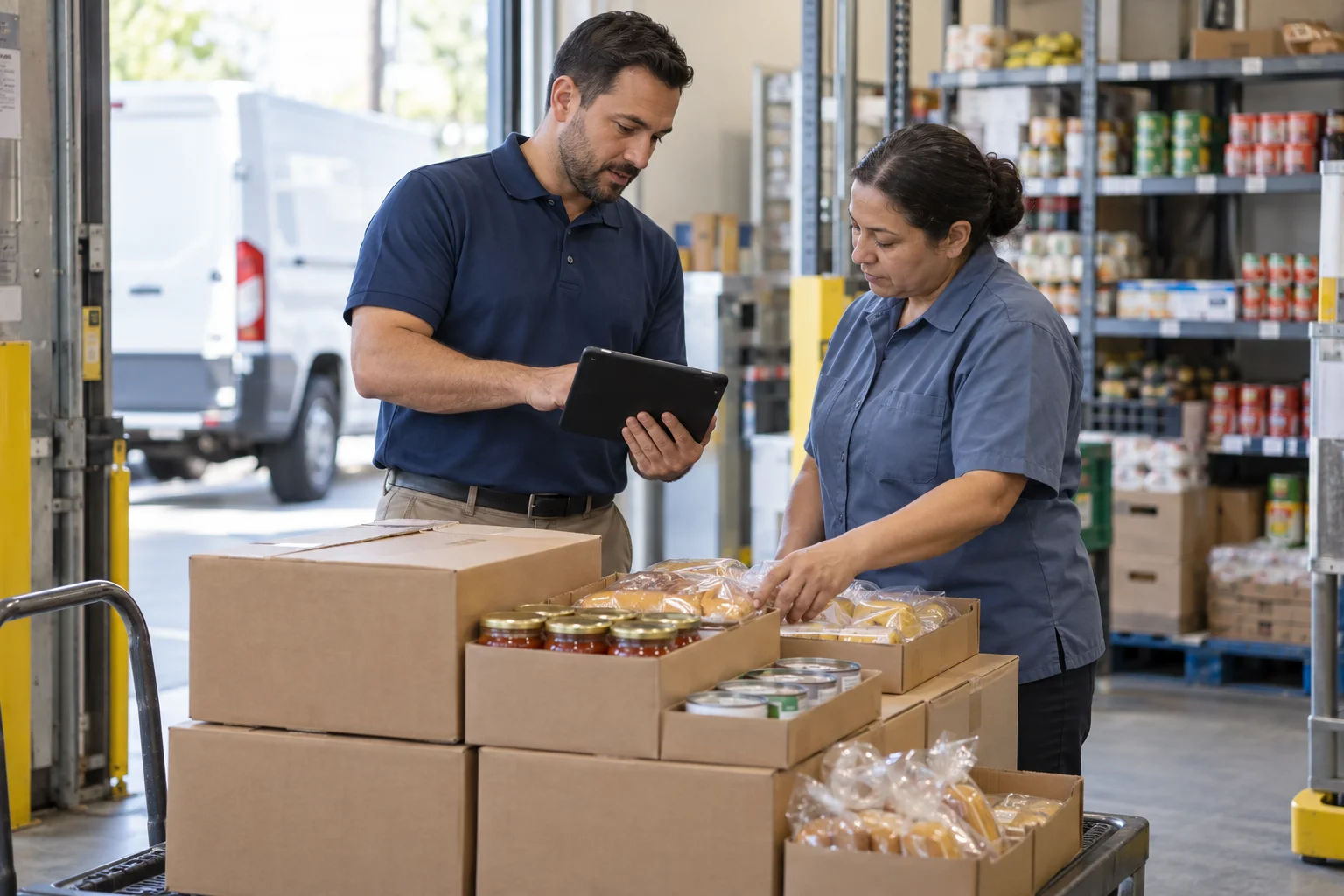
Before departure, confirm the customer, SKU, selling unit and quantity. A case-pack mismatch can make an order appear correct in the warehouse system and wrong at the receiving dock. Identify missing product while there is still time to respond, and obtain any required agreement for a partial delivery.
Load early stops where the driver can reach them without repeatedly moving later orders. Follow the approved handling and temperature procedures when choosing the sequence. A quicker unload only helps if the product arrives in the required condition.
5. Give drivers a clear way to resolve exceptions
When a store cannot accept an order, the driver needs to know whom to contact and what decisions they can make. Dispatch should hear about the problem before an unplanned detour or a promise to return changes the rest of the day.
Use a small set of reason codes with room for a short explanation. Assign responsibility for pricing disputes, returns and customer updates, then record the decision against the order so the driver and office have the same instructions.
Waiting can also create avoidable fuel costs. The EPA's SmartWay guidance on idle reduction identifies unnecessary idling as an expense worth addressing. Review it alongside waiting time while maintaining safe cab conditions, required refrigeration and equipment procedures.
6. Finish the stop with a usable delivery record
Record accepted quantities and any shortage, damage or refusal. Collect the evidence the customer requires, such as a recipient name, signature or photo. Someone reading the record later should be able to distinguish arrival, an attempted delivery and a completed delivery.
Proof of delivery software helps keep that evidence with the stop. Your team also needs a process for reviewing incomplete records and correcting errors. A signature may confirm a handoff while leaving a quantity or condition dispute unresolved.
Which metrics show whether the changes worked?
Read delivery cost alongside service results. Lower mileage is less useful if late deliveries and emergency runs increase. Compare similar territories, order mixes and service requirements, and account for changes in fuel prices, staffing or volume.
|
Metric |
What to calculate or record |
How to use it |
|---|---|---|
|
Cost per successful stop |
Route delivery cost divided by accepted completed stops |
Track overall delivery economics |
|
First-attempt completion rate |
Stops completed on the first attempt divided by eligible attempted stops |
Find avoidable repeat work |
|
On-time delivery rate |
Eligible deliveries meeting the agreed window divided by eligible deliveries |
Check the service promise |
|
Waiting and service time |
Record each separately at the store |
Distinguish access delays from required work |
|
Cost per delivered case |
Route delivery cost divided by accepted cases |
Compare order-size effects |
|
Exception cost and recurrence |
Recovery expense and repeated causes by account |
Prioritize the next process fix |
Check rates as well as totals. Ten failed deliveries out of one hundred stops represent a different problem from ten out of one thousand. Keep denominators consistent when comparing teams.
Be clear about the benefit of time saved. Freeing half an hour may let a driver serve another account, but it does not reduce payroll if the paid shift stays the same. Report added capacity and cash savings separately.
How to test a change on one route
Choose a route with enough repeat visits for a useful comparison and establish a baseline. Then change one major process, such as updating receiving windows or adding pre-dispatch quantity checks. Record the change and review the result with the people doing the work.
Agree in advance on the cost measure, minimum service requirements and exception definitions. Keep the original orders, and note changes in volume or staffing during the test. At the review, compare completed stops, cost and service together before deciding whether to keep, adjust or reverse the change.
Ask which avoidable problem occurred less often and where its effect appears in the results. A shorter-looking route on a map is a starting point; completed deliveries and operating costs show whether it helped.
Bring the route and delivery record together
Lower last mile delivery cost starts with knowing what each stop requires and seeing what actually happened there. Accurate orders, realistic visit times and complete delivery records make it easier to find the repeated problems worth fixing.
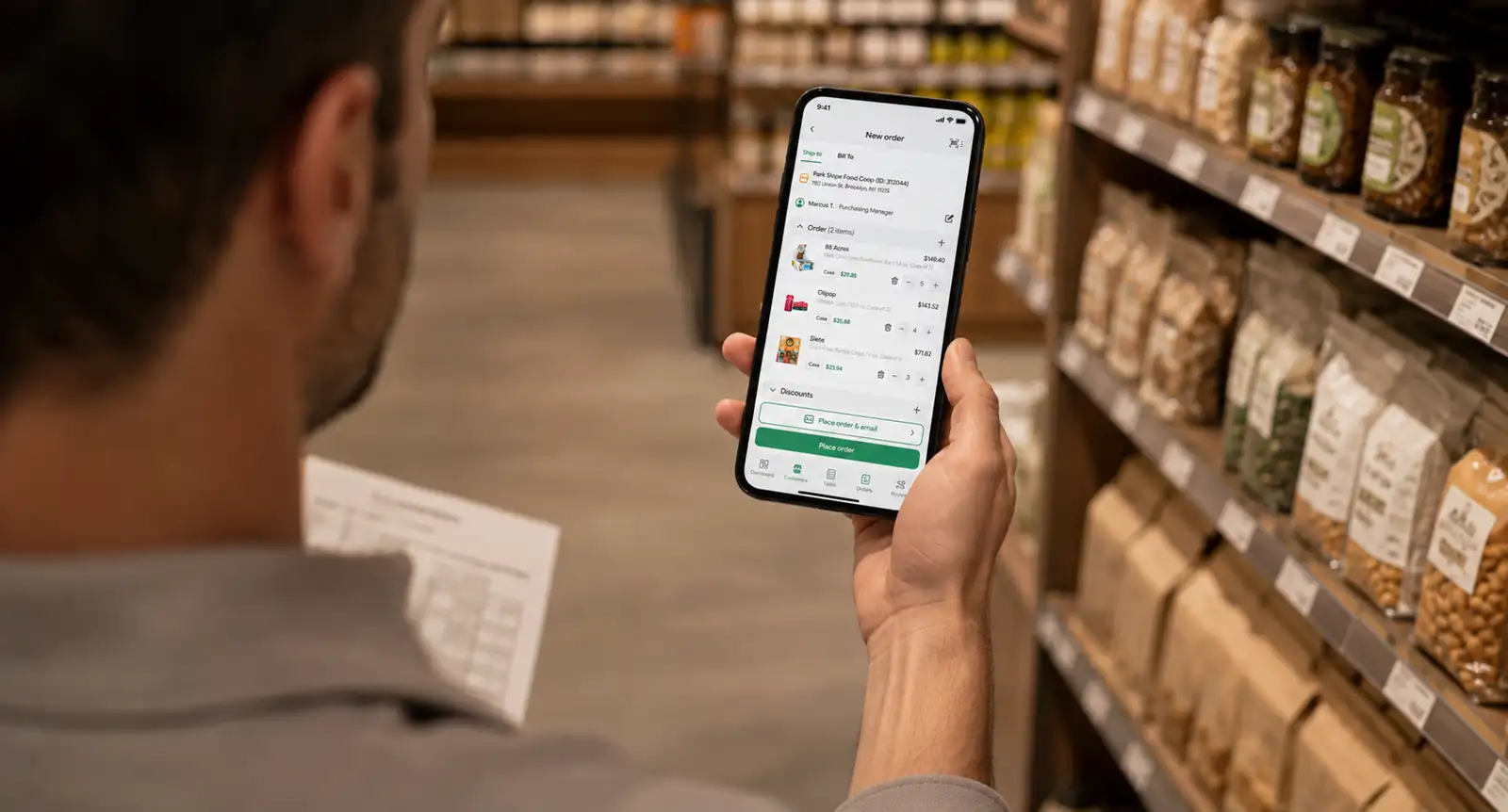
SimplyDepo brings field sales, orders, routes and retail execution into one mobile-first platform. Its direct store delivery software supports building routes from open orders or active accounts, viewing van inventory during ordering, recording GPS-verified visits and capturing delivery evidence. Those records help teams investigate where an order or delivery went off plan.
When evaluating the workflow, bring a real route with a partial delivery and a difficult receiving window. Ask to see how your team would prepare the day, handle the exception and retrieve the delivery record afterward. Use that walkthrough to judge how the system fits your operation.
FAQ
Last mile describes the final transport leg. Direct store delivery is a distribution model in which the supplier or distributor delivers to the retail store, bypassing the retailer's distribution center. A DSD route includes last-mile delivery and may also include selling, merchandising and returns during the visit.
It depends on the distance, receiving windows, number of stops and work required at each store. For wholesale accounts, measure performance against the agreed delivery date or window. Same-day service is only necessary where it forms part of that agreement.
No. A shorter route can arrive before receiving opens, run into overtime or leave an order undelivered. Compare the full delivery cost and completion results, allowing for time windows, vehicle limits and product-handling requirements.
Compare the provider's full service scope with the work your driver performs today. Check receiving appointments, returns, proof requirements and merchandising responsibilities. Include any work that stays with your team in the cost comparison.
A useful delivery record can save time spent searching for evidence or asking drivers to reconstruct a visit. It also helps teams investigate shortages and refusals. The benefit depends on consistent capture of the right details; it cannot prevent every failed stop or guarantee the outcome of a dispute.
Set a target using your route economics and service commitments. A dense parcel route and a refrigerated wholesale route perform different work. Compare similar routes, follow the cost trend and check whether account contribution supports the service you provide.
-
 October 20, 2026
-
 October 20, 2026
-
 October 20, 2026