Retail Pricing Strategies: Guide for CPG Brands & Retailers

📌 Key takeaways:
- Retail pricing strategies offer a structured approach to setting, protecting, and adjusting product prices across every point in the distribution chain.
- For CPG brands, it means building price architecture that holds from the factory floor to the retail shelf. And for independent retailers, it means margin decisions tied to the actual economics of their floor.
- Different pricing strategies serve different goals. Cost-plus, value-based, competitive, penetration, bundle, loss leader, and psychological pricing each fit specific products, markets, and growth objectives.
- Pricing discipline depends on execution. MSRP, MAP policies, promotional planning, and account-specific pricing all require consistent execution across retail accounts to protect margins and brand positioning.
A beverage brand launches a new SKU. The suggested retail price supports distributor margins and gives retailers room to run promotions.
Six months later, one retailer cuts prices to clear inventory ahead of a category reset. Other retailers follow.
Now, promotional pricing becomes the new normal. What began as a temporary discount starts reshaping how shoppers perceive the product.
This is how pricing problems emerge in CPG. Rarely through a single decision, but through a series of disconnected ones across the supply chain.
Retail pricing is more than setting a shelf price. It’s the framework that connects manufacturer margins, distributor economics, retailer profitability, promotional activity, and consumer expectations. When that framework breaks down, brands lose pricing power and retailers lose margin.
In this guide, we’ll explore the retail pricing strategies that help CPG brands protect their price architecture while giving independent retailers the flexibility to compete and grow profitably.
How pricing moves through the distribution chain
Every product passes through multiple pricing layers before it reaches the consumer:
- A brand sets a wholesale price above COGS to generate a contribution margin
- The distributor applies their markup, let’s say 20 to 40%, to cover warehousing and delivery
- A retailer marks up again, around 30 to 50 percent, to cover their costs and target margin
The consumer sees only the final shelf price, but that number has to work for everyone in the chain.
The manufacturer’s suggested retail price (MSRP) is what keeps this architecture intact. It’s the price a manufacturer recommends retailers to charge.
It’s not legally binding in most markets, but it functions as the channel-wide pricing anchor.
Set it too low, and there’s no room for promotions. And if you set it too high relative to the competitive market, the product stalls on shelf.
A retailer who understands this math can negotiate terms, evaluate wholesale offers, and decide where to apply markup versus where to run a promotion.
💡 Interesting to note:
Small pricing decisions can have an outsized impact on profitability. According to NielsenIQ, a 1% improvement in price can generate an 11% improvement in margins, which highlights why disciplined pricing execution is important across the entire distribution chain.
Retail pricing strategies that CPG brands must follow
| Pricing strategy | Best for | Watch out for |
|---|---|---|
| Cost-plus | Setting a price floor; retailers with large assortments | Ignores perceived value and competitive context |
| Value-based | Premium or differentiated CPG products | Overestimating willingness to pay in price-sensitive categories |
| Competitive | Commodity categories with price-aware shoppers | Matching prices without checking if the margin math supports it |
| Penetration | New product launches entering independent retail | Introductory price becoming the expected permanent price |
| Bundle | Increasing transaction size; simplifying buyer assortment decisions | Inventory imbalance when one component sells faster than another |
| Loss leader | Driving foot traffic on high-velocity, price-visible items | Eroding brand price image if not funded through trade spend |
| Psychological | Anchoring perceived value around MSRP; improving conversion at POS | Unrealistic anchor prices weaken the impact of a discount |
1. Cost-plus pricing
Cost-plus pricing sets a product’s price by adding a target markup to the cost of producing or acquiring it. For manufacturers, that means COGS plus desired contribution margin. And for retailers, it means wholesale cost plus desired floor margin.
It’s the starting point for most pricing decisions because it’s the floor. A price that doesn’t cover costs isn’t a pricing strategy; it’s a cash flow problem.
The limitation is that cost-plus pricing says nothing about what the market will bear or what competitors are charging. A product priced at cost-plus may be underpriced relative to its perceived value, or overpriced relative to competitors.
2. Value-based pricing
Value-based pricing sets price based on what the customer perceives the product to be worth.
A consumer who believes an organic oat milk is meaningfully better than the conventional alternative will pay a premium for that belief. The price reflects brand equity, formulation, packaging, and category context, not COGS.
This strategy works best for differentiated CPG products: premium food and beverage, functional health products, specialty or regional brands with a distinct story.
The risk is overestimating perceived value. When a value-priced product underperforms on velocity, the temptation is to discount, which undermines the positioning the price was supposed to signal.
💡 Did you know?
Consumers are willing to pay 9.7% above the average price for sustainably produced or sourced goods, according to a PwC survey.
3. Competitive pricing
Competitive pricing sets a product’s price relative to direct competitors on shelf.
In commodity categories like bottled water, basic snacks, or household staples, price is often the primary variable consumers evaluate, and staying within a competitive range is necessary to maintain baseline velocity.
For CPG brands, competitive pricing is a market reality check more than a strategy. It establishes the price ceiling the market will tolerate for a given category.
The problem comes when brands treat it as the primary decision framework and match competitor prices without checking whether their own channel math supports those price points.
A price that works for a brand with higher volume and lower freight costs may not work for a challenger brand with different economics.
4. Penetration pricing
Penetration pricing sets an introductory price below the market rate to generate trial and build velocity with a new product or in a new market.
It’s a common entry strategy for CPG brands entering independent retail for the first time. A below-MSRP opening offer lowers the retailer’s risk on an unknown product and creates an early velocity signal.
The mechanism in the field is usually a temporary price reduction (TPR), where the brand funds a discounted shelf price for a defined period.
This is a form of trade promotion and should be budgeted as one.
Without a defined exit, penetration pricing sets a precedent: if a retailer’s customers develop a price expectation at the introductory level, going back to the standard price feels like an increase rather than a correction.
5. Bundle pricing
Bundle pricing sells multiple units or complementary products together at a price that’s lower on a per-unit basis than buying each item separately.
Bundling increases the average order value with a retailer buyer, who often prefers to take on a bundle than individual SKUs because it simplifies the assortment decision.
It also shifts the consumer’s price reference from a single unit to a bundle, which makes comparison shopping harder and perceived value easier to control.
6. Loss leader pricing
Loss leader pricing sets a high-velocity item at or below cost to drive foot traffic or basket size, with the expectation that customers will purchase additional items at regular margins.
Large grocery chains use this routinely.
For independent retailers with tighter margins and fewer SKUs, the product chosen as a loss leader needs to be genuinely price-visible and reliably basket-building.
Pricing below cost on a product that consumers don’t compare across stores is just a margin write-off.
On the brand side, loss leader behavior by a retail partner is a channel risk. When a retailer uses a brand’s product as a loss leader without the brand funding it through trade spend, the brand’s price image across the channel erodes.
Minimum advertised price (MAP) policy is the control mechanism.
7. Psychological pricing
Psychological pricing uses price presentation to influence how consumers perceive value. Charm pricing (setting a price at $4.99 rather than $5.00) is the most common example.
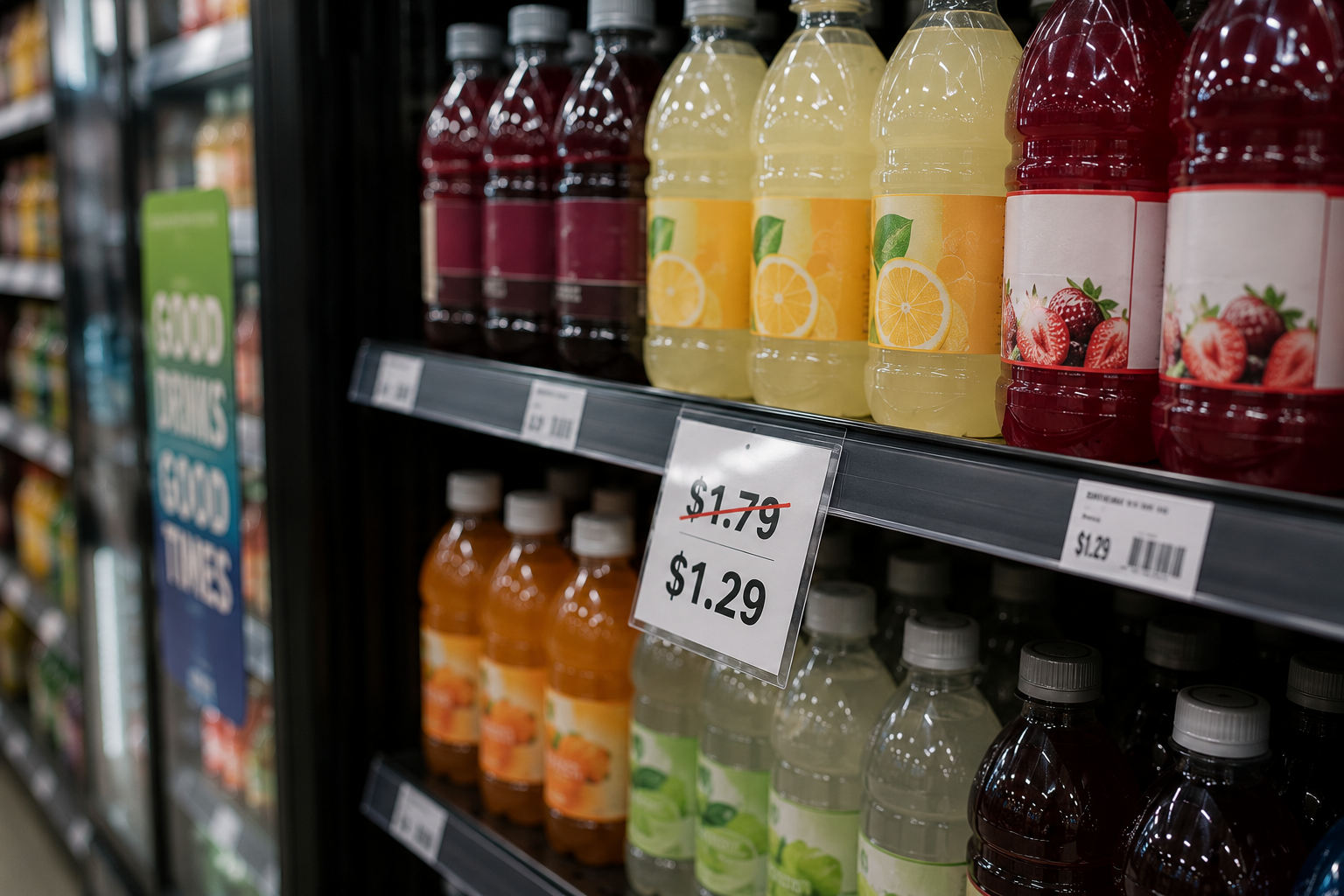
Price anchoring, showing a crossed-out “regular price” alongside a promotional price, is another.
In CPG, MSRP anchoring is the most relevant application.
A product displayed with a crossed-out MSRP and a promotional price signals value in a way that a promotional price alone does not.
This is why setting a defensible MSRP matters even for brands that plan regular promotions. But remember, the anchor needs to be believable.
MSRP, MAP, and channel conflict: How brands protect pricing across retail channels
What MSRP does in the channel
MSRP is the price a manufacturer suggests retailers charge, calculated by working backward from the desired shelf price to ensure viable margins exist at every level.
It’s a suggested price, not a contractual one, but it serves as the pricing reference across all retailers and channels.
How MAP works and why it matters
Minimum advertised price (MAP) is a contractual obligation embedded in the wholesale or distributor agreement that sets the lowest price at which an authorized retailer may advertise the product.
A retailer may legally sell below MAP at the point of sale in most jurisdictions, but they cannot advertise below it.
MSRP needs to sit high enough above MAP that retailers have genuine promotional room, and MAP needs to sit high enough that even an advertised promotional price preserves the product’s price image.
Channel conflict and how to prevent it
Channel conflict occurs when pricing differs across sales channels in ways that create tension with retail partners or confuse consumers.
For example, if a brand sells a product on its own website for $29 while independent retailers list the same product at $35, retailers are left competing against the brand itself.
Over time, that can discourage retailers from investing in shelf space or future orders.
The best way to prevent channel conflict is to establish a consistent pricing strategy across DTC, wholesale, and retail channels from the outset.
Clear pricing guidelines, aligned promotional policies, and active MAP enforcement help protect retailer relationships and maintain consumer trust in the brand’s pricing.
💡 Also read:
How can independent retailers build their pricing strategy?
1. Start from wholesale cost, not MSRP
The starting point is the wholesale cost, not the MSRP. A retailer needs to know what margin covers their cost of goods, operating overhead, and target profit before they consider what competitors are charging. The MSRP is a ceiling and a reference, not a floor.
A common confusion is the difference between markup and margin. A 50% markup on a $10 wholesale cost yields a $15 shelf price, but the margin on that sale is 33%, not 50%.
2. Price by category
High-velocity staples generally run on lower margins because consumers are more price-aware and competition is tighter.
Premium or specialty items can support higher margins because consumers are buying on attributes rather than just price.
An independent retailer who applies the same markup to every product is probably underpricing premium items and overpricing commodity items.
3. Align promotions with the manufacturer’s trade calendar
Rather than running reactive discounts to move inventory, retailers should coordinate promotions with the manufacturer’s trade calendar whenever possible.
Brands often provide co-op funding, off-invoice allowances, or promotional support during planned trade periods.
Taking advantage of those programs can improve promotion profitability and strengthen the retailer’s relationship with the brand.
3. Know when to delist
Not every product belongs in every store. If a supplier’s wholesale pricing leaves too little margin at a price customers are willing to pay, the product may not be a good fit for the channel.
Independent retailers sometimes keep underperforming products on the shelf out of habit or long-standing supplier relationships. Over time, those products can take up valuable shelf space that could be allocated to higher-margin or faster-moving alternatives.
Executing pricing strategy in the field
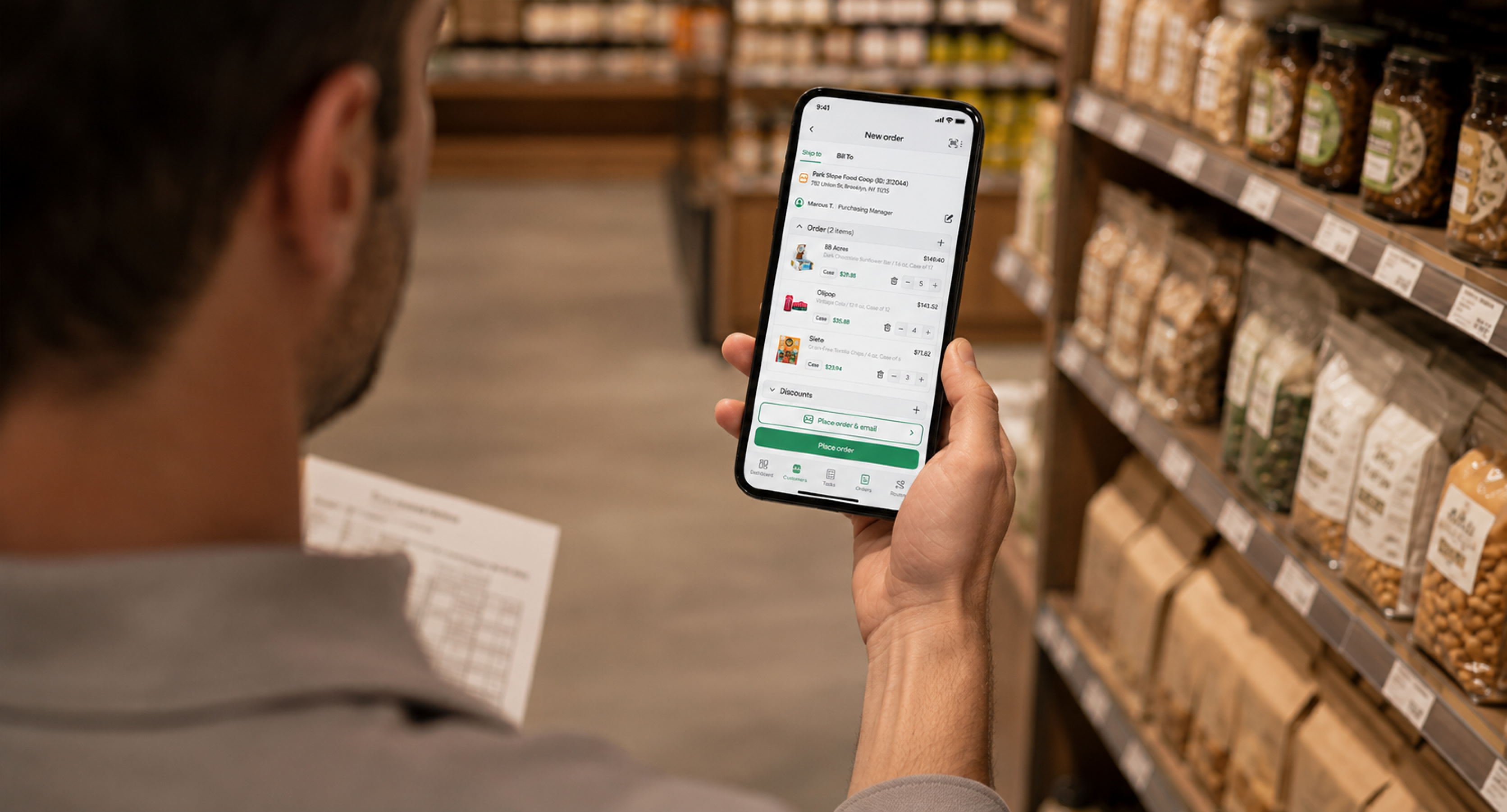
A pricing strategy succeeds or fails in the field, where reps quote prices, take orders, and manage retailer relationships.
The challenge is that pricing is rarely uniform across accounts. A high-volume chain may receive one price tier while an independent retailer receives another. New accounts may qualify for introductory pricing for a limited period.
When reps manage dozens of accounts and rely on printed price sheets or memory, mistakes become inevitable.
Those mistakes can be costly. A retailer quoted different prices on separate visits may question whether they’re being treated fairly. An order entered at the wrong price can lead to underbilling, deduction disputes, and unnecessary friction between retailers, distributors, and brands.
Maintaining pricing consistency requires more than setting the right price.
Field teams need access to current account-specific pricing and a reliable way to capture orders. When pricing information is accurate and readily available, brands can protect margins, strengthen retailer trust, and ensure their pricing strategy holds up in the market.
Pricing decisions that erode margin on both sides of the shelf
1. Setting MSRP without promotional headroom
A brand that launches with an MSRP that barely covers the distributor and retailer margin leaves no room for promotional activity without someone taking a loss.
When the brand eventually wants to fund a TPR or seasonal promotion, either the retailer absorbs the discount or the promotion doesn’t happen. An MSRP needs built-in headroom from day one.
2. Ignoring the full channel cost structure
A pricing model doesn’t stop at COGS and target margin. It also has to account for distributor markups, retailer margin requirements, and trade spend.
Many emerging CPG brands underestimate these downstream costs. As a result, a product that looks profitable in a spreadsheet can deliver much lower margins once it moves through the channel.
3. Setting a MAP policy and not enforcing it
Sometimes, brands invest time in creating a MAP policy but fail to monitor compliance. When that happens, the policy quickly loses its effectiveness.
One retailer advertises below MAP. Others respond to remain competitive. Over time, the advertised price floor across the channel falls, putting pressure on both margins and brand positioning.
Addressing violations early is far easier than restoring pricing discipline after lower prices have become the norm.
4. Matching a competitor’s price without checking the math
A competitor who sustains a lower price may have lower COGS, higher volume, or a different channel structure.
Matching their price without those same economics means accepting a margin that doesn’t work.
5. Applying a flat markup across the full assortment
A uniform markup overprices products in competitive categories where consumers comparison-shop, and underprices products in premium categories where they’re buying on attributes.
Category-based pricing, even a simple two-tier approach, produces better margin outcomes than uniform markup.
Strong pricing starts with strong execution
Retail pricing is more than a margin calculation. It requires consistent execution across distributors, retailers, promotions, and field teams.
Even the most carefully designed pricing strategy can break down when account pricing is inconsistent, promotions go untracked, or reps enter orders at the wrong price.
That’s why many brands and distributors rely on field sales software to maintain pricing consistency at the account level. Field teams need access to current pricing, retailer information, and order data to execute pricing decisions accurately in the market.
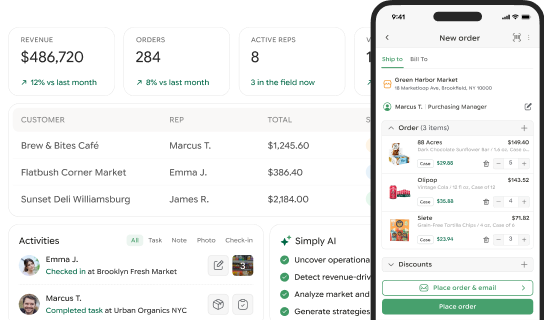
SimplyDepo supports that execution with account-specific pricing, digital order capture, and real-time visibility across retail accounts. Field reps can access the information they need during every store visit, helping brands and distributors maintain pricing consistency and improve retailer relationships.
Book a demo to see how SimplyDepo can help your team.
FAQs on retail pricing strategies
MSRP (Manufacturer’s Suggested Retail Price) is the consumer price a manufacturer recommends across its retail network, calculated by working backward from the desired shelf price to ensure viable margins exist at every level. It’s not legally binding in most markets, but it functions as the channel-wide pricing anchor.
MSRP is a suggested price; retailers can sell above or below it at their discretion. MAP (Minimum Advertised Price) is a contractual floor on the lowest price a retailer can publicly advertise, and violating it risks losing their wholesale account.
Independent retailers usually start with cost-plus pricing as a floor and apply value-based or competitive pricing depending on the category. Category-based pricing consistently outperforms a uniform markup applied across the full assortment.
No. Different products often require different pricing approaches based on category dynamics, competitive pressure, brand positioning, and consumer demand. A premium product may benefit from value-based pricing, while a commodity product may require a more competitive pricing approach.
Distributors can support pricing consistency by maintaining clear pricing policies, communicating promotional programs effectively, and ensuring field teams have access to current account pricing and retailer information. Consistent execution at the account level helps reduce pricing discrepancies and retailer disputes.
 Rated 4.7 on G2
Margins are tight. Visibility shouldn't be.
-
 September 16, 2026
 -
 September 15, 2026
 -
 September 15, 2026