Reverse Logistics: How to Turn Returns & Waste into Profit

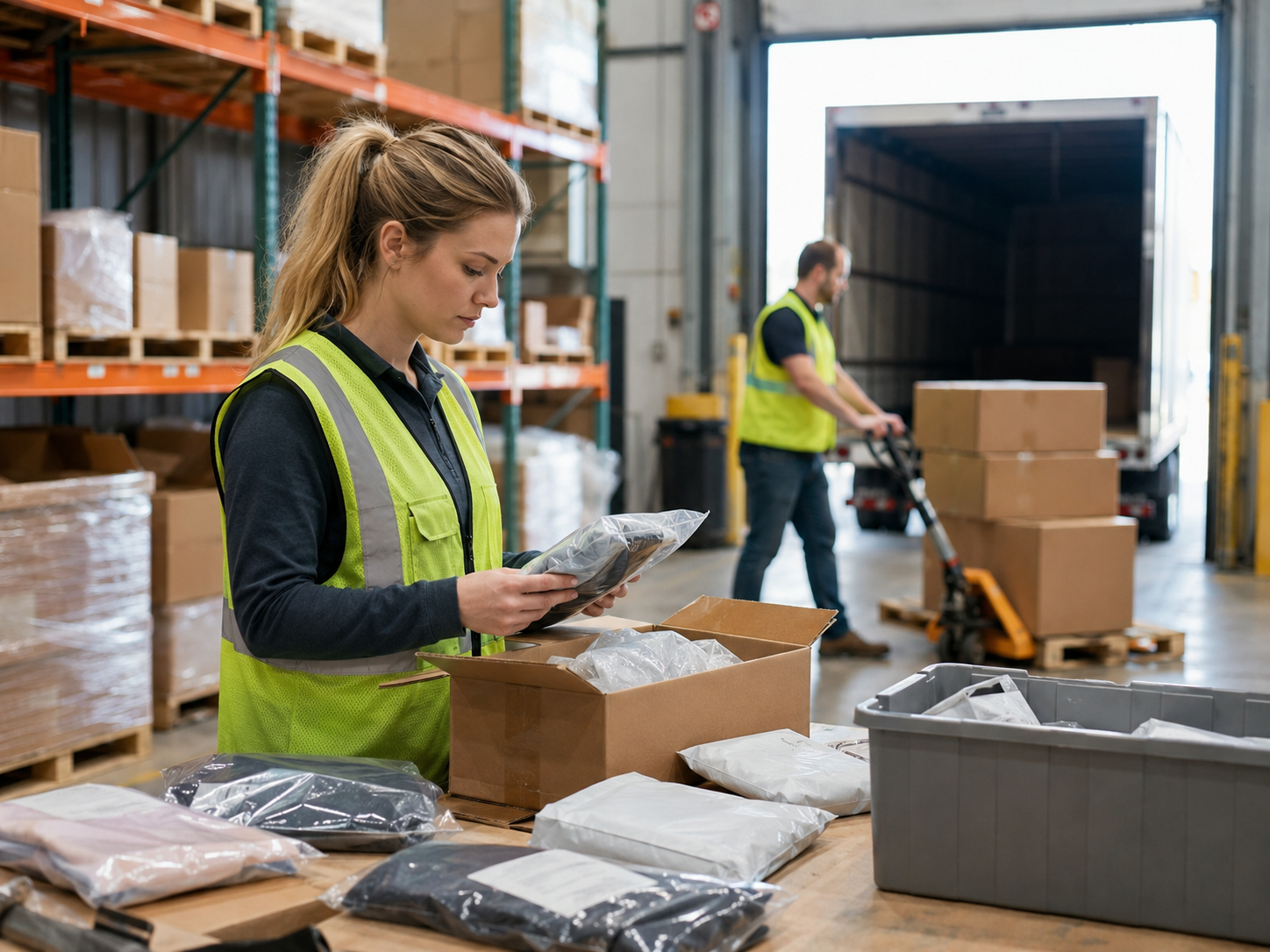
📌 Key takeaways:
- Reverse logistics can recover value that would otherwise be written off. Fast inspection and clear disposition rules help you restock, refurbish, resell, recycle, or safely dispose of each return based on its condition.
- Distributors can keep return transport costs low by using existing delivery routes. Collecting damaged goods, expired stock, and reusable packaging on the return trip turns otherwise empty truck capacity into a backhaul advantage.
- Return data should help you prevent the next return. Tracking return reasons can reveal recurring problems with specific SKUs, accounts, or handling steps, so you reduce waste and costs over time.
A delivery rep finishes a drop at a grocery account and the store manager waves him over. There is a case of dented cans and a few near-expiry units that need to go back, plus a stack of empty crates from last week.
The truck is about to leave for the depot, mostly empty. Whether the rep takes that product or not, the goods are already flowing backward through the business.
That backward flow is called reverse logistics, and it is either draining margin or recovering it.
What is reverse logistics?
Reverse logistics is the specialized supply chain process of moving goods back up the supply chain, from the customer or the retail shelf toward the distributor or manufacturer.
The reasons vary: returns, repair, resale, recycling, or disposal.
It is the mirror image of forward logistics. Traditional logistics focuses on the forward flow of goods to the end consumer, ending at a single known destination. Reverse logistics moves goods from customers back to sellers, and it can end at many different points.
The two also behave differently.
Forward logistics exists to generate revenue by delivering products efficiently, using standardized packaging, bulk handling, and demand forecasting that make it highly predictable.
On the other hand, reverse logistics has to cope with the opposite: unpredictable volumes, mixed conditions, and multiple possible destinations for every returned item.
For a distributor, this is not a rare case. Returns, damaged goods, expired stock, and empty packaging move backward on a routine basis. And each one is a small decision about whether value gets recovered or written off.
Why do returns cost distributors so much?
Returns are a large and growing line item across the economy. The National Retail Federation projected that U.S. merchandise returns reached $890 billion in 2024, about 16.9% of total sales.
For a distributor, the credit issued to the account is only the visible part of the cost. The return also drags along transport, labor, and tied-up capital, and much of that stays invisible until you add it up.
Volume makes the problem worse. Returns are unpredictable and often arrive in large batches after trade promotions, seasonal resets, or a faulty production run. Without a plan, distributors have to deal with the surge using whatever staff and warehouse space happen to be available.
The hidden costs of a passive returns process
A return that nobody planned for still consumes resources. It takes up transport capacity, inspection labor, and warehouse space, and it ties up working capital in a product that sits in limbo.
The longer returns sit untouched, the more likely usable inventory becomes a loss.
Teams often view reverse logistics as an unavoidable expense, but products that could have been restocked, repaired, or resold lose value when no one processes them quickly enough.
There is a customer cost too. A slow or unclear return process erodes customer satisfaction and customer loyalty.
For a distributor that sells through retail accounts, a mishandled credit can strain the relationship that keeps those shelves stocked. Managing customer expectations is a core part of reverse logistics success.
Why distribution returns are harder than parcel returns
Nearly all returns advice targets e-commerce, where the problem is a single parcel coming back. But distribution is messier.
Reverse logistics requires item-by-item inspection, sorting, and grading of returned items, and it features low predictability because returns arrive in varying volumes and conditions.
Add expiry windows, batch and lot recalls, and account-specific credits, and the distributor’s version of the reverse supply chain becomes far more complex than a generic customer return.
What are the types of reverse logistics?
Returns are the most visible path, but reverse logistics involves several distinct flows, and each one needs its own handling.
Returns and delivery failures
This is the common reverse logistics process everyone recognizes: a customer or retail account sends a product back. Delivery failure is a close cousin, where a delivery refusal or a failed drop sends products back to the sender.
Both need a fast, clear path back into the system so the goods do not lose value while they wait.
Refurbishment, repair, and remanufacturing
Some returned goods are not sellable as-is but are far from worthless. Remanufacturing involves repairing and rebuilding products, which prevents waste and saves money by restoring items to sellable condition.
Resale, recycling, and disposal
Goods that cannot go back to primary shelves still have options. Reverse logistics includes recycling, refurbishing, and reselling products, often through secondary markets, outlet channels, or liquidation partners like Total Surplus Solutions.
Packaging management belongs here too. Reusing pallets and packaging materials keeps usable assets in circulation instead of the landfill. Reverse logistics can reduce waste by recycling products that reach the end of their life.
Recalls and expired stock
This path is where distribution differs most from parcel returns. Product recalls, unsold goods returned to manufacturers, and expired stock pulled from shelves all move backward. Many of them carry compliance requirements that make speed and traceability non-negotiable.
Excess inventory is a less obvious version of the same flow. When a product sells poorly, moving that excess stock back for redistribution or liquidation frees warehouse space and recovers cash that would otherwise sit frozen on a shelf.
How do you turn returns into profit?
Profit in reverse logistics comes from one habit: routing each returned item to its highest-recovery path instead of defaulting to the write-off pile.
Practitioners call that decision disposition, and it is where a solid reverse logistics plan earns its place.
Establishing strict workflows for returned items maximizes asset recovery value. The matrix below shows how condition maps to the best recovery path.
| Item condition | Best recovery path | What it protects |
|---|---|---|
| Unopened, sellable | Restock into inventory | Full product value |
| Minor damage or open-box | Discount or outlet resale | Most of the margin |
| Repairable defect | Refurbish, then resell | A margin often near new-product levels |
| Near-expiry | Fast liquidation or donation | Partial value before total loss |
| Expired or unsafe | Recycle or proper disposal | Compliance and avoided penalties |
| Reusable packaging | Return to circulation | Asset and replacement cost |
Read it top to bottom as a priority order. The goal is to catch each item at the highest rung it qualifies for, because every step down the ladder is a recovered value you give up.
Where the margin hides
The refurbishment rung deserves attention, because it is where a lot of margin hides. A returned item restored at low cost and resold at a modest discount can carry a margin close to what a new unit earns, which is why refurbishment turns a would-be loss into a revenue line.
Speed is what protects all of it. The longer an item waits for a disposition decision, the more value it loses. So the distributors who recover the most are the ones who grade and route returns quickly.
How can route-based delivery make reverse logistics profitable?
Here’s the advantage most distributors leave on the table. The delivery truck is already visiting the account, so the marginal cost of bringing product back on that same trip is close to zero.
The backhaul advantage
Backhaul is a structural edge that a direct-to-consumer brand does not have. A DTC seller pays for a separate return parcel on every item, while a route-based distributor can collect returns, damaged goods, expired stock, and empty crates on a trip that was going to happen anyway.
Turning a sunk transport cost into recovered value is one of the clearest wins in the reverse supply chain. It also improves operational efficiency, because one driver on one existing stop now does double duty.
That control over the route is one of the reasons some brands keep distribution in-house rather than handing it to a 3PL.
Why coordination is the catch
The backhaul only pays off if the pickup is planned. What makes it work is coordination: your field team has to log and schedule return shipments on the same route, so the driver, the warehouse, and the back office all stay aligned.
Without that, returns turn into a separate, costly errand, or worse, a product the rep meant to collect gets left on the dock. Route planning software treats return pickups as part of the route from the start, not a separate task.
What does a good reverse logistics process look like?
An effective reverse logistics system reduces waste and improves customer satisfaction, but only if the steps are deliberate.
The programs that work tend to share the same traits: they keep returns visible, move them fast, and refine the process as they learn.
1. Set the rules before goods move
Good returns management starts with gatekeeping. Clear and transparent return policies set expectations for customers and limit fraud, and an authorization step decides what qualifies before anything reaches a truck.
2. Capture condition at the point of return
The moment a return is picked up, someone should log its condition, the reason, and the account. Automated return management software streamlines the authorization process and records the detail that later drives the disposition call.
3. Reintegrate value and learn from the data
Sellable goods should flow straight back into stock, which is where inventory management keeps returned products from getting lost. Folding returns handling into the wider warehouse management process makes sure inspection and restocking happen as routine steps, not exceptions. The rest moves to refurbishment, resale, recycling, or disposal.
Then close the loop. Data analytics helps you analyze return patterns to improve product design and reduce returns, so a recurring defect or a mishandling store gets caught.
How do you measure reverse logistics performance?
You cannot improve what you do not track, and reverse logistics has its own set of key performance indicators separate from the forward supply chain. Track the right ones and you’ll know whether your process is recovering value or leaking it.
The key metrics
Recovery rate is the headline number: the share of returned value you get back rather than write off. Alongside it, track cost per return, the time from pickup to disposition, and the restocking rate, which is the portion of returns that go straight back into sellable inventory.
Return reasons belong on the list too. When you sort returns by cause, you can quickly identify the SKU, customer account, or handling step driving repeat returns.
Use the data to reduce returns
The best reverse logistics strategy is the one that shrinks the reverse flow over time. Feeding return data back into forecasting and product decisions is how good reverse logistics management moves from cleanup to prevention, lowering both waste and cost.
So, how do returns become a profit center?
Returns and waste are only a loss when the reverse flow runs on autopilot. Handled with intent, the same goods recover value, protect customer loyalty, and support sustainability goals through reuse, refurbishment, and recycling.
For a distributor, the profit lever is the route you already run and the discipline to route each item to its best recovery path. Both of those depend on capturing what happens in the field the moment it happens.
That is where SimplyDepo fits for distribution and consumer-goods teams. The distribution management software captures returns, damaged goods, and stock changes from the mobile app during the store visit, on the same trip and the same system as the outbound order.
Returned sellable goods update stock in real time, route planning lets returns ride the existing delivery trip, and native QuickBooks sync reconciles credits and inventory without manual work. Offline mode keeps all of it running in low-signal stockrooms and rural routes, so no pickup goes unrecorded.
The result is a reverse flow you can see and act on.
Book a free demo to see SimplyDepo in action!
FAQs on reverse logistics
Reverse logistics is the movement of goods backward through the supply chain, from the customer or retail shelf back to the distributor or manufacturer. It covers returns, repair, resale, recycling, and disposal, and its aim is to recover value or dispose of goods responsibly.
Forward logistics moves product out to the customer and runs on predictable, planned demand. Reverse logistics moves product back the other way and is far less predictable, because returns arrive in varying volumes and conditions and can end at many different destinations.
The main paths are returns management, refurbishment and repair, resale and liquidation, recycling and disposal, and recalls or expired stock. Many distributors count packaging management, which reuses crates and pallets, as a sixth.
Profit comes from routing each returned item to its highest-recovery path, such as restocking, refurbishing, or reselling, rather than writing it off. Distributors add another gain by collecting returns on existing delivery routes, which keeps the transport cost close to zero.
They start with gatekeeping to decide what is eligible, capture each item’s condition and reason at the point of return, then make a disposition decision per item. Route-based collection keeps transport cheap, and clear workflows protect the recovered value.
Technology adds visibility and speed. Real-time capture in the field with field sales software, disposition tracking, inventory sync, and returns data feeding back into forecasting all turn a slow, manual process into one that recovers more value with less labor.
Reverse logistics is a core part of the circular economy, because it keeps products and materials in use instead of sending them to landfill. Reusing packaging, refurbishing returned goods, and recycling end-of-life products cut waste and lower environmental impact, which both retail partners and regulators care about.
It can be, though the process has to fit the scale. Reverse logistics can be expensive if run manually, so smaller distributors gain the most by piggybacking returns onto existing delivery routes and using software to automate authorization and tracking rather than adding headcount.

-
 October 8, 2026
 -
 October 8, 2026
 -
 October 7, 2026
