Types of Payment Methods for B2B and Wholesale: How to Pick the Right Mix for Your Business


📌 Key takeaways:
- Offer the payment methods your buyers can use and your margins can support; one method rarely fits every wholesale transaction.
- Compare processing fees, time until funds are usable, collection effort and reconciliation work, not just the advertised transaction rate.
- Separate the payment method from payment terms: net 30 defines when money is due, while a card, ACH transfer or check determines how it moves.
- Keep payment status tied to the correct customer and invoice, whether an order originates with a field rep or in a B2B portal.
The main types of payment methods for B2B and wholesale transactions include bank transfers, credit and debit cards, checks and cash. Some buyers also use digital wallets or instant bank payments. The right mix depends on the size and frequency of orders, buyer preferences, collection timing and the cost of accepting each method.
A regional food distributor might accept cards for first orders, ACH for repeat accounts and checks from buyers whose accounts-payable process still requires them. A CPG brand selling through a self-service portal may prioritize a convenient card checkout while offering approved accounts payment terms.
The practical goal is to make it easy to pay without creating unnecessary fees or back-office work. This guide focuses on U.S. business payments; availability, fees and protections vary by provider and market.
Payment methods, payment terms and payment channels are different
A payment method is the mechanism used to transfer value. Payment terms describe when payment is due and any agreed conditions. A payment channel is where the buyer initiates the transaction, such as a portal, invoice link or in-person collection.
For example, a customer can receive net 30 payment terms and settle the invoice by ACH. Another customer can pay the same invoice immediately by card. “Pay on delivery” sets the collection point but does not tell the driver whether to expect cash, a check or an electronic payment. Keep these choices separate when setting up customer accounts.
Common types of payment methods at a glance
Use this comparison to shortlist options. Actual fees, settlement schedules, limits and availability come from your bank or processor agreement; they are not universal properties of a payment method.
|
Method |
Useful B2B fit |
Cost and timing questions |
|---|---|---|
|
ACH bank transfer |
Repeat domestic invoices and scheduled collections |
Bank or processor fees; authorization; processing schedule and payout timing |
|
Credit or debit card |
First orders, remote checkout and buyer convenience |
Percentage and fixed fees; authorization versus settlement; disputes |
|
Wire transfer |
Large or time-sensitive payments |
Sending/receiving fees; cutoffs; verified beneficiary details |
|
Paper check |
Buyers with established check-based accounts payable |
Handling and deposit effort; collection delay; returned-check risk |
|
Cash |
Selected in-person or route transactions |
Receipts, custody, deposit work and loss controls |
How each payment method fits wholesale operations
ACH transfers for recurring business payments
ACH moves payments between bank accounts. An ACH credit is generally initiated by the payer; an ACH debit allows an authorized collection from the payer’s account. For a distributor with repeat invoices, that distinction affects who must act before money moves.
Nacha explains that ACH payments can be processed on the same business day or scheduled for a following business day. However, a processor’s payout schedule, eligibility rules or holds can make the time until usable cash different from network settlement. Ask your provider for the complete timeline rather than promising every customer an instant result.
ACH can suit established customers making frequent or higher-value payments, especially where its quoted fees compare favorably with percentage-based card charges. Verify authorization requirements, return handling and how invoice references reach your accounting team.
Cards for convenient checkout
Credit and debit cards give buyers a familiar way to pay without arranging a bank transfer. They can be useful for a first wholesale order, a smaller replenishment purchase or a portal transaction where convenience helps the buyer complete checkout.
Card authorization is an approval step, not the same event as settlement or a payout to your bank. Stripe’s explanation of authorization and settlement separates these stages. Your order workflow should distinguish an authorized payment from money that has reached the business.
Compare the full fee schedule and the process for refunds, disputes and failed payments. A familiar checkout is valuable, but the cost of a large card-paid invoice can be materially different from a small order. Avoid assuming every card type or transaction channel carries the same rate.
Wire transfers for larger or urgent payments
A wire may suit a large opening order or a time-sensitive supplier payment. For U.S. Fedwire transfers, the Federal Reserve describes payments as final and irrevocable once processed. That makes accurate beneficiary instructions particularly important.
Confirm your bank’s cutoff, charges and recipient requirements before promising a delivery or release date. International transfers can introduce additional banks, currency conversion and different timelines. A domestic-wire assumption should not become a blanket promise for cross-border wholesale trade.
Checks when the buyer’s process requires them
Checks may remain part of a buyer’s established accounts-payable process. If accepting them helps retain a worthwhile account, create a clear routine for who receives the check, records its invoice reference, deposits it and follows up on exceptions.
The operational cost includes more than the bank’s charge. Count handling time, delayed deposits, reconciliation and returned payments. Receiving a check should not automatically mark an invoice as finally collected; align your status rules and credit decisions with the bank’s guidance.
Cash for controlled in-person collection
Cash can fit selected route or counter transactions, but it needs a documented handoff. The rep should issue a receipt, identify the customer and invoice, record the amount and follow the business’s deposit procedure.
A cash policy should also explain how to handle partial payments, change, overpayments and a missing receipt. These are process decisions to make before a driver is standing at a store with another stop waiting.
Where do digital wallets and instant payments fit?
A digital wallet is often a convenient way to present an underlying card or other funding method. It does not automatically create a different settlement schedule or eliminate processing fees. Evaluate the actual payment method, buyer adoption and provider support behind the wallet.
Instant bank payments are a separate option where participating institutions and their business offerings support them. The Federal Reserve’s FedNow Service supports payments within seconds, around the clock, through participating banks and credit unions. Confirm that both the required sending and receiving capabilities are available to your business before adding this option.
For many wholesalers, these options supplement the core mix rather than replace it. Add a method when it solves a real customer problem and your team can reconcile it reliably.
Choose the mix by order type and total collection cost
Start with three customer situations
For a new account, consider how payment fits your credit policy and first-order release process. For an established buyer with repeat orders, compare a scheduled bank-payment workflow with the effort of collecting each invoice manually. For a field sale, consider what the rep can realistically complete at the stop and what must happen later in the office.
Then check whether buyers actually want the option. A technically available payment method has little value if customers avoid it or your team has to explain it on every order.
Calculate more than the transaction fee
A useful decision model is: total collection cost = processing fees + administrative effort + exception-handling costs + the cost of delayed cash. This is a planning framework, not a standardized accounting formula.
For an illustrative $2,000 invoice, a hypothetical 3% processing charge would be $60, while a hypothetical $5 flat charge would be $5. Those figures are not market quotes or SimplyDepo pricing. The $55 difference only helps if the cheaper workflow does not introduce comparable chasing, matching or delay costs.
You can test this with a small sample of actual invoices. Record the method, fee paid, days until usable funds and minutes spent resolving problems. Compare similar customer groups rather than treating one difficult payer as representative of an entire payment method.
Keep the order, invoice and payment connected
A payment received without a usable reference can leave an invoice looking overdue. Standardize the customer identifier, invoice number, amount, payment date and transaction reference that must travel together. Decide who reviews payments that cover several invoices or differ from the amount due.
For route-based businesses, DSD route accounting connects the discussion to the operational handoff between the field and office. A rep’s collection note should not be the only record of what happened at a stop.
Build a separate verification step for changed bank details. The FBI’s business email compromise guidance recommends verifying changes in account numbers or payment procedures. Use a known contact channel rather than relying on the same message that introduced the change.
Build a payment workflow your buyers and team can use
Choosing types of payment methods is ultimately a workflow decision. Offer enough choice to serve worthwhile accounts, keep the economics visible and make each payment easy to match to an order. Review the mix as order values, customer expectations and collection patterns change.
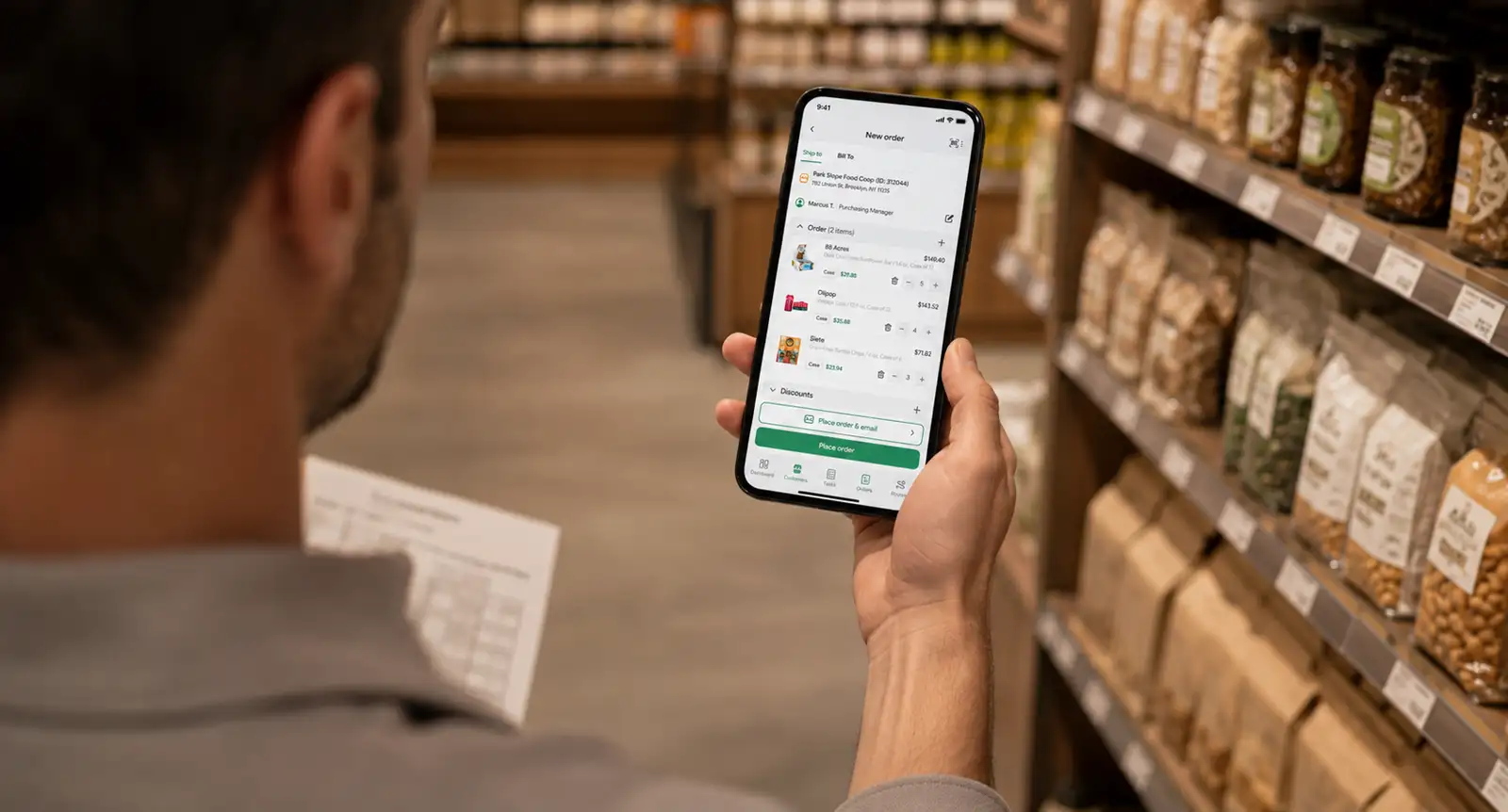
SimplyDepo’s B2B portal software connects wholesale ordering with customer-specific pricing and account history, and supports card payments through Stripe. Its QuickBooks Online integration connects the operational workflow with accounting. For a field-sales business, that provides useful context for evaluating how orders, invoices and payment records should move together.
Explore SimplyDepo with a sample of your own orders and payment scenarios. Confirm the collection methods available for each channel, how exceptions are handled and which system owns the final accounting record before rollout.
Frequently asked questions
Common options include ACH transfers, credit and debit cards, wire transfers, paper checks and cash. Digital wallets and instant bank payments may also be available. The useful mix depends on the buyer, transaction and provider support.
No. Net 30 describes when payment is due under the agreed terms. The buyer still needs a method, such as ACH, card or check, to settle the invoice.
There is no universally cheapest option. Compare your quoted processing charges with collection effort, exceptions and time to cash. Larger invoices can make percentage-based fees more significant, but convenience and buyer acceptance also matter.
Not always. Authorization, processing, settlement and payout can be separate stages. Define what each status means with your provider and avoid releasing credit holds based only on an ambiguous confirmation.
Accept the methods that customers value and your business can support economically and operationally. Start with a manageable mix, measure its performance and add options when there is a clear reason.
-
 October 8, 2026
 -
 October 8, 2026
 -
 October 7, 2026