What Is a Stockist? Role in the B2B Distribution Chain

📌 Key takeaways:
- A stockist buys and holds inventory for resale, so it takes on the risk of unsold stock while helping brands keep products available closer to local customers.
- Stockists differ from distributors and wholesalers mainly in the relationship they have with the manufacturer. Their role centers on holding stock and making it locally available, rather than managing a full territory or buying broadly across many brands.
- As a stockist network grows, inventory visibility becomes critical. Brands need a reliable way to track stock levels, purchase orders, pricing, deliveries, and reorders across every account.
Walk past a boutique window and you might see a small sign: “Now stocking [Brand].”
The shop isn’t reselling on consignment or placing an order every time a customer asks. It bought the inventory outright, and it’s betting its own shelf space on it.
This is the stockist relationship, and it shows up everywhere from independent pharmacies to specialty food shops to global B2B supply chains.
Understanding what a stockist does, and how that differs from a distributor or wholesaler, shapes real decisions for anyone in that chain.
It affects pricing, growth plans, and who ends up carrying the inventory risk.
The role sounds simple on paper. In reality, it touches everything from how a brand sets wholesale pricing to how quickly a small business can put a new product in front of local customers without building its own retail store.
What does a stockist do?
A stockist is a business, or in smaller markets sometimes a single person, that buys products from a manufacturer or distributor and holds that inventory in its own facility for resale.
Some industries call the same role a dealer, an agent, or a channel partner, but the function is the same.
The defining feature isn’t the size of the operation. It’s that a stockist buys and holds a certain level of stock, rather than simply placing an order on demand every time a customer asks for something.
A specialty cosmetics shop carrying an indie skincare line, a regional pharmacy stocking a supplement brand, and a hardware store carrying one particular tool brand are all examples of stockists. Each one bought the inventory, stores it on a shelf or in a back room, and now carries the job of moving it.
Stockists generally sell to retailers or other businesses, though plenty also sell straight to end customers, acting as both a wholesale point and a retail store in one.
Where does a stockist sit in the supply chain?
Picture the traditional path a product takes: producer, distributor, stockist, retail shelf, consumer.
A stockist is often the previous node before a product reaches the person buying it, whether that’s a shopper walking into a store or a business placing a procurement order of its own.
A stockist buys directly from the manufacturer, or from a distributor further up the chain, and takes on ensuring availability within a specific region or community.
This decentralizes the burden of forecasting demand.
Instead of one manufacturer trying to predict orders from thousands of individual shops, stockists spread across a market absorb that risk locally, buying in bulk and reselling in smaller quantities that fit what their own customers need.
This structure sits at the center of wholesale distribution generally, where the whole point of the chain is moving goods efficiently from producers to the countless businesses and consumers who never deal with the parent company directly.
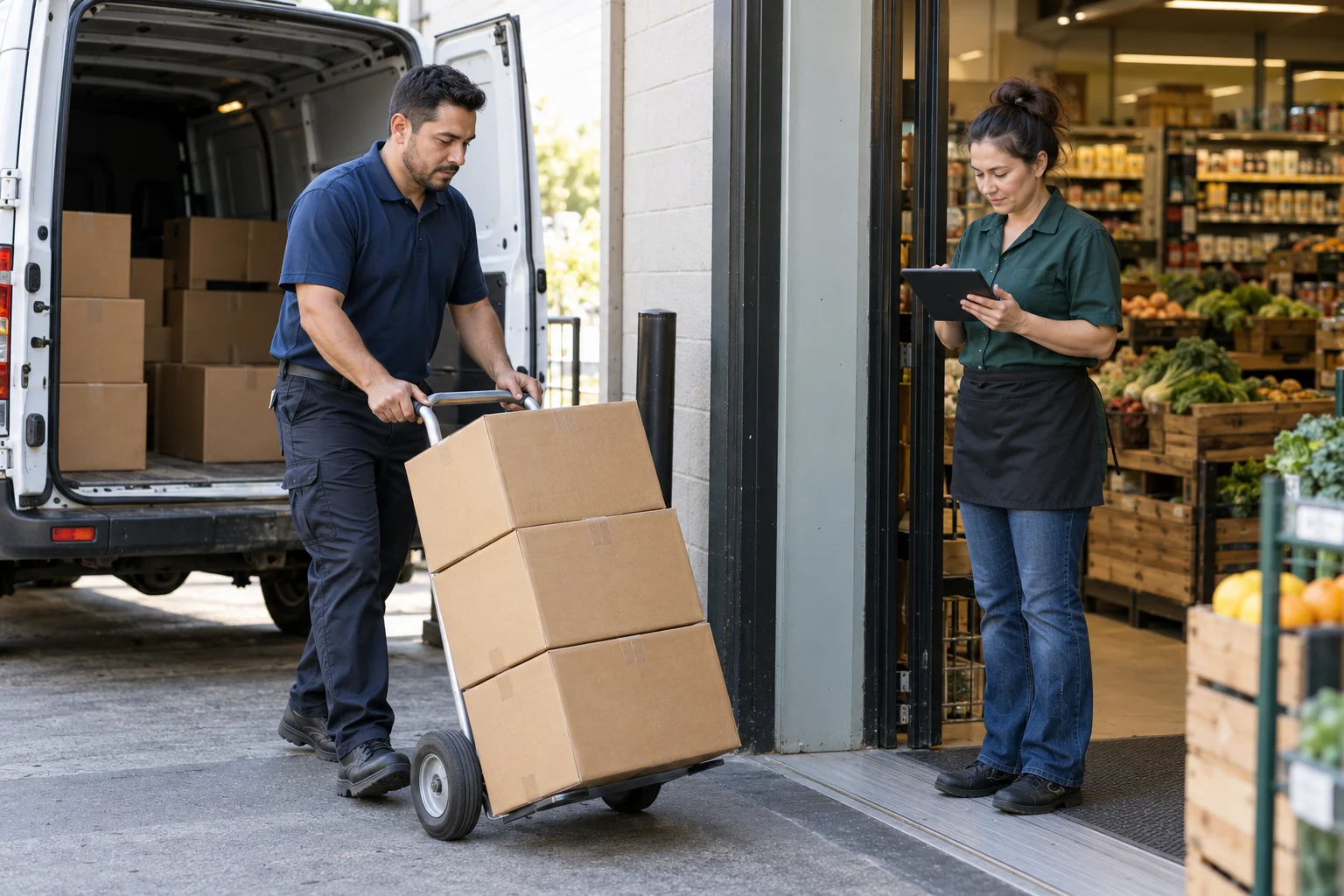
The logistics burden shifts locally, too: a stockist manages its own warehouse space, staffing, and local delivery, instead of relying on the manufacturer to ship every single order directly to the end customer.
How is a stockist different from a distributor or a wholesaler?
The three terms overlap so often in casual use that people treat them as interchangeable, but the roles carry real differences once a manufacturer starts drawing up agreements.
Stockists, distributors, and wholesalers are all resellers in the technical sense, buying products to sell again rather than making anything themselves. But the label that fits depends on the relationship each one has with the manufacturer.
Stockist vs. distributor
A distributor has a formal, often exclusive, contractual relationship with a manufacturer, representing the brand across a defined sales territory and often handling marketing or field sales on the brand’s behalf.
A stockist is different from a distributor in one specific way: the emphasis is on holding inventory and making it locally available, not on managing routes, reps, or brand-building for someone else.
That narrower scope is also why a stockist operates in a business-to-business environment with lower overhead than a full distributor agreement requires.
Stockist vs. wholesaler
A wholesaler primarily buys bulk items from multiple producers and resells to retailers, without exclusivity or a required agreement tying it to any one brand.
A stockist’s relationship is usually narrower and closer to the brand: it often holds a formal account or stockist agreement with one supplier for a specific product line.
| Role | Relationship to manufacturer | Who they sell to | Formal agreement |
|---|---|---|---|
| Stockist | Buys and holds stock, often representing one brand locally | Retailers, other businesses, sometimes consumers directly | Often an account or holding agreement |
| Distributor | Represents the brand across a defined territory | Retailers, wholesalers, occasionally consumers | Usually a formal, sometimes exclusive contract |
| Wholesaler | Buys bulk from various manufacturers | Retailers and other businesses | Rarely; mostly transactional purchases |
Why do brands work with stockists?
For a manufacturer, signing on a potential stockist is often the fastest way to get a product in front of a new customer base without opening a store or warehouse of its own.
Faster, cheaper market access
Partnering with stockists lowers the cost of expanding into a new region significantly, since the brand isn’t paying for its own warehouse, staff, or storefront.
Stockists help brands gain faster market access through networks they’ve already built with local retailers and their own customer base. They allow the brand to diversify its reach into new areas without the manufacturer doing that legwork itself.
Local insight and credibility
Stockists provide valuable market insights from the communities they already serve, since they know what sells, what doesn’t, and why, often better than a manufacturer sitting several regions away ever could.
Being picked up by a reputable boutique, pharmacy, or specialty shop also lends a new brand credibility that advertising alone can’t buy.
Growth without the overhead
For small businesses and growing brands, stockists reduce distribution costs by consolidating demand from many individual customers into fewer, larger orders.
That efficiency supports steady business growth while keeping customer satisfaction high, since local shelves stay stocked instead of running out between shipments.
It also means a brand can grow region by region without building out its own retail footprint in each one.
💡 Did you know?
Stockouts can also affect future sales. A Journal of Retailing study found that a failed grocery order delayed a customer’s next purchase by 7.22% on average.
Predictable margins on both sides
Stockists buy at wholesale pricing and build in their own margin when reselling, which keeps a manufacturer’s profit consistent even as the stockist sets its own retail price locally.
That arrangement gives both sides a clear advantage: the brand gets paid on delivery rather than waiting on end-consumer sales, and the stockist controls its own pricing within the market it knows best.
How do stockists manage inventory and risk?
Holding inventory isn’t free. A stockist invests money upfront to buy stock before a single unit sells, which means absorbing the financial risk if demand doesn’t show up the way it was expected to.
This is also where the model earns its value. By purchasing stock upfront and warehousing it locally, stockists let a manufacturer produce in efficient, larger lot sizes.
Rather than counting boxes by hand, many stockists use inventory management software and other tracking tools to monitor stock levels across their warehouses, flagging a reorder before a shelf runs empty.
That, in turn, lets nearby retailers replenish stock just in time rather than carrying large safety stock of their own.
Ordering itself has moved on from phone calls and fax sheets. Retailers reordering from a stockist increasingly do it through an online B2B order management system. There the stockist sees the order, the requested quantity, and current stock the moment it’s placed, instead of waiting on a callback to confirm what’s available.
💡 Did you know?
McKinsey’s 2026 Global B2B Pulse found that 71% of B2B companies now offer e-commerce. Among those companies, roughly one-third of revenue flows through digital channels.
How do stockists market to their local customers?
Because they’re closer to the ground than a manufacturer sitting in another region entirely, stockists often take on marketing that a brand can’t easily do itself.
Many stockists boost sales through targeted marketing built around their own community:
- Social posts featuring local customers
- Email campaigns ahead of a new shipment, or
- In-store events for a niche audience.
This kind of localized customer service and product experience is something an online-only brand, selling through ecommerce alone, can’t offer on its own.
A brand with a strong roster of stockists also builds brand presence in physical retail without ever signing its own store lease. The stockist’s existing foot traffic and reputation do the work.
Over time, that presence compounds: each stockist becomes a small, local ambassador the brand didn’t have to hire or train.
Which industries rely on stockists?
The clearest examples of the term show up in fashion, cosmetics, and other niche consumer goods, where the “stockists” pages on brand websites list every shop carrying a product by name and region.
The model isn’t limited to boutique retail, though.
Food distribution, pharmaceuticals, and industrial supply all lean on the same structure.
A pharmacy stocking a supplement brand, a specialty food shop carrying an imported line, and an industrial parts dealer holding stock for a manufacturer are doing the same job. They’re buying ahead of demand so nobody down the chain waits on a shipment from across the world.
The logistics stay similar across each of these categories. A stockist holds enough stock locally to cover demand between shipments.
How do customers find their nearest stockist?
Brand websites solve this with a dedicated locator tool: a shopper enters a city or postcode and gets back the closest shop carrying the product.
This works in both directions. It helps the end customer find a physical shop or online shop carrying the brand. And it gives the brand visibility into where its products sell best, which accounts move the most volume, and where its presence in a given region is thin.
For a growing brand, that list also doubles as a growth lever.
Every new stockist added to the map is a new local point of sale, and often a new pocket of customers the brand didn’t reach before through its own channels.
Watching which regions have several stockists and which have none is also a quick way for a brand to spot where its next expansion effort should go.
💡 Pro tip:
Audit the stockist locator page every quarter against actual order history. A shop that stopped reordering months ago but still shows up on the map costs conversions the moment a customer drives out and finds empty shelves.
Keep your stockist network organized
Every stockist relationship generates its own trail of purchase orders, invoices, pricing, and stock counts.
Multiply that across dozens of stockists carrying the same brand, and tracking it all through spreadsheets and email stops working long before the business itself does.
This is the layer distribution management software is built for. It centralizes stock levels, purchase orders, and per-account pricing, so a distributor or brand isn’t managing every stockist relationship through a separate spreadsheet or inbox.
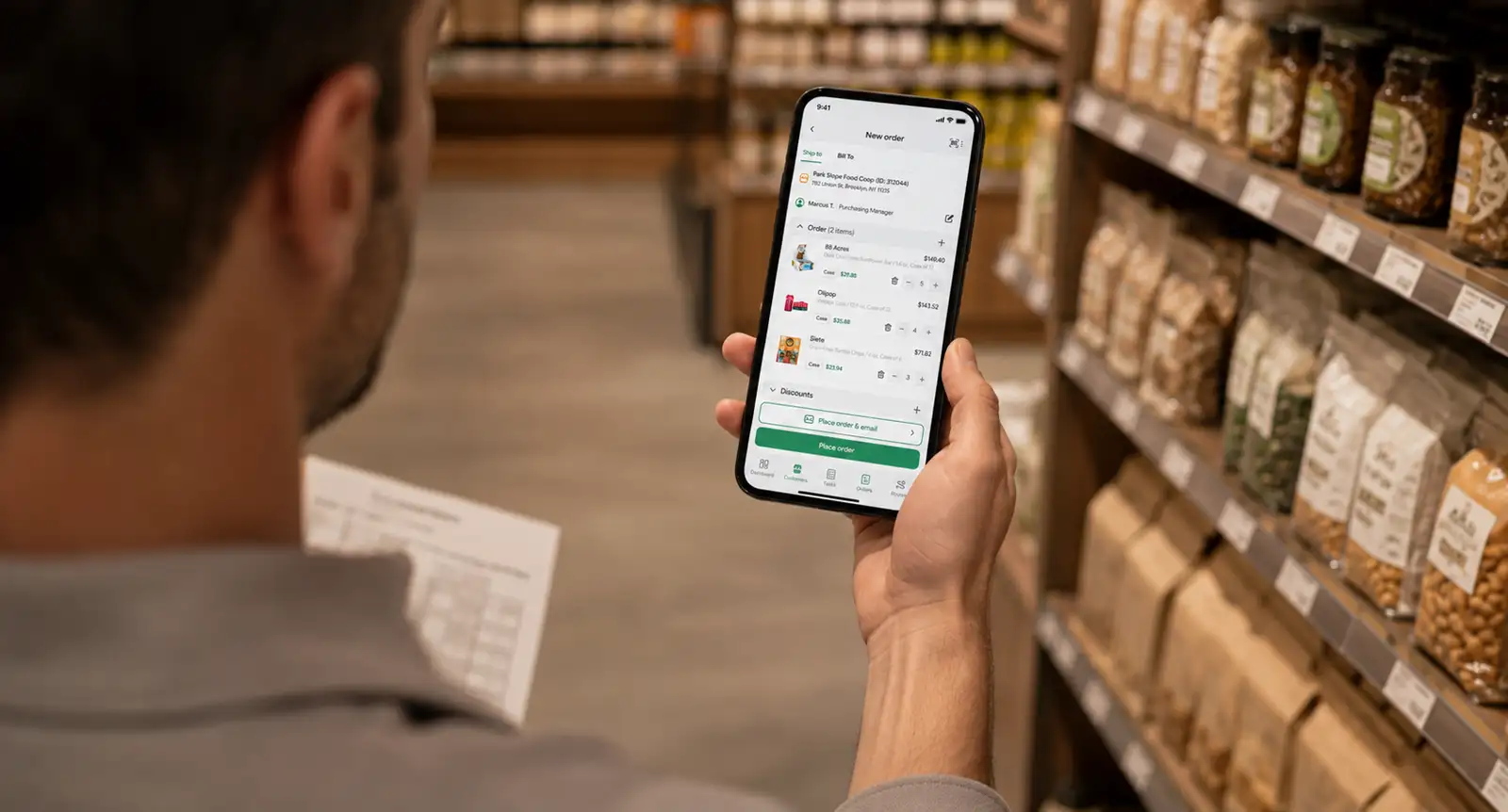
SimplyDepo brings this together in one mobile platform. Reps and stockists see live inventory and per-account pricing before an order is confirmed, deliveries are logged with proof of delivery at the stop, and every order syncs natively to QuickBooks Online instead of waiting on manual reconciliation at month’s end.
Route planning and offline order capture mean a rep can still take an order and record a delivery even without a signal, with everything syncing once the connection returns.
Sounds interesting? Book a free demo to see SimplyDepo in action!
FAQs on stockists
The difference comes down to overhead and control. A distributor agreement usually means giving up some say over how and where a brand is sold, in exchange for a partner who invests in reps, routes, and territory-building.
A stockist relationship is lighter: the brand keeps more control, but takes on more of the market-building itself, since a stockist mainly commits shelf space and a purchase order rather than a full sales operation.
Every stockist selling to the public functions as a retailer, but not every retailer is a stockist. A general retailer might reorder stock case by case as it sells through, while a stockist specifically buys and holds a set quantity upfront, often under a formal account or holding agreement negotiated directly with the brand.
Often, yes. Many brands set up an account or stockist agreement defining minimum order quantities, pricing tiers, and sometimes a loose territory. However, this is usually a lighter arrangement than a full distributor contract with exclusivity attached. Smaller or newer brands may skip a written agreement entirely and simply take a purchase order.
Fashion, cosmetics, and niche consumer goods use the word most visibly, especially in British and Commonwealth retail, where a “stockists” page is standard on a brand’s site. American brands selling the same way more often say “retailer” or “authorized dealer,” but the underlying arrangement, buying stock upfront and reselling it locally, is identical across food distribution, pharmaceuticals, and industrial supply.
-
 October 20, 2026
 -
 October 20, 2026
 -
 October 20, 2026